Le Thi Luu, the first female painter of modern Vietnamese art

If you love Vietnamese art in the Indochina period, you can't help but know the Indochinese quartet in Europe. These are Le Pho, Mai Trung Thu, Le Thi Luu and Vu Cao Dam.
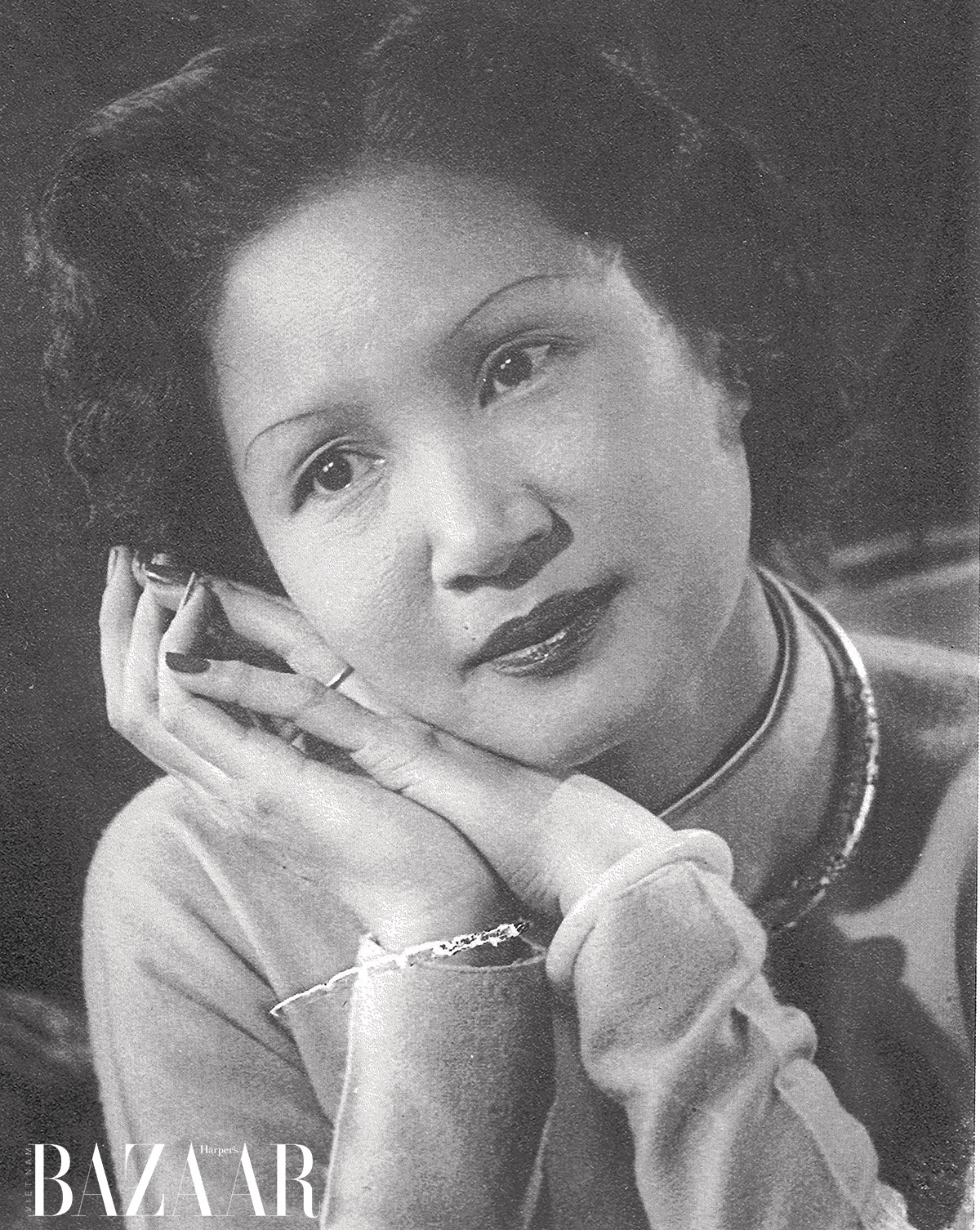
Among them, Le Thi Luu is the only female painter. The valedictorian in painting class III (1927-1932) is not only a painter with priceless works of art but also a beautiful woman in terms of personality and figure.
She followed her husband to France to live in the 1940s. Thirty years after her death, the talented artist's family took her "back" to her homeland through 29 of her works. Currently, the works are being kept and displayed at the City Museum of Fine Arts. Ho Chi Minh.

Biography of painter Le Thi Luu
Le Thi Luu was born on January 19, 1911 in Tho Block village, Bac Ninh. In 1926, she enrolled in the preparatory class of the Indochina Fine Arts College and passed the third class in 1927.
Her paintings are always praised by teachers Victor Tardieu (one of the two co-founders of the school) and Mr. Joseph Inguimberry. Even as a student, Le Thi Luu had two oil paintings in her first painting exhibition with the school: Portrait of Mr. Hai and Children in the Banana Garden.
According to Mr. Ngo The Tan, she grew up in a family that was educated in Confucian ethics. Therefore, when she was still a student, she also faced many difficulties when she had to practice drawing pictures of naked men. In addition, as a woman entering the male world, she is sometimes envied by the boys in her class. They even used knives to cut or erase her paintings.
However, the female artist still graduated with a valedictorian degree and became a professor at prestigious schools at that time such as Buoi School, Hang Bai School (Hanoi), Gia Dinh Fine Arts School (Saigon). Le Thi Luu is often mentioned by domestic newspapers.

Rebuilding a career
In 1940, she followed her husband to France. The trip to Europe seemed short-lived, but as a result, Le Thi Luu lived her whole life in France.
Compared to the three painters in the Indochinese quartet, Le Thi Luu's artistic path has more professional tragedies. After going to France, going with her husband to Africa and then back to France, it took her nearly 15 years to pick up a pen to continue her painting path.
She once confided in her childhood:
“I came here in 1940 and it was not until 1956 that I was able to draw again. [...] I haven't held a brush or tissue paper for a long time, so I don't even dare to believe that I can return to drawing. But after I asked my close friends to encourage me, I tried."
Her first three silk paintings when she returned to painting won the First Prize (Premier Prix) and were purchased by two Americans at the opening ceremony at the Exhibition Hall of the Union of Women Painters, Sculptors and Engravers. Therefore, she gradually regained her confidence and continued to compose until the end of her life. In more than half a century of creation, the female artist left about 300 works of art.

School of silk painting named after Le Thi Luu
Referring to Le Thi Luu, it is impossible not to mention her famous silk paintings. "This choice is like a predestined attachment to the nature of the artist," said writer Thuy Khue, author of the book Le Thi Luu - Impressions of Sunset .
The female artist sought to blend the art of silk painting with Impressionist techniques to create her own style. Compared with the ancient silk paintings of Nguyen Phan Chanh or the silk paintings of Mai Trung Thu, Vu Cao Dam, and Le Pho, Le Thi Luu silk paintings have a soft, natural feminine touch. Read More…