Life in Russia, a year after the invasion
-
 Loading...
 - Andrei Guskov
- 27 Mar 2023
- 65 Views
- 0 Like
- 0 Comment
Russian invasion of Ukraine: A visual timeline of the war. As the war in Ukraine enters its second year, ABC News tracks the milestones of the conflict and how Ukraine fought back against the Russian invasion.
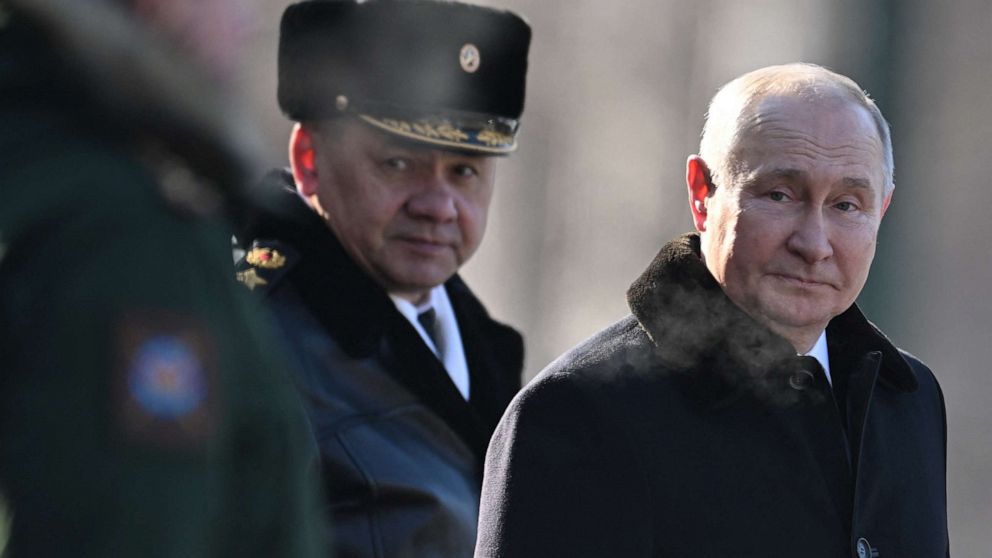
A year ago, President Vladimir Putin plunged Russia into the war in Ukraine, pulling his country into a bloody military debacle and reigniting a global stand-off with Western countries.
Nearly 200,000 Russian troops are estimated to have been killed or wounded in the past 12 months. Over half a million -- by some estimates as many as a million -- Russians have left their country, fleeing conscription, political persecution or hopelessness. Russia's economy has been hit by unprecedented sanctions that has blocked it off from much of the global banking system and isolated it from Europe.
But in Moscow, on the surface it can seem little has changed. The Russian capital looks as it did, still sparkling with street decorations, its shops and restaurants bustling with people. Many of the world's top brands, like Apple and H&M, have left, but many of their products remain available. Brief protests were snuffed out by police at the start of the war and now are all but non-existent. Virtually all prominent political opposition figures are either jailed or in exile and most independent media has been driven abroad.
For many Russians, the response throughout much of the war, has been to largely pretend it isn't happening. "The more mainstream attitude, if you had to sum up in one word, I think would be a sort of acquiescence. Apathetic acquiescence," Jade McGlynn, a researcher and author of "Russia's War," who has been looking at attitudes among Russians towards the conflict, told ABC News.
"Russian society has assumed the fetal position," Andrey Kolesnikov, a senior fellow at the Carnegie Center, wrote recently. The Kremlin's crackdown on dissent has made it difficult to judge public attitudes in Russia towards the war based on polling.
But Russians are receptive to the broad framing of the conflict by Putin and regime propaganda, McGlynn said: that Russia is defending itself against a hostile NATO, that Ukrainians are hapless puppets of the West, that Ukraine is not a fully independent nation from Russia. "I think the narratives resonate. I think that these narratives have always been a co-creation" she said. But a far smaller number of Russians actively and enthusiastically support the Kremlin's most aggressive visions, such as conquering Kyiv. Read More…


