Lighting or Relighting? How Much Portrait Lighting Is Real?
-
 Loading...
 - Jara Cielo
- 13 Feb 2023
- 60 Views
- 0 Like
- 0 Comment
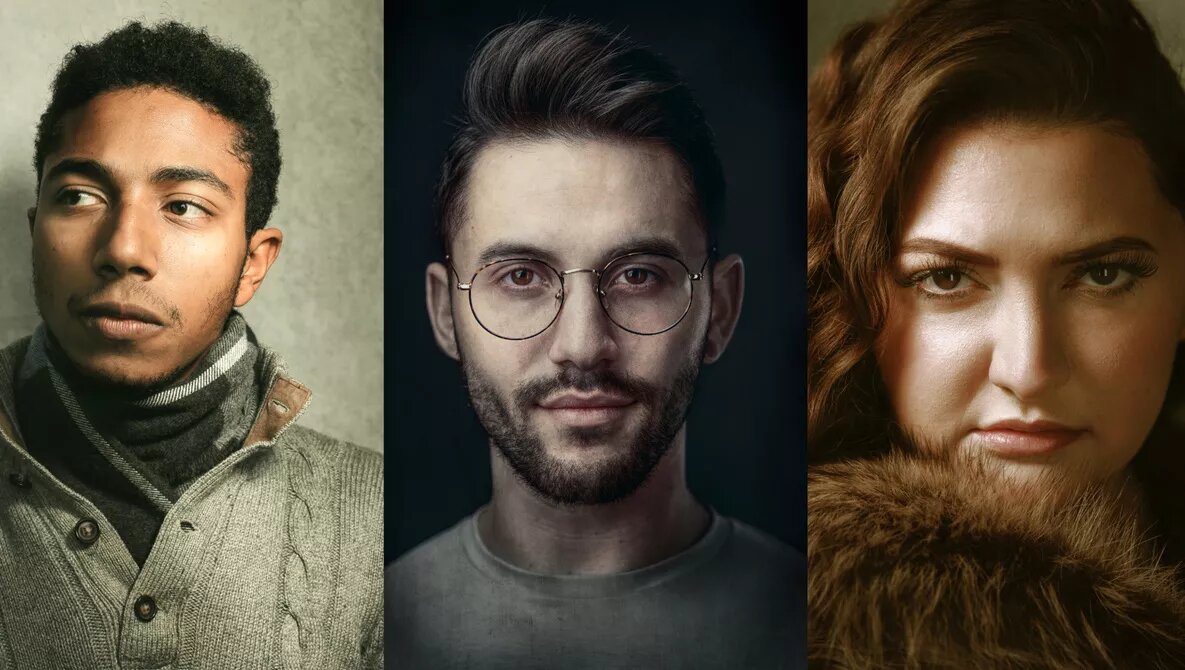
Studio photographers are often admired for their lighting skills, and for good reason. Creating compelling portrait lighting is not only extremely difficult, but requires lighting gear, backdrops, and a shooting space. Editing can play either a small or large role in the final image. Have you ever wondered how much of what you see was created in camera, as opposed to in the editing room? In this article, I will show you some before and after images from my own studio work and lift the veil on my editing process.
As a portrait photographer, I love to gain knowledge and improve my lighting skills. I have studied with many photographers I admire, in order to grow in my knowledge of lighting in an attempt to find my own personal voice as a visual artist. I often experiment, holding late night studio sessions with photographer friends where we explore different lights, modifiers, and even replicate lighting from some of our favorite portrait artists.
I mention this to lay the groundwork for this article and dispel any misconceptions, because there is no substitute for understanding how to manipulate light in the studio. There is no shortcut past the fundamentals, and as great as technology is today, you still can’t fix bad lighting in post-production. This means that my primary concern is to create an image in camera that has the raw materials I need for the editing room.
Another concern for me is the kind of image I am attempting to create and the purpose it will serve. When I create a head-and-shoulders headshot, generally I keep it clean and simple, avoiding a post-processed look. Therefore, the headshots I create are 95% finished in camera. This is especially true with business clients who are looking for a headshot to use on social media that represents them on their best day. I save the drama for my portrait work, and offer this in addition to clean and simple headshots.
So, just how much editing is done in post? For me, it varies depending on the capture, subject, and goal. There is no “one size fits all” approach, although most of my portraits are color graded and employ dramatic shadows with a varying degree of intensity. Let's examine some before and after images and discuss the process I used to create the final result. Read More…