Lightning Strikes Create a Strange Form of Crystal Rarely Seen in Nature
-
 Loading...
 - Vinha Harju
- 07 Feb 2023
- 61 Views
- 0 Like
- 0 Comment
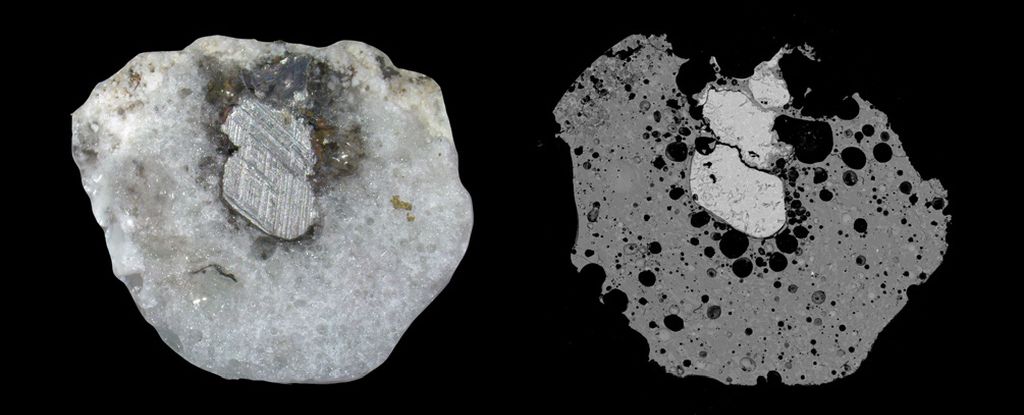
The violent fingers of electricity that struck a sand dune in Nebraska have left behind a configuration of crystal rarely found in nature.
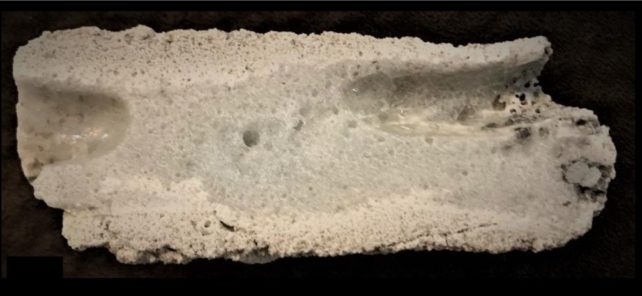
Inside a piece of fulgurite – or 'fossilized lightning' – created by a powerful bolt of electricity traveling into and fusing sand, scientists have found a quasicrystal, an arrangement of matter once thought to be impossible.
This discovery suggests there are previously unknown formation pathways for quasicrystals, opening up new avenues for their synthesis in the laboratory.
"The current investigation was designed to explore a different possible nature-inspired mechanism for generating quasicrystals: electrical discharge," write a team of researchers led by geologist Luca Bindi of the University of Florence in Italy in their paper.
"The discovery of a quasicrystal in a fulgurite with rarely observed 12-fold symmetry and a not been reported previously composition indicates that this approach may also be promising in the laboratory."
Most crystalline solids in nature, from the humble table salt to the toughest diamonds, follow the same pattern: their atoms are arranged in a lattice structure that repeats in three-dimensional space.
Solids that don't have these repeating atomic structures – amorphous solids like glass – are generally an atomic mess, a jumble of atoms mooshed in together with no rhyme or reason. Read More…