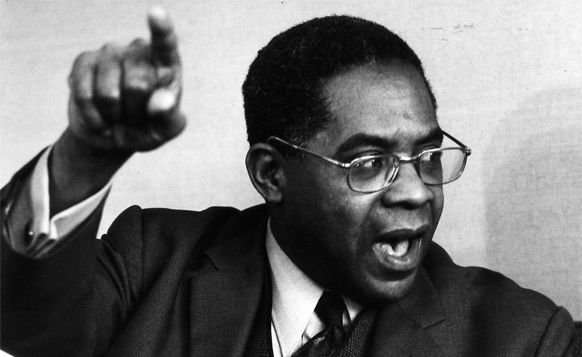
Literature: "Notebook of a return to the native land" by Aimà© Cà©saire
-
 Loading...
 - William Tonui
- 03 Oct 2022
- 85 Views
- 0 Like
- 0 Comment
Césaire proposed a definition: “Negritude is the main recognition of the fact of being black, and the acceptance of this fact, of our destiny as black, of our history and of our culture. »
Later, Senghor gives the word a more dynamic meaning; he defines negritude as a specific way of "ensuring the values ​​of civilizations of the black world"
This awareness thus becomes a poetic act insofar as, through poetry, Negroes dare to proclaim the right to autonomous existence.
This is how Césaire, in the Cahier d'un retour au pays natal, like Senghor, tries to demythologize the White and rehabilitate Negro culture.
To approach the subject, we will first examine the man and the work, then, secondly, the aesthetics of the text. A glossary of difficult words will be offered at the end of the presentation in order to guide the reader through this semantic labyrinth that the poem constitutes.
I – The man and the work
1. 1. Biography of Cesaire
Coming from a modest family in Fort-de-France, writer and man of action, Aimé Césaire was born on June 26, 1913, in Basse-Pointe in the north of Martinique. At the age of six, he entered primary school. After a good education at the high school in his hometown, Aimé Césaire obtained a scholarship to continue his studies in Paris at the Lycée Louis-Le-Grand.
1932-1933, Césaire enters hypokhâgne in Louis-le-Grand, where he meets Ousmane Socé, then Léopold Sedar Senghor.
Césaire succeeded in the entrance examination to the ENS in 1935. He traveled to Martinique and began to write the Cahier. In 1937 Césaire married Miss Roussy. 1937 saw the birth of his first child and he had just finished the Cahier which he was to publish in 1939 in the journal Volontés.
Césaire and his wife Suzanne Césaire are assigned as teachers at the V.-Schoelcher high school in Fort-de-France. Césaire was elected deputy-mayor of the city under the colors of the French Communist Party (PCF), which he left in 1956 and occasionally sent a letter to Maurice Thorez. He renounced the deputy in 1993.
Unlike the African Senghor, also a victim of Western colonization, but whose culture remained intact, the West Indian was cut off from his roots and forced to adhere to the politics practiced by the white master. Therefore, Césaire, like other West Indians, is torn between two conflicting situations: wanting to be white, he discovers himself black and wanting to be black, he finds that he is white. Thus Césaire is torn between this father who denies him and this mother whom he has denied.
This ambiguous situation continues to haunt him, and pushes him to denounce the colonial system. This is why he uses his pen to make himself heard. Read More…


