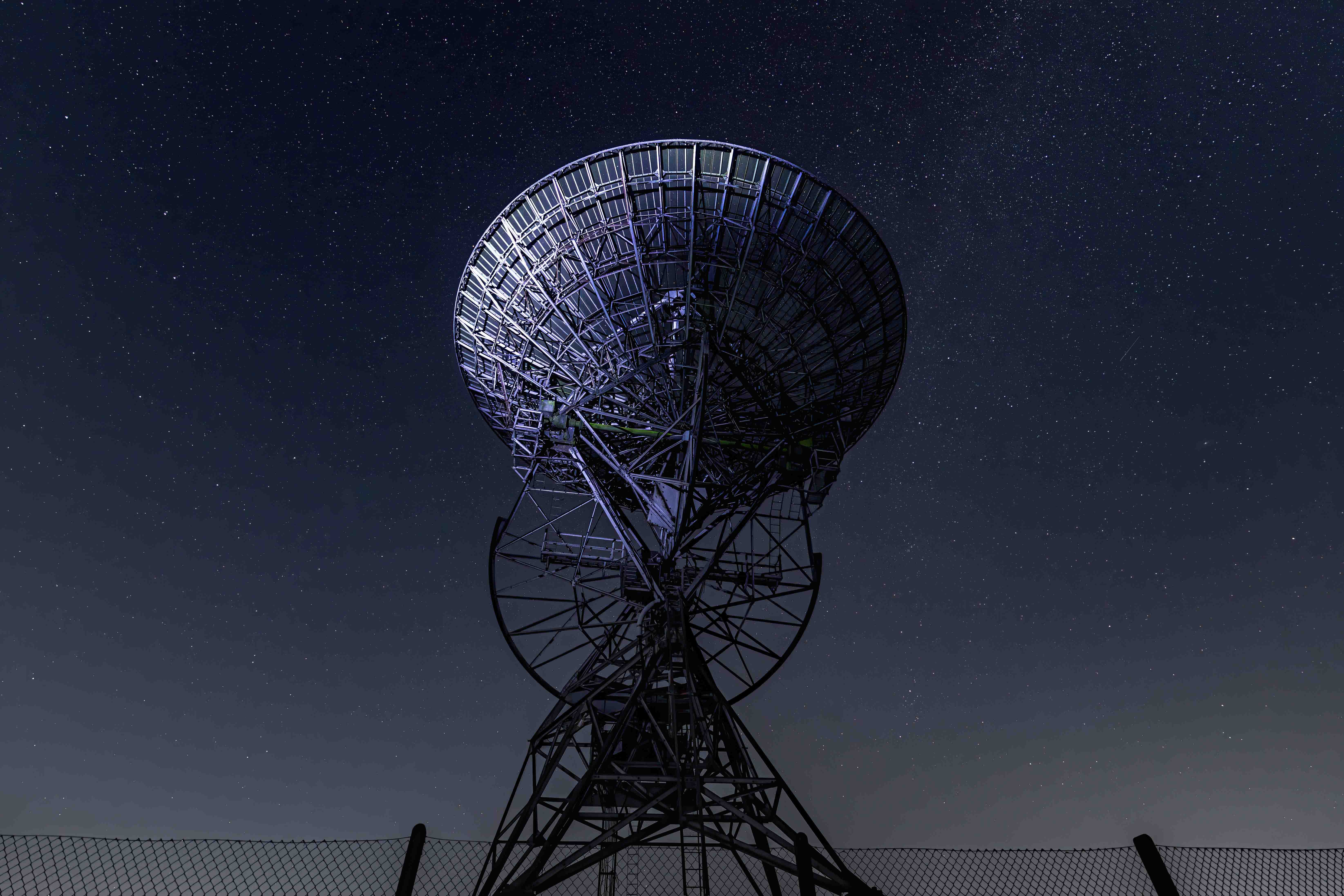
Look To The Stars: How Radio Astronomy Can Benefit Pakistan
-
 Loading...
 - Hari Chavan
- 04 May 2023
- 67 Views
- 0 Like
- 0 Comment
Pakistan has the potential to invest in radio astronomy if it fosters a spirit of scientific research and progress
Pakistan has long been recognised for its nuclear and missile capabilities but the country is still lagging in many areas, including space exploration, semiconductors, antenna design, radio-frequency (RF) engineering, high-performance computing and astronomy. However, by investing in radio astronomy research and development, Pakistan has the potential to improve its technical capabilities in telecommunications, defence, medical imaging, and big data sciences.
Radio astronomy is a field that studies the universe through the analysis of radio waves emitted by celestial objects. From pulsars to black holes, radio astronomy has played a critical role in our understanding of the universe. Furthermore, radio astronomy research can also lead to spin-off technologies that can benefit other industries.
One of the best examples of the potential of radio astronomy research is Wi-Fi. Astronomers at Australia’s national space agency CSIRO developed methods to realign scrambled radio signals from black holes, leading to the discovery of this widely used technology. Similarly, the data acquisition mechanisms in radio astronomy and magnetic resonance imaging (MRI) have similarities that can potentially lead to advances in medical imaging technologies.
Investing in radio astronomy research also has the potential to foster collaboration and innovation across diverse groups. For example, universities in Pakistan can be encouraged and funded to launch amateur radio astronomy projects, by providing students with a platform to learn about radio astronomy, leading to the discovery of new celestial objects and phenomena. On a larger scale, Pakistan’s national space research organisations (SUPARCO, NCGSA, IST, ISPA, etc.) and telecommunications organisations can develop at least one international-level radio astronomy research facility. India's Giant Metrewave Radio Telescope (GMRT), for example, is a relatively low-cost facility in comparison with other major radio telescope facilities around the world.
Research organisations, like the National Center of Physics (NCP) in Islamabad, HEJ Research Institute of Chemistry in Karachi, can also join the efforts by providing science goals. A lot of interdisciplinary research in areas like astrophysics, astroparticle physics, astrochemistry, astrobiology, exoplanet atmospheres, solar physics can be done by promoting collaborations between various institutes of Pakistan which have their own expertise in specific areas. This will foster a culture of collaboration among various R&D organisations in Pakistan and help pave the way for more research avenues in the future.

Emerging powers like India, with projects like Giant Metrewave Radio Telescope (GMRT), and South Africa, with its involvement in Square Kilometre Array (SKA), are greatly benefitting from their investments in radio astronomy and other big science areas in the form of spin-off technologies, scientific and industrial human resource development, advancement in instrumentation capabilities, which in turn benefit industries and strengthen universities in general. Such investments will not only help these countries in the future, but they have already started reaping benefits today. Their success story is similar to how European countries benefitted from the development of the European Organization for Nuclear Research (CERN)’s. CERN transformed Europe which was devastated by the two world wars into a global hub of innovation and scientific cooperation. The development of particle accelerators and other technologies at CERN led to the creation of the World Wide Web and many other technological advances. Read More…