Luanda’s Art Scene Forges a New Narrative for Angola
-
 Loading...
 - Elinam Offei
- 30 Dec 2024
- 49 Views
- 0 Like
- 0 Comment
In the heart of Luanda, a striking red neon sign illuminates the facade of Hotel Globo, a building that has witnessed the city’s tumultuous history since its construction in 1950. Once the most popular hotel in Luanda, its exterior now reflects the scars of civil war, yet it retains an air of grandeur, representing the pinnacle of modernist architecture in Angola. Recently, however, a vibrant energy has surged through its walls as artists, creative producers, and gallerists have transformed the hotel into a thriving arts hub.
Jahmek Contemporary Art, one of Angola’s leading contemporary art galleries, has established its home in Hotel Globo, alongside the project Fuckin’ Globo, which fosters intellectual and artistic discourse by bringing together artists, filmmakers, producers, curators, and performers. “It’s a safe space,” says Luanda-born artist Sandra Poulson, who is currently showcasing her work at the 60th Venice Biennale. Unlike other venues in Luanda, this space is open and welcoming, allowing for spontaneous interactions and collaborations among artists.
A Dynamic Artist-Led Scene
Angola, rich in oil, boasts a young and dynamic art scene that has emerged largely without government support. The country lacks dedicated art museums, has very few art schools, and access to art supplies is limited. Jahmek Contemporary Art was founded by Mehak and Jardel Vieira in 2018 and relocated to Hotel Globo in 2022 after being evicted from its original space in Fábrica da Mission, an old soda factory. “When we started the gallery, there was no strategy. We went on intuition. Our mission is to foster the art scene and the next generation of Angolan artists,” Mehak explains.
Since its inception, Jahmek has gained momentum, enabling artists to showcase their work in major international art exhibitions, including Art Basel and the Venice Biennale. Mehak’s efforts have opened doors for Angolan artists, allowing them to gain recognition on the global stage.
For many Angolan artists, their work serves as a means of healing and a way to confront the painful legacy of colonialism and civil war. The struggle for independence from Portuguese rule, which lasted from 1575 until 1975, and the subsequent civil war that raged until 2002, have left deep scars on the nation. Artists like Wyssolela Moreira use their practices to explore Angolan identity and the importance of indigenous knowledge systems, aiming to reconnect with cultural roots that were suppressed during colonial rule.
The ambition to decolonize the Angolan narrative and reconcile the nation with its post-independence modernity has been a driving force in Luanda’s contemporary art scene. The late Sindika Dokolo, a prominent art patron and collector, played a significant role in promoting Angolan art and supporting initiatives like the Triennial de Luanda. His efforts brought international attention to Angolan artists and helped establish a foundation for the current art scene.
Leaving a Legacy Through Art
Younger artists are not only focused on their individual practices but are also committed to developing the local art scene for future generations. Initiatives like Rompe, a non-profit collective founded by artist Pamina Sebastião, aim to create spaces for continuous learning and political reflection. “You have different types of artists in Angola but not a community built around art,” Sebastião notes.
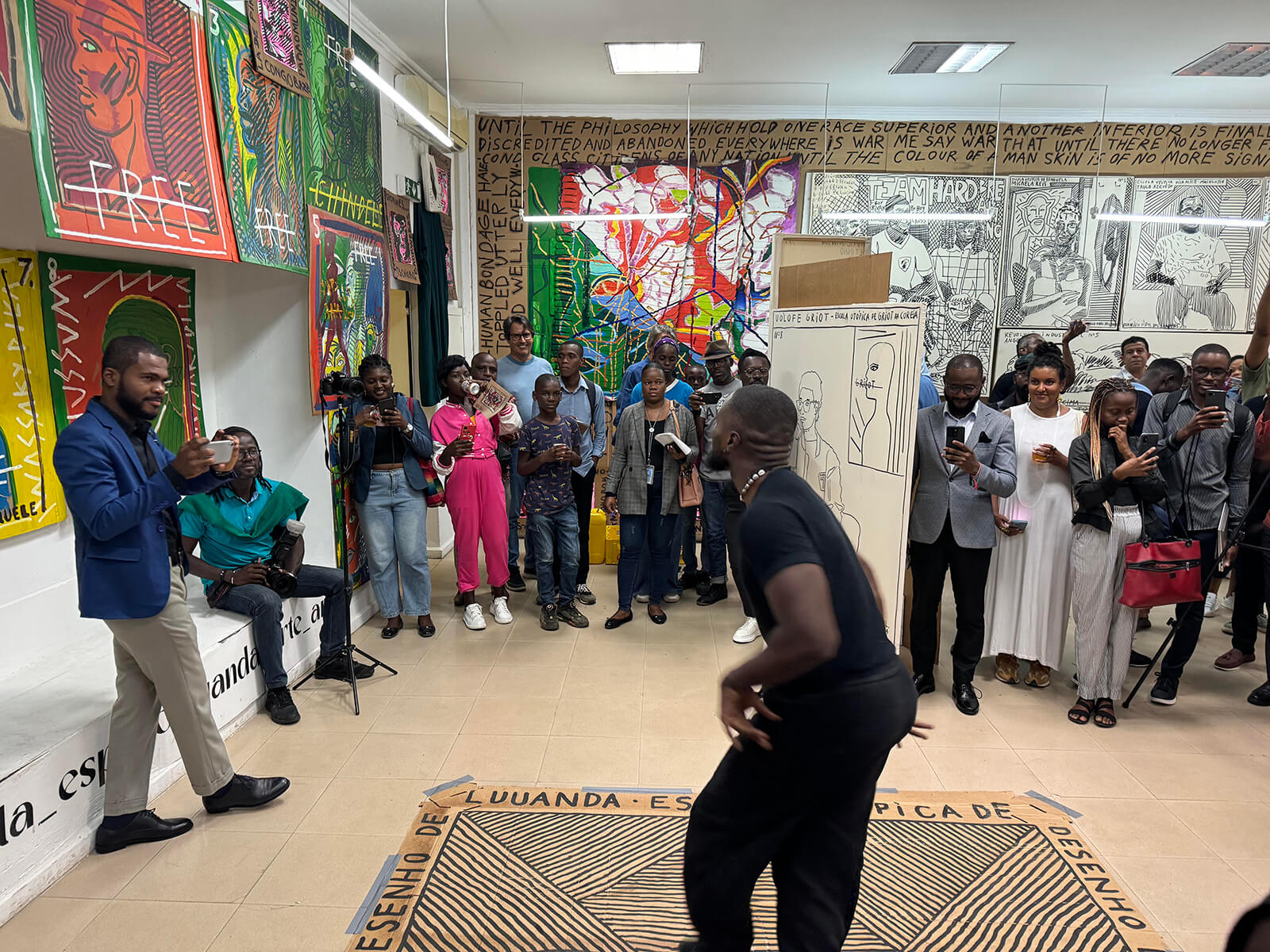
In addition to Jahmek, other art spaces such as ELA-Espaço Luanda Arte and the NESR Art Foundation are dedicated to nurturing the local art scene. The recent Luanda Art Fair, organized by Dominick Maia Tanner, marked a significant milestone in promoting Angolan art and building a local audience.
Despite challenges such as a limited pool of domestic collectors and the absence of state funding, the determination of Angolan artists and philanthropists has attracted the attention of major figures in the art world. The ongoing collaboration between Angola and international art events, such as the 35th Bienal de São Paulo, highlights the growing recognition of Angola’s cultural contributions.
A New Narrative
As Luanda’s art scene continues to evolve, it forges a new narrative for Angola—one that embraces its rich cultural heritage while addressing the complexities of its past. Artists are using their work to challenge perceptions, foster dialogue, and create a sense of community. The art produced in this vibrant city not only reflects the struggles and resilience of its people but also serves as a powerful tool for healing and transformation in a nation that is still coming to terms with its history. Through their creativity, Angolan artists are shaping a future that honors their identity and celebrates their unique cultural landscape.