McDonald's Is Defending Its Latest Controversial Meal
-
 Loading...
 - Jenab Chan
- 09 Mar 2023
- 65 Views
- 0 Like
- 0 Comment
The chain's collaboration with Cardi B and Offset is rubbing some franchisees the wrong way.
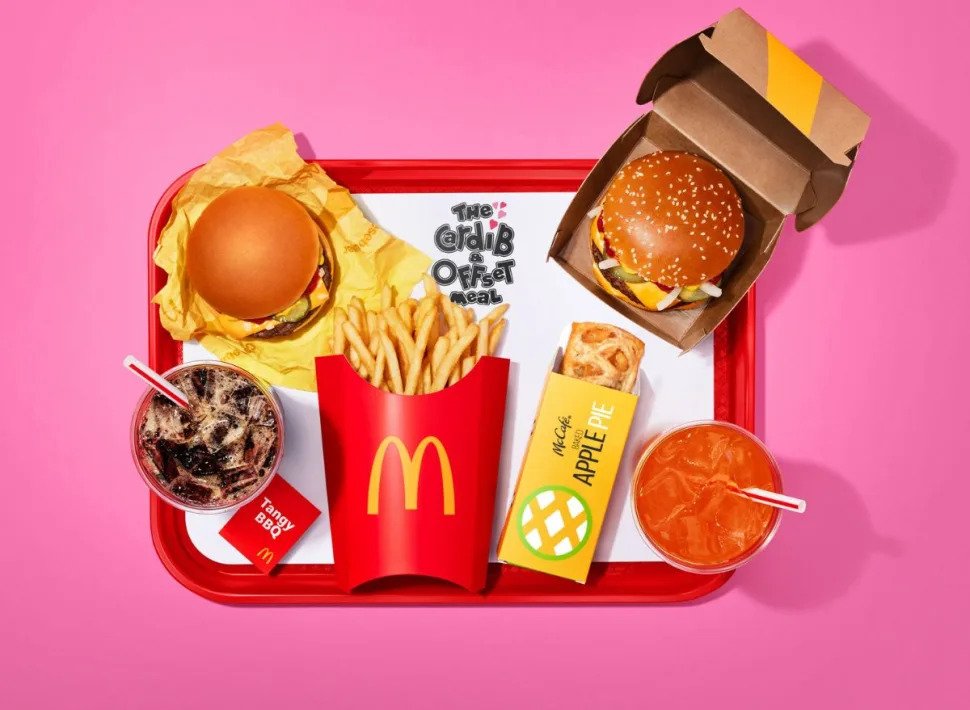
McDonald's is making waves with its latest celebrity meal collaboration featuring power couple Cardi B and Offset, but not everyone is lovin' it.
Several McDonald's franchisees are reportedly concerned that the partnership with the married rappers will damage the brand's image. These critics want the fast-food giant to do away with the promotion altogether because they claim it violates a set of internal rules called the "Golden Arches Code."
But McDonald's is refusing to bend to the pressure and is standing by its decision to collaborate with Cardi B and Offset, who have been married since 2017.
"Across our marketing, we're focused on putting McDonald's at the center of culture," Tariq Hassan, chief marketing and customer experience officer for McDonald's USA, said in a statement. "Artist collabs have helped reignite fans' love for our food and fueled significant business momentum, both for the company and our restaurant owner/operators. And the reason they've been so successful is that our partners are real fans of the brand themselves – that authenticity is our secret sauce."
"Cardi and Offset are an iconic couple who have their own date-night tradition at McDonald's that goes back years," Hassan added. "We're proud to share a little piece of that with customers across the U.S. with our latest campaign, which is about love and celebrating the special moments we all share over McDonald's."
McDonald's USA doubled down on this support in an additional statement.
"McDonald's stands behind our partnership with Cardi B and Offset. They have been incredible partners and we support them as a family," the statement said.
The "Golden Arches Code" at the center of the backlash states that collaborations with celebrities and influencers "that have potential risk to damage our brand based on statements they have made or their positions on certain issues" aren't allowed. It also prohibits "music partnerships associated with content that includes offensive language in the lyrics," according to Bloomberg, which obtained a 2021 copy of the rules. Read More…