‘Merit is a bad word’: Can inclusion and quality coexist in Argentine higher ed?
-
 Loading...
 - Emilia Salo
- 18 May 2023
- 63 Views
- 0 Like
- 0 Comment
Argentina's public universities are known for their inclusivity, offering free tuition and no entry requirements. However, despite this accessibility, the country faces low graduation rates and a lack of enrollment among college-aged individuals. Various factors contribute to this issue, such as inadequate preparation in high schools and financial challenges associated with university education, exacerbated by the lengthy degree programs that can last up to nine years. The existing disparities and low graduation rates pose a threat to Argentina, leading to brain drain and hindering economic recovery. To reverse this trend, inclusive policies need to be implemented, focusing on supporting students throughout their educational journey and emphasizing quality education alongside accessibility.
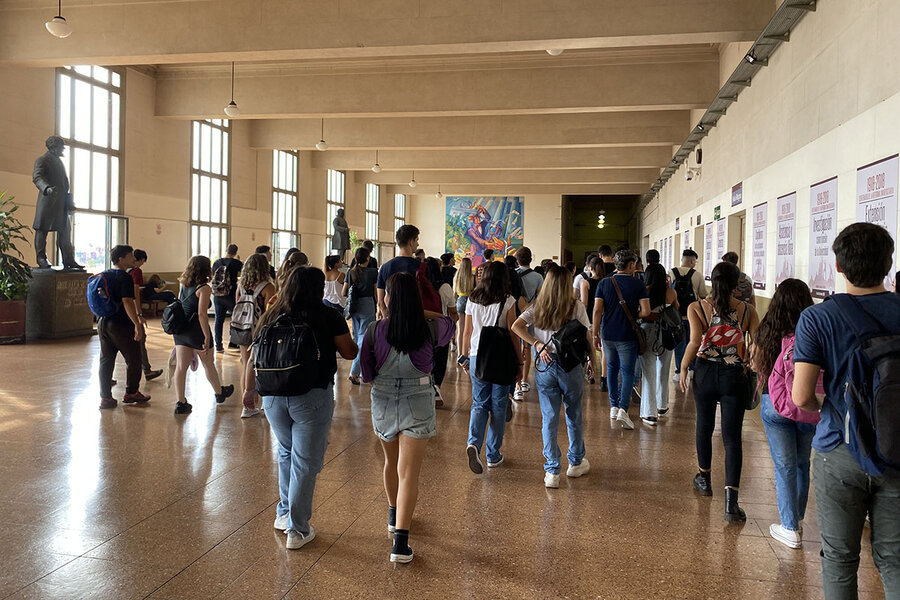
Marcelo Rabossi, an expert in higher education policy, highlights the historical decline in Argentina's educational and human capital, which he sees as the nation's true wealth. Juan Lopensino, an engineering professor, points out the low graduation rates in his department, with less than 10% of students successfully completing their degrees. The national average for graduation across disciplines in public universities is 30%, creating social problems and a frustrated generation.
Natalia Villagra, a law student, faces numerous challenges in pursuing her degree, including a part-time job, a long commute, and interruptions in public transportation. She recognizes the illusion of open access to education, as students from low-income backgrounds make up only 8% of college freshmen, dropping to 1% by the fifth year. The dream of Argentine universities as engines of social mobility has remained unfulfilled, according to Isabel Bohorquez, a former university rector. Criticizing flaws in the system has become difficult due to the untouchable status assigned to universities.
While open admission policy promotes inclusivity, it comes at a cost. First- and second-year classes often overcrowd classrooms, leaving some students sitting on the floor or listening from hallways. In fields like medicine, limited resources hinder hands-on experience for each student. This dilemma highlights the delicate balance between inclusivity and quality in education. Dr. Rabossi believes that certain conditions should be in place to prevent clashes between these two aspects, but in Argentina, inclusion tends to compromise quality.

The challenges start even before university level, with a significant gap in graduation rates between private and public high schools. The majority of Argentines attend public schools, where only 36% of students graduate on time, compared to 64% in private schools. Moreover, there are no national exams at the end of high school to assess students' readiness for college. Proposals to introduce selectivity exams face strong opposition, as the notion of merit remains controversial in Argentine society.
Camila Roig, a political science student, supports the belief that education is a human right but argues for discussions on raising educational standards. Efforts to reduce high school dropout rates focus on advancing students to the next grade easily, which, according to Dr. Bohorquez, fails to provide substantial requirements for academic success. Argentina can learn from neighboring countries like Chile and Uruguay, which have implemented solutions such as investing in primary and secondary education and establishing funds to support low-income students.
Reform ideas occasionally arise in Argentina, including shortening degree programs, improving funding for disadvantaged students, charging tuition for international students, and strengthening partnerships between universities and institutions that train teachers and technicians. However, these proposals have not gained significant traction. Meanwhile, the government plans to open eight new universities to enhance accessibility, despite calls for prioritizing quality over quantity.
In the face of these challenges, students like Enzo Centurion pursue their degrees against all odds. Enzo, who comes from a family with limited educational background, faced numerous difficulties but received support from the nonprofit organization Fundación Sí, which provides housing for students studying away from home. Government scholarships are scarce and insufficient to cover living expenses.
In conclusion, Argentina's public universities may appear inclusive on the surface, offering free tuition and open admission. However, the reality is far from ideal, with low graduation rates and limited enrollment among college-aged individuals. The country faces various obstacles, including inadequate preparation in high schools, financial burdens, and lengthy degree programs. These challenges perpetuate existing disparities and hinder Argentina's ability to overcome its economic crisis and retain its intellectual capital.
To address these issues, inclusive policies must extend beyond superficial measures and focus on comprehensive support for students throughout their educational journey. It is crucial to prioritize quality education alongside accessibility, ensuring that students receive the necessary resources and opportunities to succeed. By improving high school education, introducing selectivity exams, and investing in disadvantaged students, Argentina can enhance its educational system and foster social mobility.
Moreover, it is important to learn from neighboring countries that have successfully tackled similar challenges. Chile's emphasis on primary and secondary education and Uruguay's solidarity fund for low-income students offer valuable insights and potential solutions. Argentina should consider these approaches and explore reforms such as shorter degree programs, improved funding, and stronger collaborations between universities and related institutions.
In conclusion, Argentina's universities have the potential to be beacons of opportunity and social mobility. By addressing the underlying issues and implementing meaningful reforms, the country can create a more equitable and effective higher education system. It is imperative that Argentina prioritizes quality education while ensuring accessibility for all its citizens.