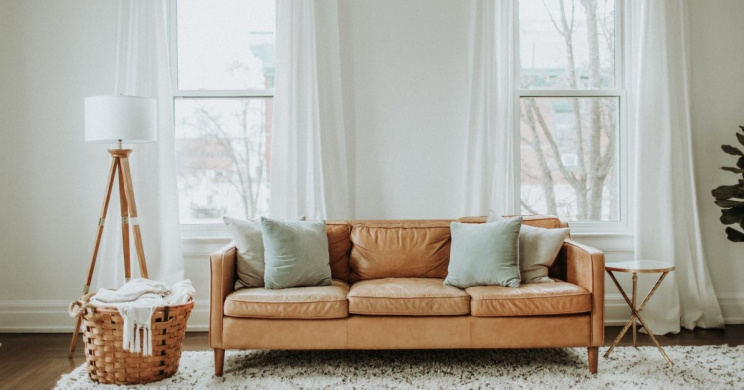
Minimalist decoration tips for every room
-
 Loading...
 - sara harriet
- 25 Apr 2023
- 71 Views
- 0 Like
- 0 Comment
If you are interested in learning how to add a minimalist touch to your home, you're in the right place: take note and put it into practice
There are many ideas and trends to apply to the world of decoration. Every home should reflect its owner's style and character. Some people like their homes to be extravagant and colourful, while others prefer modern or eclectic, and others like simple and minimalist. If you're more into minimalism, this article is for you. Read on to discover the keys to minimalist decoration, its meaning and examples of how to apply it to each room in your home (kitchen, bathroom, living room and bedroom).
What is minimalist decoration?
Minimalism is the trend of stripping back to what's essential and useful. The famous phrase "less is more", attributed to the modern architect Mies Van der Rohe, is the philosophical basis of this trend.
It emerged in the United States in the early 1960s, following the American geometric tradition and reacting against the predominance of realist currents and pop art by museums and collectors.
Focusing on interior design, this trend is based on being practical, elegant lighting and the empty spaces left by removing three-dimensional forms. It was popularised in the late 1980s in London and New York, where simplicity, white elements, cool lighting and large spaces with minimal objects and furniture were the stars of the moment.
Influenced by traditional Japanese design and architecture, minimalist decoration uses very few and simple elements to create a comfortable yet elegant space, i.e. stripping things back to the essentials. There are three fundamental rules: simplicity, naturalness and cleanliness. This oriental influence has a "moral perception" about the nature of truth and pursues the essence of materials and objects.
In short, minimalism is not simply to do away with excessive decoration but to reduce all elements to a point where nothing else can be removed to enhance the design.

Keys to minimalist decoration
Simplicity and elegance are king, as well as the minimal use of materials, the choice of conservative colours and functionality over aesthetics. The keys and characteristics of minimalism are:
No furniture: Space is given to plants and practical elements, not furniture.
Uncluttered space: A minimalist home only has the essentials without sacrificing style, making it practical without being cluttered.
Bare walls: Walls should follow the "bare" concept. There should be no extravagant paintings or flamboyant decorations. One option is to use mirrors to give a sense of depth.