'Mnangagwa's Crackdown on Political Opposition Reveals Deep-seated Fears of Electoral Defeat'
-
 Loading...
 - Patrick Kanini
- 10 May 2023
- 54 Views
- 0 Like
- 0 Comment
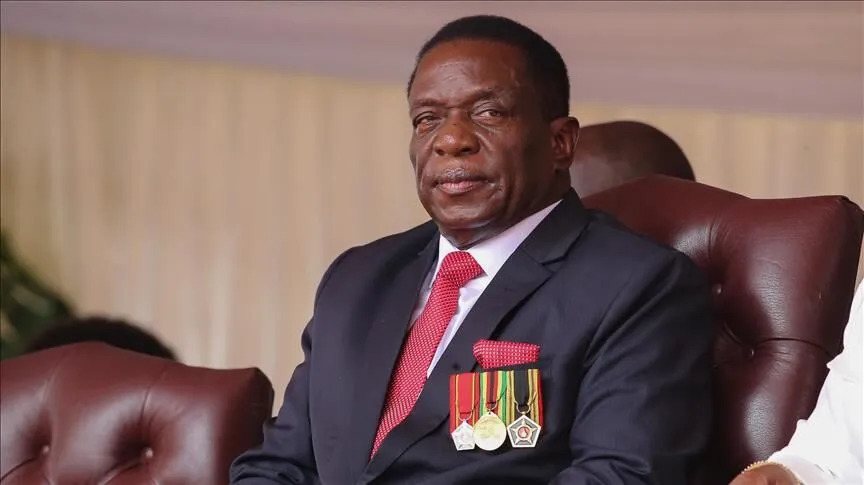
Political analysts have highlighted that the sustained crackdown on pro-democracy activists and opposition party members by President Emmerson Mnangagwa's administration is indicative of his growing apprehension towards a potential electoral loss. Mnangagwa himself has announced his intention to disclose this year's election dates before the month concludes.
In recent developments, Job Sikhala, a Member of Parliament for Zengeza West and a prominent figure in the Citizens Coalition for Change (CCC), alongside Fadzayi Mahere, the party's spokesperson, and Jacob Ngarivhume, the leader of Transform Zimbabwe, have all faced convictions on various charges. Ngarivhume, specifically, is currently serving a four-year prison sentence for inciting public violence, while Mahere managed to evade imprisonment but was required to pay a fine of US$500 for disseminating false information. Sikhala, on the other hand, received a six-month suspended sentence for obstructing the course of justice.
Analysts argue that these convictions expose a President who is determined to suppress the democratic space due to his mounting concerns about an electoral defeat. Rejoice Ngwenya, a political analyst, asserts that "Mnangagwa finds himself on the verge of electoral defeat and is experiencing a sense of panic." Ngwenya further elaborates, stating, "On one hand, he claims to advocate for peaceful elections and aspires to be recognized as a legitimate democrat. Yet, on the other hand, he actively arrests and intimidates opposition figures. This contradictory approach is likely to fuel citizen hostility and diminish confidence in the electoral process."
Dumisani Nkomo, another political analyst, suggests that these convictions may actually embolden citizens to challenge oppression. Nkomo explains, "As oppression intensifies, so does resistance, and we are likely to witness this phenomenon unfold during the elections and subsequently influence their outcome. Every action generates an equal and opposite reaction, and while people might not be able to express their dissent openly, it will be manifested through the ballot box."
Vivid Gwede, an additional analyst, emphasizes that the prosecution and persecution of opponents or critics often serve as a tactic employed by ruling elites lacking confidence in their ability to persuade citizens. Gwede remarks, "Coercion becomes the resort after persuasive strategies fail, but it is also a double-edged sword that ultimately backfires as public outrage and resentment towards such tactics grow over time."
Political analyst Kudakwashe Munemo contends that Mnangagwa's administration has abandoned any pretense of upholding the rule of law. Munemo states, "This demonstrates that the current regime is no longer committed to preserving, promoting, protecting, and fulfilling the fundamental freedoms and rights of citizens. Instead, they are overtly and covertly suppressing any voices that call for justice, which they perceive as a threat to their monopoly on ruling power." Munemo further argues that a comprehensive examination of the upcoming election, taking into account the pre, during, and post-election phases, reveals an inherent bias in favor of the ruling party, Zanu PF.
Last week, Tafadzwa Mugwadi, the director of information for Zanu PF, defended the convictions of opposition politicians, asserting that they had rightfully been found guilty of violating the country's laws.