Moroccan Food: 30 Traditional Dishes to Look For in Morocco
-
 Loading...
 - bethany maria
- 14 Jan 2022
- 471 Views
- 0 Like
- 0 Comment
From a tourism standpoint, Morocco needs little introduction. Year after year, it’s consistently one of the most visited countries in Africa. There are many reasons to visit Morocco but one of the best has to be the food.
If you’re the type of traveler who likes to experience a different culture through its food, then be sure to check out these 30 traditional dishes on your next trip to Morocco.
WHAT IS TRADITIONAL MOROCCAN FOOD?
Moroccan food is a mix of many influences. It’s a blend of Berber, Andalusian, and Mediterranean cuisines with hints of European and sub-Saharan influences.
Morocco produces a wide variety of Mediterranean fruits and vegetables. Wheat is the staple grain while common meats include beef, lamb, goat, mutton, chicken, and seafood.
Savory, sweet, and sour flavors figure prominently in many Moroccan dishes. They’re typically seasoned with preserved lemon, smen (fermented butter), argan oil, olive oil, dried fruits, herbs, and a multitude of different spices.
Like India and Ethiopia, spices are used extensively in Moroccan cuisine. Some of the most commonly used spices in Moroccan cooking include cumin, turmeric, cinnamon, saffron, nutmeg, paprika, ginger, anise, and fenugreek. Ras el hanout, a popular spice blend used in many Moroccan dishes, can be made with 25-40 different spices.
With so many spices and fresh herbs used in Moroccan recipes, it’s impossible to think of Moroccan food without thinking of flavor.
THE BEST MOROCCAN DISHES
This article on Moroccan foods has been organized by category to make it easier to digest. Click on a link to jump to any section of the guide.
1. Starters / Soups / Sides
2. Breads / Pancakes
3. Meat / Poultry / Seafood
4. Desserts / Drinks
STARTERS / SOUPS / SIDES
1. Couscous
What better way to start this Moroccan food guide than with couscous, Morocco’s national dish? It refers to a widely consumed Maghrebi dish of small durum wheat semolina granules. It’s a staple food in many North African countries like Morocco, Tunisia, Algeria, Mauritania, and Libya.
In modern times, the production of couscous is largely mechanized but it’s traditionally made by sprinkling semolina with water and rolling it by hand to form small pellets. The pellets are then sprinkled with flour to keep them separate before being sieved. Any pellets that fall through are rolled again until they achieve the proper size.
As you can imagine, the traditional preparation of couscous is a labor-intensive process. Groups of people would work together to create large batches that would last for several months. They’d form the balls of couscous then leave them out to dry in the sun. When ready for consumption, the couscous would be steamed and rehydrated in a couscousiere until the desired consistency was achieved.
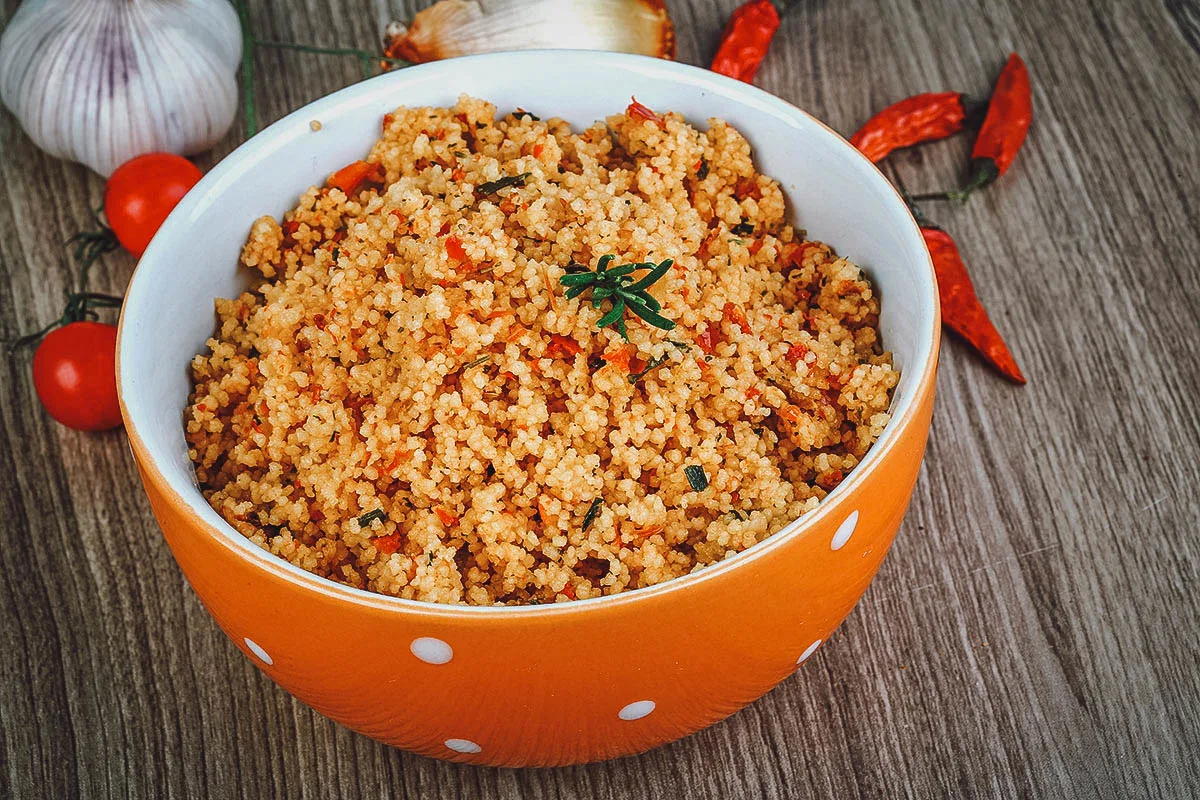
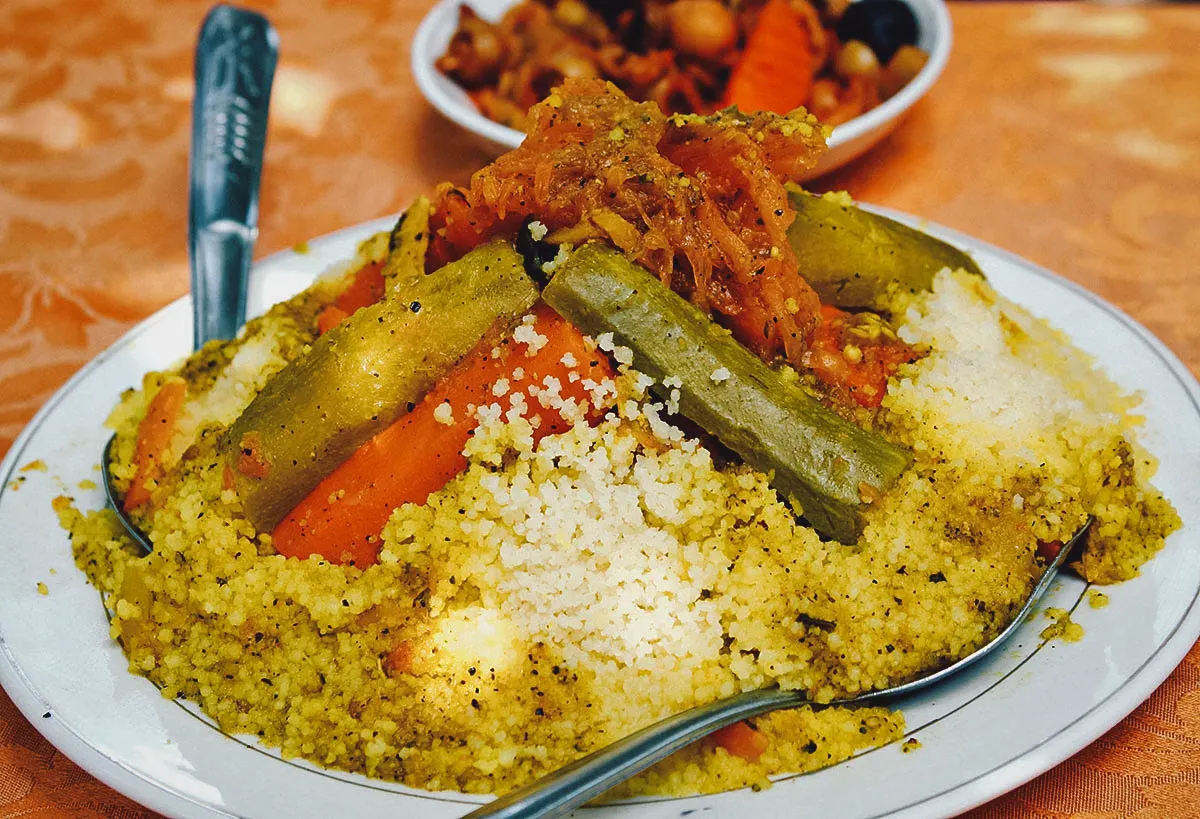
Couscous is typically served in a large earthenware bowl or plate with a meat or vegetable stew spooned on top. It’s a communal affair with diners gathering around the plate to enjoy the meal. You’re meant to eat only the portion of food directly in front of you, so hosts would often place the choicest cuts of meat in front of esteemed guests.
Like Ethiopians, Moroccans traditionally eat using only their right hand. The left hand is used to perform hygienic duties and is thus considered unclean. It’s used only to pick up bread or to pass dishes to other guests.
To eat, a portion of couscous is gathered using the thumb and fingertips and then pressed into a ball and consumed. No matter how good it is, remember to use only your thumb and first two fingers when gathering couscous. In Moroccan culture, using any more is considered gluttony.
Interestingly, Friday is the traditional day to eat couscous in Morocco. Friday is a Muslim holy day and the equivalent to a Sunday in Christian cultures. After prayers, families would sit down to a large meal of couscous and stew made with seven vegetables – eggplant, carrots, zucchini, pumpkin, parsnips, tomatoes, and cabbage.
2. Shakshuka
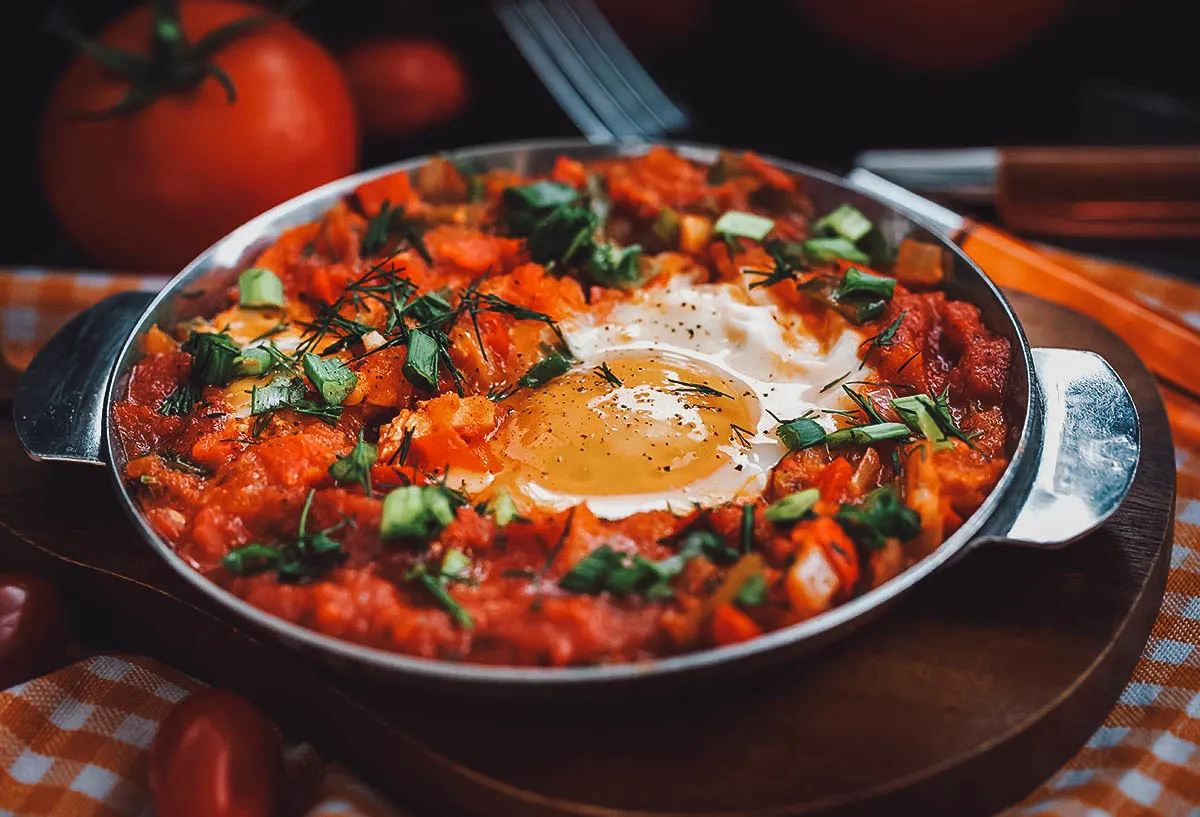
Shakshuka (or shakshouka) refers to a popular Mediterranean breakfast dish of poached eggs cooked in a tomato sauce with peppers, garlic, onions, olive oil, and spices. Popular throughout North Africa and the Middle East, its name translates to “mixture” and is believed to be either Tunisian or Yemeni in origin.
Shakshuka is a one-pan dish that can be prepared in many ways. It’s typically made with poached eggs though it can be made with scrambled eggs as well similar to a Turkish menemen. Recipes vary but common spices include ground coriander, paprika, cumin, and cayenne pepper. Some versions may include other ingredients as well like preserved lemon, sheep milk cheese, olives, harissa, sausage, and minced lamb.
Shakshuka is typically served in the pan in which it was cooked, often with crusty Moroccan bread which is meant to be dipped into the tomato sauce and runny poached egg.
3. Taktouka
Similar to shakshuka, taktouka refers to a Moroccan salad made with tomatoes, roasted bell peppers, olive oil, paprika, and fresh parsley. It’s essentially a less saucy and milder-tasting version of shakshuka made without eggs.
Unlike shakshuka that’s typically enjoyed for breakfast, taktouka is served as a side dish to grilled meat and fish dishes or as a dip with bread.
4. Zaalouk
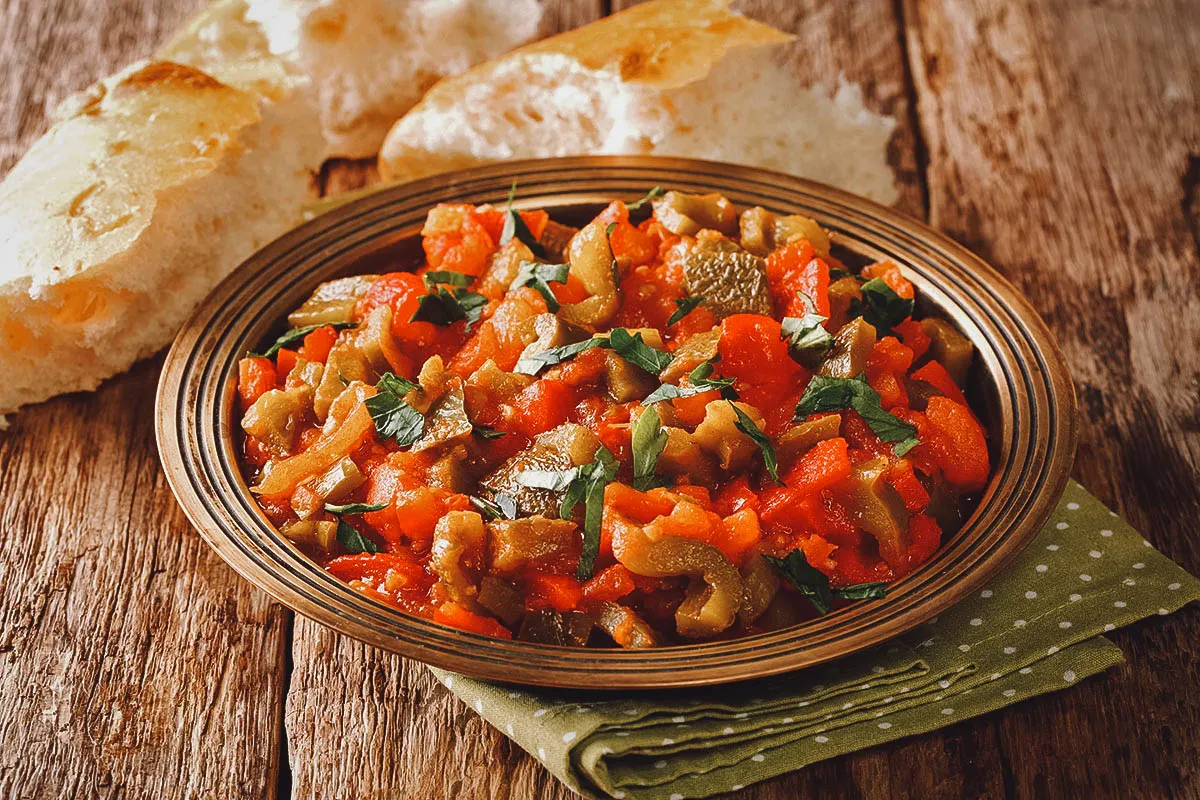
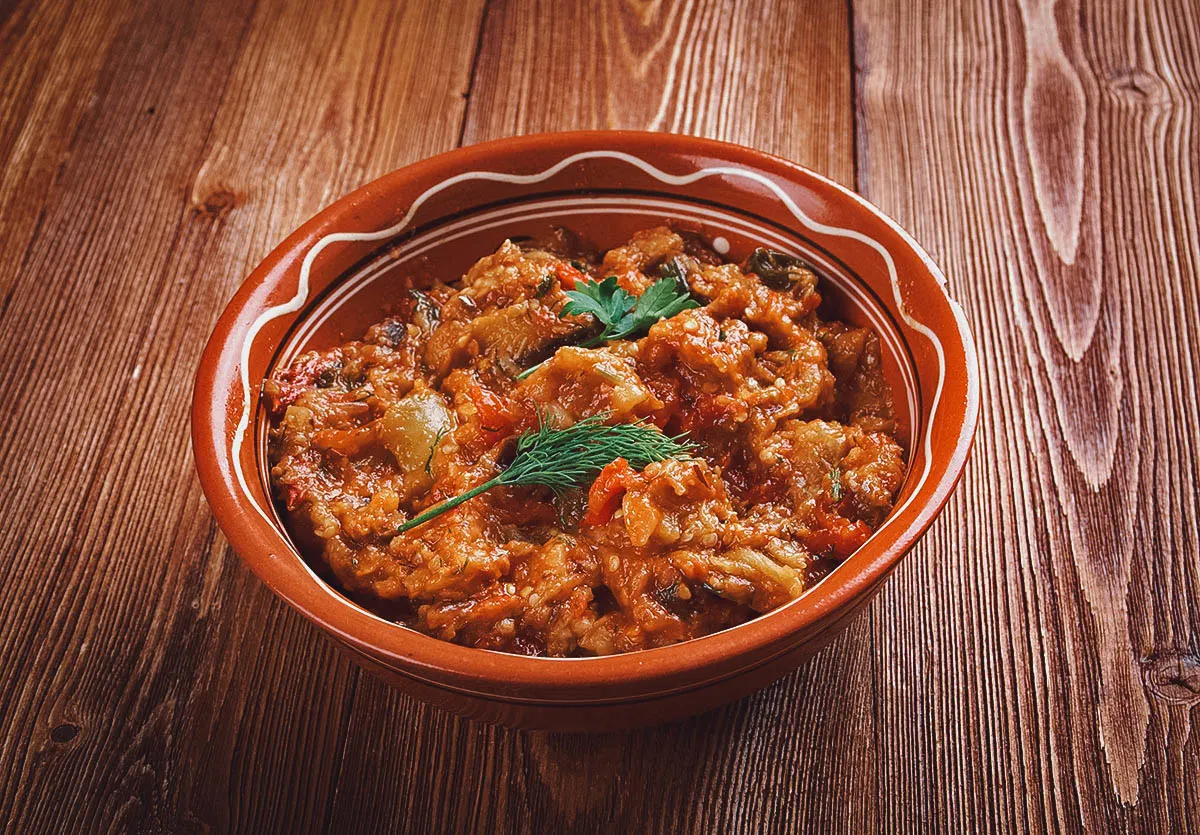
Zaalouk is a popular Moroccan dip made with eggplant, fresh tomatoes, garlic, olive oil, and spices and herbs like cumin, paprika, parsley, and cilantro. Like taktouka, it’s typically served as a dip with crusty bread or as a side dish to Moroccan fish, chicken, or meat dishes.
Preparations for zaalouk vary but the best versions are made with roasted eggplant. It adds a wonderful smokiness and another layer of flavor to the dish.
5. Maakouda
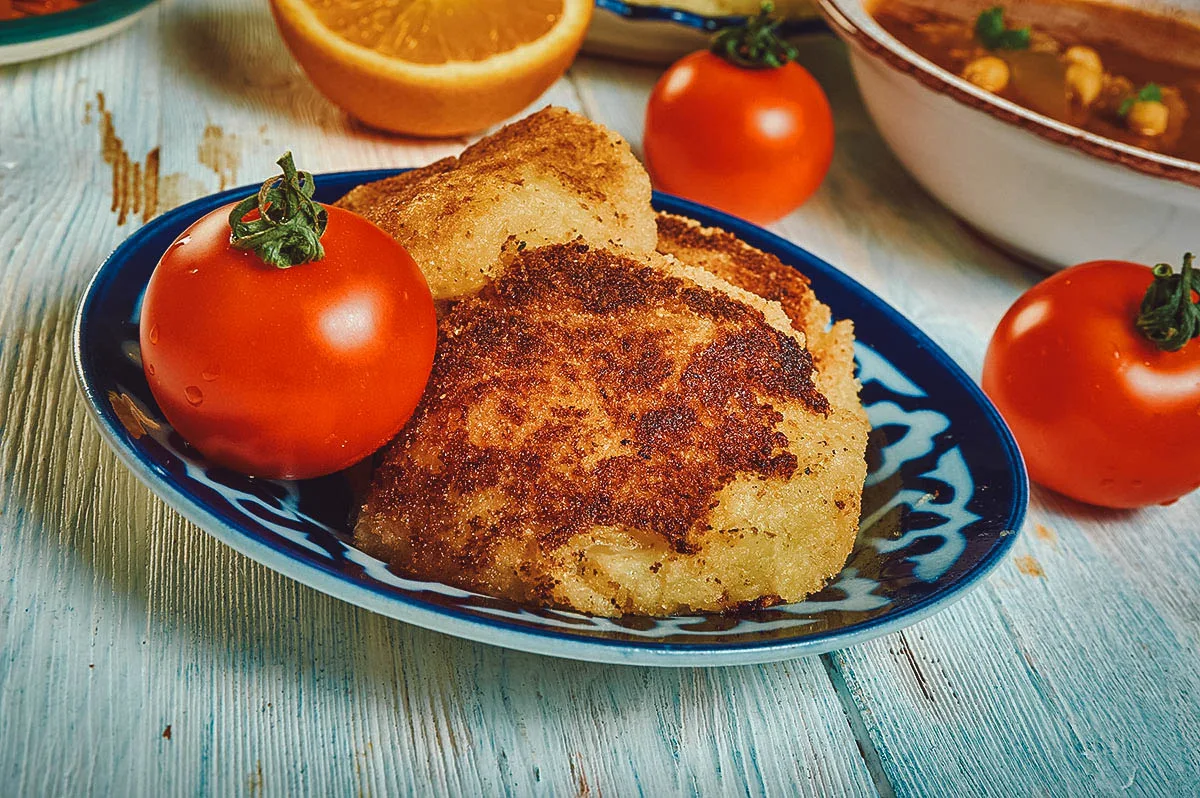
Maakouda refers to a type of potato fritter made with deep-fried mashed potatoes mixed with sautéed onions, garlic, cumin, and cilantro. It’s originally an Algerian dish that’s become popular in Morocco and Tunisia as well.
Maakouda can be enjoyed in many ways. It can be eaten as an appetizer, as a side dish, or as a filling for sandwiches. It’s often served as street food in Morocco and becomes especially popular during the month of Ramadan.
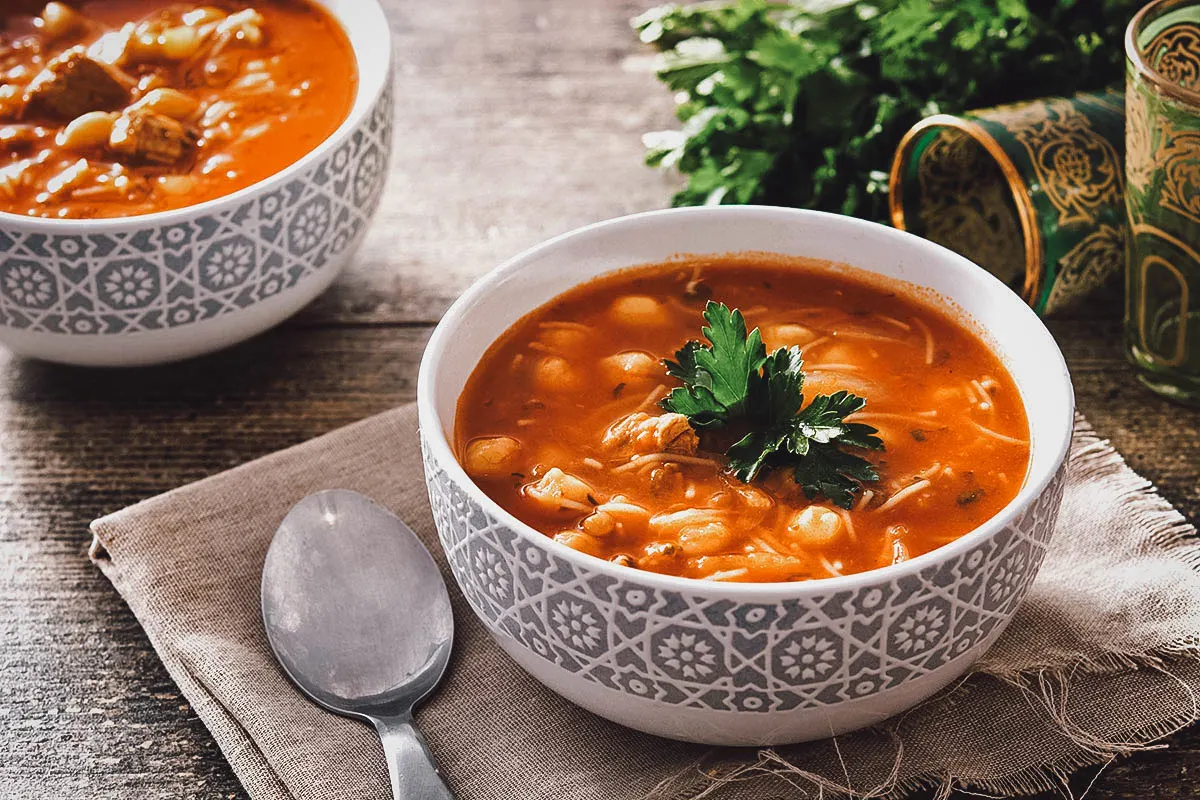
6. Harira
Harira is a zesty tomato-based lentil and chickpea soup popular in the cuisines of Morocco and Algeria. It can be consumed at any time of the year though it becomes especially popular during Ramadan when it’s served to break the fast.
Recipes for harira vary from cook to cook but it’s typically made with tomatoes, chickpeas, lentils, onions, rice (or vermicelli), eggs, flour, herbs, and spices. The name harira is derived from the Arabic word for “silk” and refers to the consistency of the soup after it’s been thickened with eggs or a tedouira mixture of flour and water.
The stock can be flavored with beef, lamb, or chicken, though these ingredients can be omitted altogether to make a vegetarian version of the soup. Rice or vermicelli are often added as fillers while common seasonings include cilantro, parsley, ginger, cinnamon, and turmeric.
As described, harira is one of the main dishes served for iftar, the evening meal that breaks the fast. Like chebakia (Moroccan pastry), it’s served almost everyday in every Moroccan household during the month of Ramadan.