Morocco Calls for Structural Reforms, Peace in Sahara, Sahel
-
 Loading...
 - Jerome Makris
- 31 Mar 2022
- 432 Views
- 0 Like
- 0 Comment
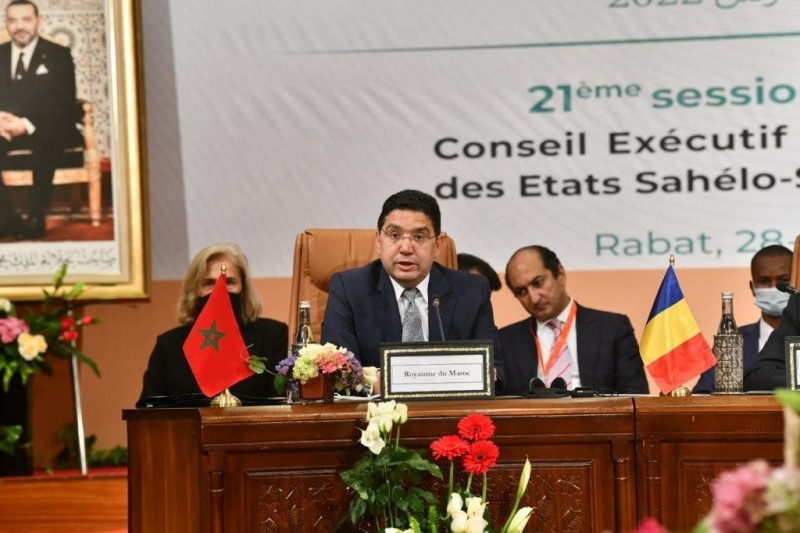
Morocco’s Minister of Foreign Affairs, African Cooperation, and Moroccan Expatriates Nasser Bourita has welcomed new reforms to advance economic development and provide stability to the Community of Sahel-Saharan States (CEN-SAD).
Rabat - Morocco’s Minister of Foreign Affairs, African Cooperation, and Moroccan Expatriates Nasser Bourita has welcomed new reforms to advance economic development and provide stability to the Community of Sahel-Saharan States (CEN-SAD).
The reforms are part of measures, introduced by Saharan and Sahel heads of states and governments in April 2019, aimed at advancing economic and sustainable development, as well as preserving peace and stability in the region.
The new reforms seek to mobilize financial and human resources across the Sahel and Sahara to counter challenges facing the region such as terrorism, the president of the CEN-SAD executive council, Cherif Mahamat Zene said on Tuesday.
Bourita proposed setting up an economic forum for CEN-SAD during the 21st ordinary session of the community's Executive Council. The two-day session started on March 28 in Rabat.
It would operate as “a platform for exchange and cooperation between economic operators in our region,” he explained.
The forum would underpin the long-standing CEN-SAD mission to assist member-states in implementing socio-economic development projects and creating a regional free trade area in Sahel and Sahara.
CENS-SAD’s session adopted the reformative action plan for 2022-2026.
Morocco addresses terrorism in the region
Moroccan chief diplomat noted, in agreement with the action plan for the region, the need to establish new bodies within the organization.
This would allow authorities to restructure existing institutions to address pressing issues across the region such as terrorism and sustainable development.
The institutions in need of restructuring include the Committee of Ambassadors and Permanent Representatives, the Permanent Council for Sustainable Development, the Permanent Council for Peace and Security, and the Center for Combating Terrorism. Read More...