Music schools and success. "There have been no retentions here for 20 years"

Two of the three schools that lead the ranking of educational establishments that take less than 100 exams are music schools. The data were collected by Renascença , which, in the analysis of the results by school, distinguishes the educational establishments that take more and less tests.
In the list of those who take the fewest exams, the Academia de Música de Santa Cecília, in Lisbon, had the best results, with an average of 15.66, followed by Colégio dos Cedros, in Vila Nova de Gaia.
After these two private schools, in third place comes the public school Conservatory of Music Calouste Gulbenkian, in Braga, which reached an average of 15.11.
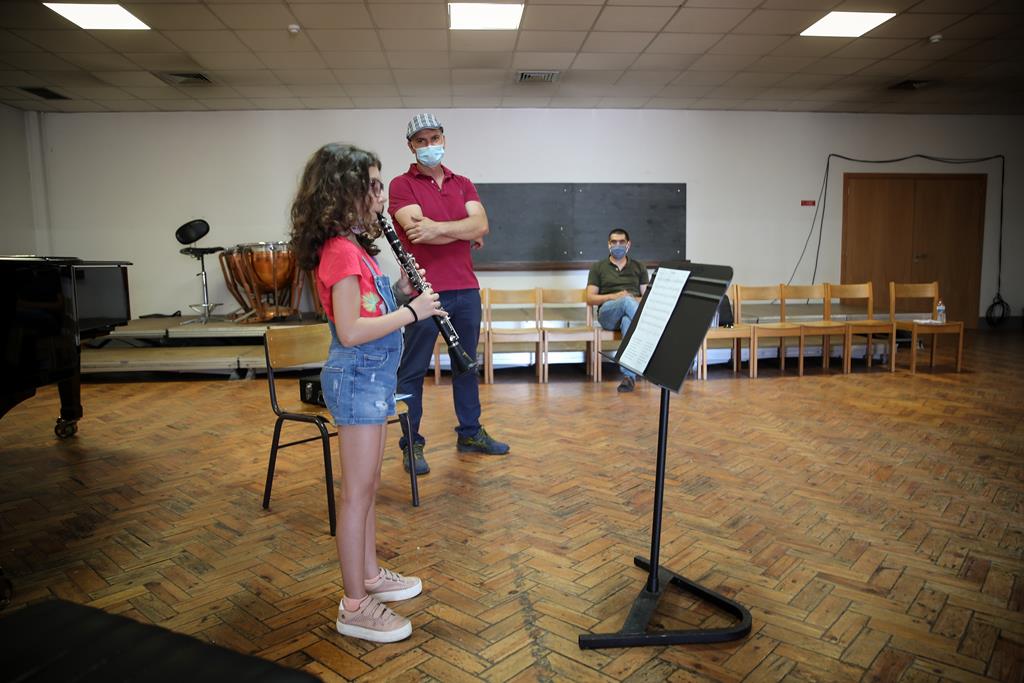
Asked if the teaching of music can explain the good school results, the director of the Conservatory Ana Maria Caldeira admits that it can be a justification, giving as an example the ensemble classes.
“An orchestral practice, which they have from the 5th grade onwards, requires a great deal of concentration, they know that silence is sacred, they have to know when they enter. They also have to be able to memorize when they play their solo pieces”, he exemplifies.
About the results of the ranking, Ana Maria Caldeira is happy, but says that the real achievement of that school community translates into the lack of retentions.
School... the second home
“No one has been held back for at least 20 years and I know what I'm talking about, as I've been here for 37”, he says.
“There are few students, the school is small, we know practically all the students, because they enter the 1st year and are practically until the 9th year and some continue to the 12th, this is literally their second home. When they are small and start to have some weaknesses in some subject, the school is immediately very attentive and adopts strategies, so that no one is ever left behind ”, he explains.
In Lisbon, we spoke to the director of the Academia de Música de Santa Cecília, a long-standing private school in the capital, founded in 1964. Rui Paiva agrees with Ana Maria Caldeira, considering that specialized artistic education “develops a set of skills and competences that are later reflected not only in school results, but also in collaborative work, in the development of autonomy, of critical sense”. Read More…