Mutant Blue Frog Hops into Wildlife Sanctuary Workshop
-
 Loading...
 - Willow Cook
- 19 Jul 2024
- 46 Views
- 0 Like
- 0 Comment
Researchers in Australia recently encountered a remarkable and rare find: a magnificent tree frog (Litoria splendida) exhibiting a striking blue skin coloration, a result of a genetic mutation known as axanthism. This condition suppresses the yellow pigments typically found in these frogs, giving them their usual green appearance.
Discovery and Identification
The unique amphibian was discovered by land managers at a wildlife sanctuary in Kimberley, Western Australia. The blue frog made its presence known by hopping into their workshop and perching on a bench, seemingly observing the humans around it. The land managers captured photos of the frog and sent them to Jake Barker, a conservation and ecology intern with the Australian Wildlife Conservancy (AWC).
"Seeing the picture of the frog, it definitely elevated my heart rate," Barker told ABC News. "It was so cool, it was a really exciting and special thing."
Characteristics of the Magnificent Tree Frog
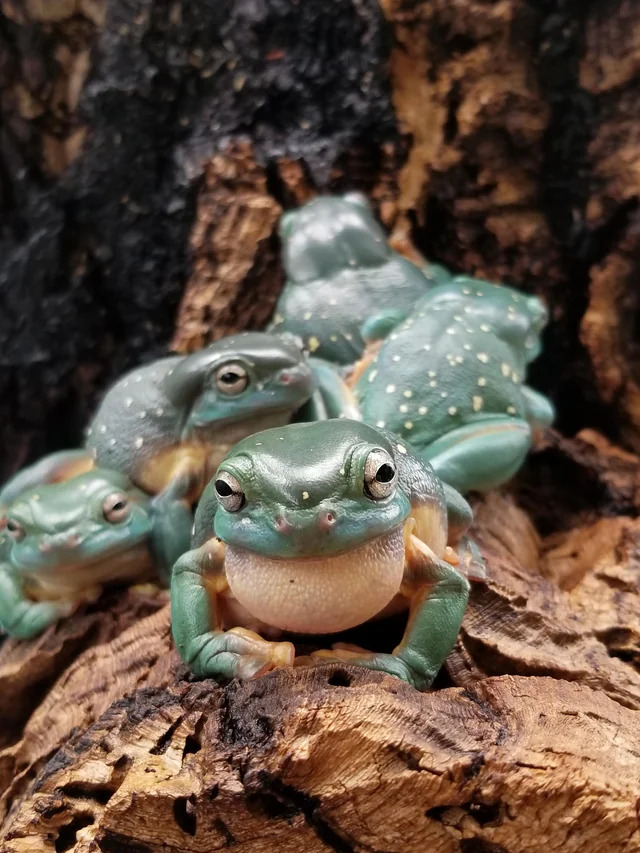
Magnificent tree frogs are typically green with white spots on their backs. They can grow to around 4 inches (10 centimeters) in length and are distinguished by a notable poison gland on the top of their heads. This gland produces a bitter-tasting toxin that serves as a defense mechanism against predators, including larger amphibians, reptiles, birds, and mammals.
The frogs are known to live for up to 20 years and are usually found in areas of low rainfall across the northern Kimberley region and nearby Northern Territory.
The axanthism mutation, which results in the suppression of yellow pigments, is extremely rare in tree frogs. This blue coloration is not only visually striking but also highlights the genetic diversity and potential for unusual variations within amphibian populations.
The discovery of the blue magnificent tree frog is a rare and exciting event for researchers and conservationists. It underscores the importance of ongoing wildlife monitoring and conservation efforts to protect and study the diverse species that inhabit Australia’s unique ecosystems.