My Venice
-
 Loading...
 - Brielle Durand
- 04 May 2022
- 319 Views
- 0 Like
- 0 Comment
Venice is bliss for wine lovers. Driving is out of the question for a start, and the day is traditionally punctuated by breaks at the city’s many bacari (wine bars) for a small glass with cicchetti, the bite-sized snacks that Venetians do so well. The wine choice is largely local, popular varieties including the fruity Manzoni Bianco, dry Tai (also known as Friulano or Sauvignon Vert) and juicy red Raboso. The role of the landlord, or oste, is even more central here than elsewhere – and be they brusque, friendly or eccentric, they’re sure to leave an impression.
Together with its outlying islands, Venice has a deeply ingrained winemaking history, and grapes continue to grow in gardens and courtyards. You can even eat under vines at restaurants such as Corte Sconta (see No3, below) and Pizzeria alla Strega, where a rare Bacò vine provides a courtyard canopy.
Twelve years ago, the Consorzio Vini Venezia launched a project to safeguard the city’s forgotten vines, unearthing an incredible 70 varieties, 18 of which now grow in a vineyard behind the 17th-century Carmelitani Scalzi church. The vines are part of the walled Giardino Mistico, laid out in seven areas representing the order’s teachings and also home to olives, woodland and herbs such as Melissa moldavica, used for a herbal tonic made here since 1710. The vines include six types of Malvasia, once so important locally that the most prestigious wine shops of 16th-century Venice were known as malvasie, specialising in wines from Greece.
Malvasia Istriana, together with Glera, now grows at another vineyard, the city’s oldest, bequeathed in 1253 to Franciscans who built their San Francesco della Vigna church around it. Since 2019, the vineyard has been owned by the Santa Margherita group (famed for its Prosecco and Pinot Grigio), which is also restoring the original chapel. The first wines should be released in 2023.
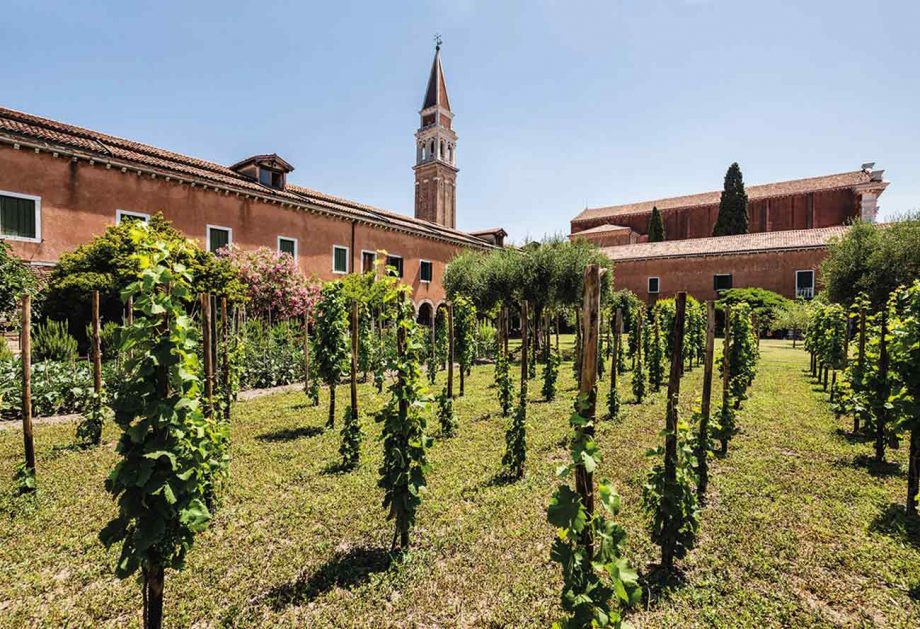
No stay in Venice is complete without a trip to the islands, especially the trio where the lagoon’s first, 5th-century settlers lived: Torcello, home to the famous Locanda Cipriani and a Byzantine basilica with glorious mosaics; Burano with its brightly painted houses; and peaceful Mazzorbo linked by bridge to Burano.
It’s here on Mazzorbo that the Bisol family runs the lovely Venissa wine resort (see below). Surrounded by sea, with a clever drainage system to protect the vines, the resort’s walled vineyard of traditional but rare Dorona vines produces two intense, deep-golden wines made with extended skin contact, including Venissa, sold in 50cl bottles with gold-leaf labels (2014, £150 Fine & Rare).
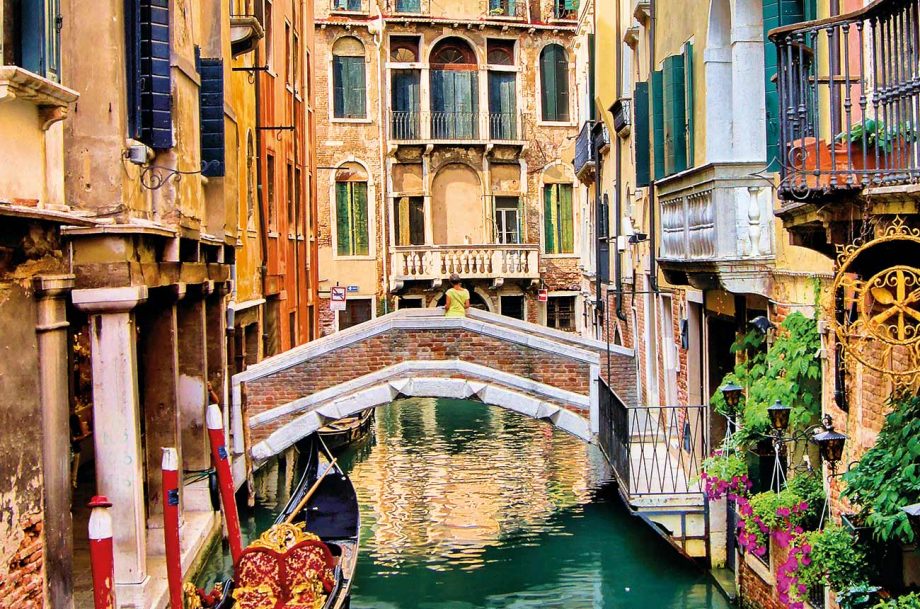
Astonishing at any time of year, Venice’s charm is only enhanced by winter mists when the welcoming glow of cosy interiors becomes magical, even more so during carnival (next one, 11-21 February 2023), when curiously costumed figures are a regular sight. Wander the city, explore the quiet side-canals and embrace the voluptuous Venetian hospitality when you come upon another wonderful bacaro.
My top 10 in Venice
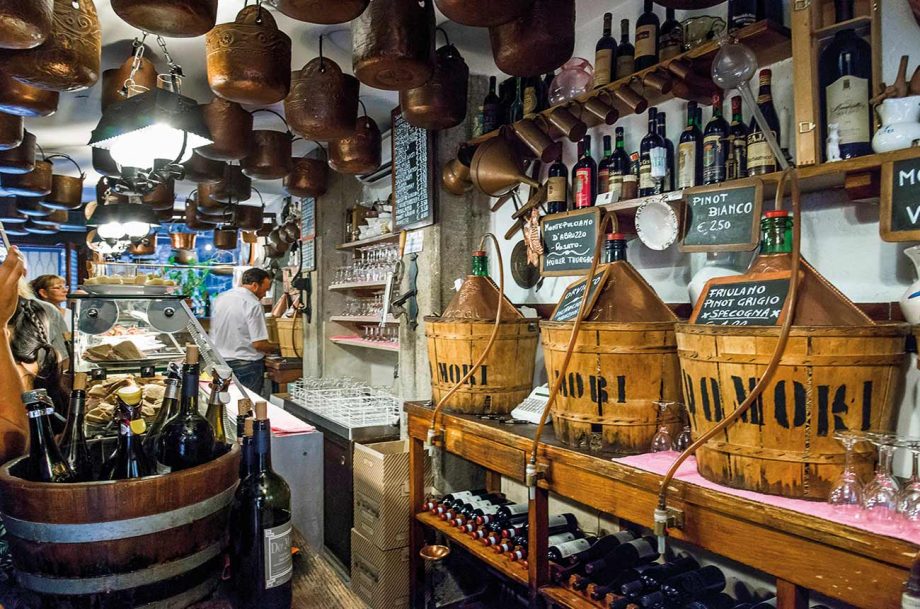
1. Cantina Do Mori
Step back in time at Venice’s oldest bacaro, dating from 1462. Order a local white, such as Manzoni Bianco, Verdiso or Tai, at the long wooden bar and perch on a stool to ponder which of the array of cicchetti bites to try next: perhaps the typical creamy baccalaÌ€ mantecato cod with polenta, the baby octopus or salami crostini. Sestiere San Polo 429
2. Cantinone già Schiavi
One of Venice’s best-loved historical bacari is also a well-stocked wine shop specialising in bottles from northeastern Italy. Join the locals for a glass and selection of delicious cicchetti such as octopus and celery, cuttlefish and samphire or the traditional sarde in saor (marinated sardines). Standing room only, but you can perch out on the canalside, not far from the San Trovaso gondola boatyard. Read More...