Nice sunny days can grow into heat waves -- and wildfires: summer weather is stalling
-
 Loading...
 - WildJupiter Rave
- 20 Aug 2021
- 1556 Views
- 0 Like
- 0 Comment
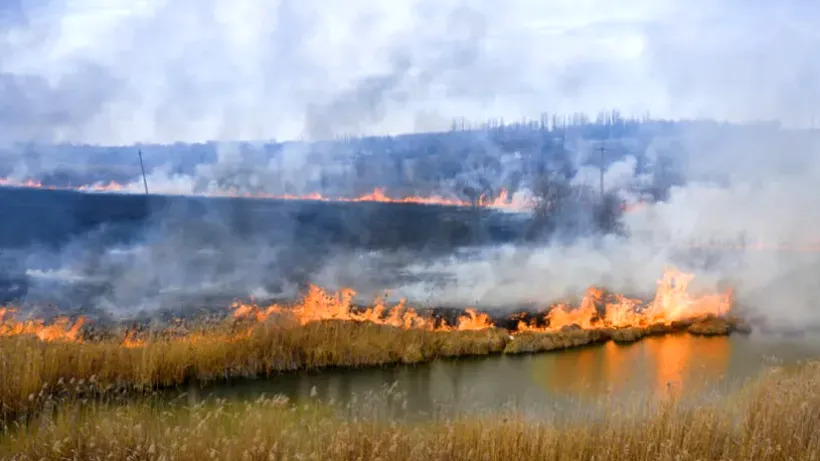
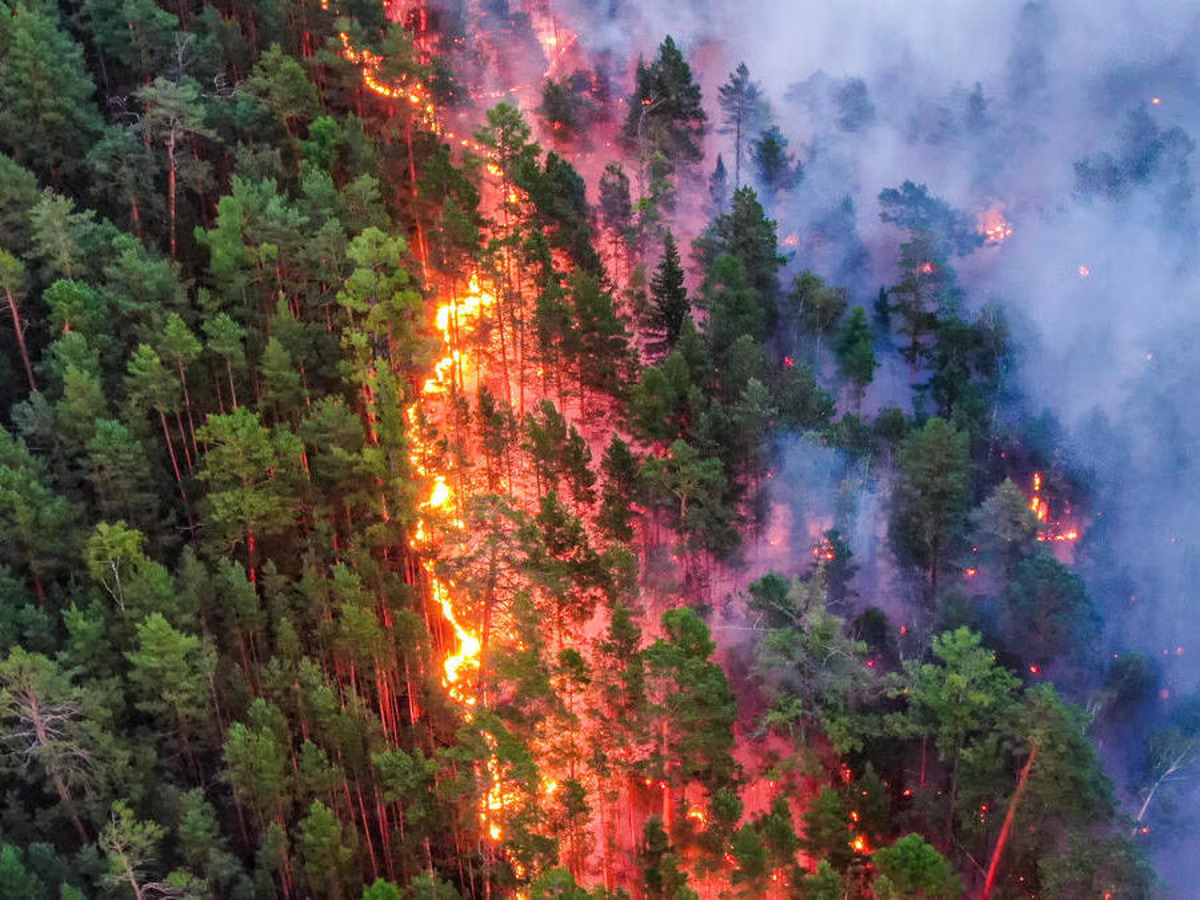
Be it heavy downpours or super-hot spells, summer weather becomes more persistent in North America, Europe and parts of Asia. When those conditions stall for several days or weeks, they can turn into extremes: heatwaves resulting in droughts, health risks and wildfires; or relentless rainfall resulting in floods. A team of scientists now presents the first comprehensive review of research on summer weather stalling focusing on the influence of the disproportionally strong warming of the Arctic as caused by greenhouse-gas emissions from burning fossil fuels. Evidence is mounting, they show, that we likely meddle with circulation patterns high up in the sky. These are affecting, in turn, regional and local weather patterns -- with sometimes disastrous effects on the ground. This has been the case with the 2016 wildfire in Canada, another team of scientists show in a second study.
"Giant airstreams encircle our globe in the upper troposphere -- we call them planetary waves," explains Hans Joachim Schellnhuber, Director of the Potsdam Institute for Climate Impact Research (PIK) and co-author of the second paper. "Now evidence is mounting that humanity is messing with these enormous winds. Fueled by human-made greenhouse-gas emissions, global warming is probably distorting the natural patterns." Usually the waves, conveying chains of high- and low-pressure domains, travel eastwards between the equator and the North Pole. "Yet when they get trapped due to a subtle resonance mechanism," says Schellnhuber, "they slow down so the weather in a given region gets stuck. Rains can grow into floods, sunny days into heat waves, and tinder-dry conditions into wildfires."
Investigating the Arctic Factor and connecting the dots
"While it might not sound so bad to have more prolonged sunny episodes in summer, this is in fact a major climate risk," says Dim Coumou from the Potsdam Institute for Climate Impact Research (PIK) and Vrije Universiteit Amsterdam, lead-author of the review paper and co-author of the wildfire case study. "We have rising temperatures due to human-caused global warming which intensifies heat waves and heavy rainfall, and on top of that we could get dynamical changes that make weather extremes even stronger -- this is quite worrying." This summer is an impressive example of how stalling weather can impact societies: persistent hot and dry conditions in Western Europe, Russia and parts of the US threaten cereal yields in these breadbaskets.
Tons of studies have appeared on this topic in recent years, sometimes with seemingly conflicting results. For the paper now published in Nature Communications, an international team of scientists set out to review the existing research and tried to connect the dots, with a focus on the Arctic factor. Under global warming, the Arctic warms more than the rest of the Northern hemisphere. This reduces the temperature difference between the North Pole and the equator, yet this very difference is a main driving force for the airstreams. "There are many studies now, and they point to a number of factors that could contribute to increased airstream stalling in the mid-latitudes -- besides Arctic warming, there's also the possibility of climate-change-induced shifting of the storm tracks, as well as changes in the tropical monsoons," says Simon Wang from Utah State University in the US, a co-author of the review paper.
"Under global warming, the Indian summer monsoon rainfall will likely intensify and this will also influence the global airstreams and might ultimately contribute to more stalling weather patterns. All of these mechanisms do not work in isolation but interact," says Wang. "There is strong evidence that winds associated with summer weather systems are weakening and this can interact with so-called amplified quasi-stationary waves. These combined effects point towards more persistent weather patterns, and hence more extreme weather."
The case of the Canadian wildfire disaster
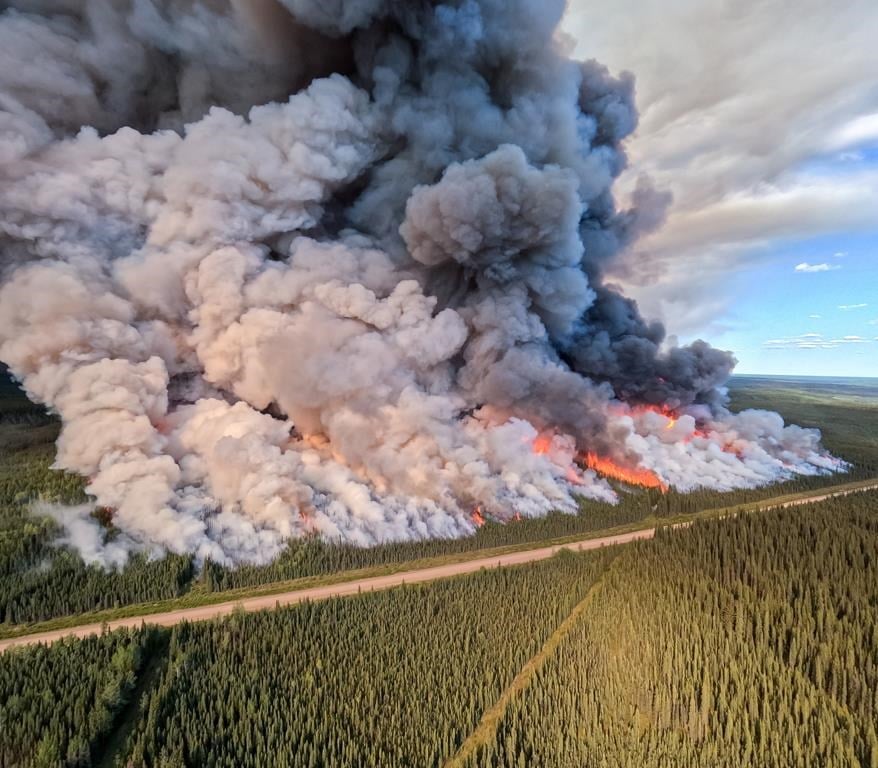
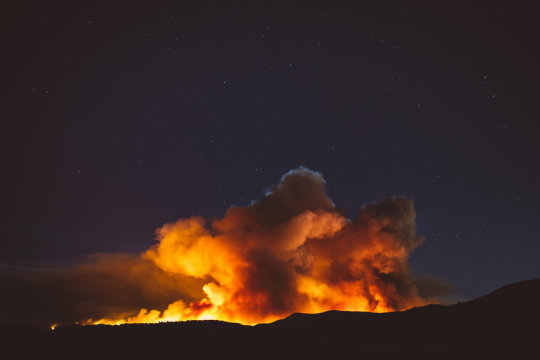
The wildfire in Canada's Alberta region in 2016 is one stark example for the potentially disastrous impact of planetary-waves slow-down and the resulting summer-weather stalling. In a study now published in Scientific Reports, the other research team shows that indeed the blaze has been preceded by the trapping of a specific kind of airstreams in the region. In combination with a very strong El-Nino event this favored unusually dry and high-temperature conditions on the ground, entailing an increased fire hazard here. It took two months before the officials eventually could declare the fire to be under control. This was the costliest disaster in Canadian history with total damages reaching 4.7 billion Canadian Dollars.
"Clearly, the planetary wave pattern wasn't the only cause for the fire -- yet it was an additional important factor triggering a deplorable disaster," says Vladimir Petoukhov from PIK, lead-author of the case study. "In fact, our analysis reveals that beyond that single event, actually from the 1980s on, planetary waves were a significant factor for wildfire risks in the region. Since it is possible to detect the wave patterns with a relatively long lead-time of ten days, we hope that our findings can help forest managers and fire forecasters in the future."
A phenomenon that sounds funny but isn't: "extreme extremes"
"Computer simulations generally support the observations and our theoretical understanding of the processes, so this seems pretty robust," concludes Coumou. "However, the observed changes are typically more pronounced than those seen in climate models." So either the simulations are too conservative, or the observed changes are strongly influenced by natural variability. "Our review aims at identifying knowledge gaps and ways forward for future research," says Coumou. "So there's still a lot to do, including machine learning and the use of big data. While we do not have certainty, all in all the state of research indicates that changes in airstreams can, together with other factors, lead to a phenomenon that sounds funny but isn't: extreme extremes."