Nikos Kazantzakis: The Greatest Greek Writer of the 20th Century
-
 Loading...
 - Bianca Palumbo
- 22 Feb 2023
- 55 Views
- 0 Like
- 0 Comment
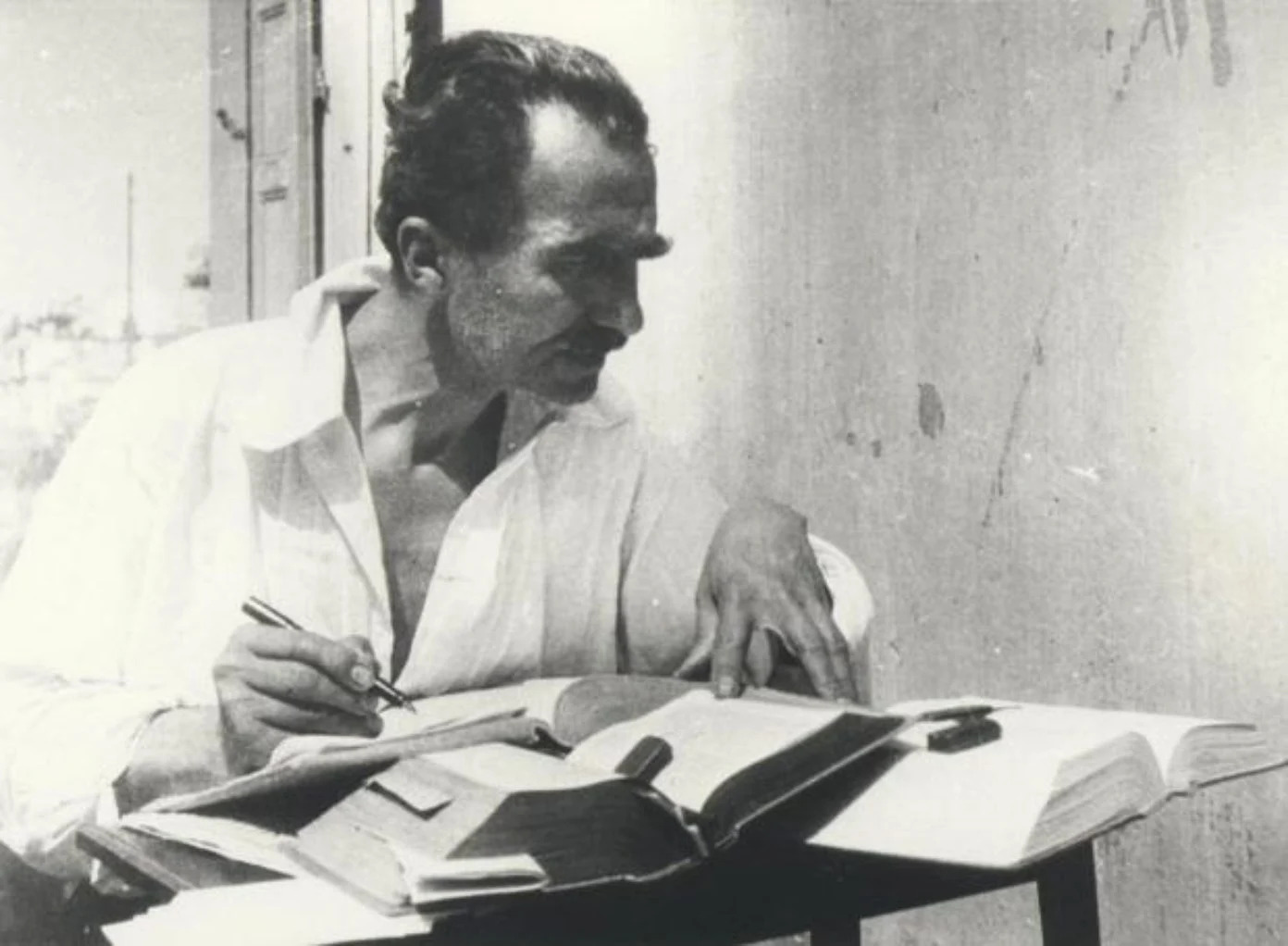
Nikos Kazantzakis is considered by many the greatest Greek writer of the 20th century, and his books have been translated more so than any of his contemporaries.
The Cretan man’s literary genius was recognized posthumously after his book Zorba the Greek was created into an award winning film in 1964.
If Kazantzakis’ work is to be described in one word, it would be a Greek word, of course, and that is pathos.
The writing of the great writer is passionate, raw, rebellious, unpredictable, and often mystical—much like Crete itself.
His life was as exciting as his books. He was a novelist, poet, playwright, journalist, philosopher, and politician, and he lived in several European cities.
Early life of the great Cretan
Nikos Kazantzakis was born on February 18, 1883 in Heraklion, Crete, which at that time was still part of the Ottoman Empire.
His father, Michalis, was a trader in agricultural products and came from Varvaroi, where the Kazantzakis Museum is located today.
After completing his high school studies in his hometown and Naxos in 1902, he moved to Athens to study Law.
In 1906, he appeared for the first time in Greek letters with the essay “The Disease of the Century” and his first novel Ofis and Krinos.
In 1907, Kazantzakis began his postgraduate studies in law in Paris. At the same time, he attended lectures by existentialist philosopher Henri Bergson and studied Friedrich Nietzsche’s work. Both philosophers exerted a tremendous influence on him for the rest of his life.
In the same year, he began his journalistic career and became interested in Freemasonry; he was soon to be initiated into that group.
In 1909, upon his return to Greece, Kazantzakis published his doctoral dissertation, called “Frederick Nietzsche in the Philosophy of Law and the State.”
At the time, he was earning a living translating books and lived with his compatriot intellectual, Galatia Alexiou, whom he later married. Read More…