Nine female Polish writers you must read before you die
-
 Loading...
 - Hayley Baker
- 19 Apr 2022
- 329 Views
- 0 Like
- 0 Comment
Discussions on Polish literature in the English-speaking world have largely focused on male writers. A recent article published by Notes from Poland, which looked at the nine Polish works to feature in an international list of books “you must read before you die” was no exception: all nine were written by men.
This is partly because for a long time the Polish voice has been imagined as tantamount to the fight for national liberation, which, as Maria Janion noted, has been predominantly male. My alternative selection gives a rundown of exciting Polish female writers encompassing a variety of genres, offering snapshots of women’s voices throughout Poland’s complex history.
The majority of them have been translated into English, but two have not. This reflects the translation gap in comparison to texts written by Polish male writers, but is also meant to induce curiosity, which maybe, just maybe, will lead someone to consider translating more Polish works.
Limitations of space mean that some worthy writers had to be left out. I decided to spotlight the authors who may be less known in English-language contexts: Zuzanna Ginczanka over Nobel laureate poet Wisława Szymborska, for example.
Nevertheless, as a good Polish saying says, rules exist to be broken, or at least stretched. So, while I cannot name all the writers I wish, I would like to dedicate this article to other brilliant female authors: Gabriela Zapolska, Zofia Posmysz, Manuela Gretkowska, Inga Iwasiów, Martyna Majok, Maria DÄ…browska, MaÅ‚gorzata Musierowicz, Joanna Chmielewska, Maria Pawlikowska-Jasnorzewska, StanisÅ‚awa Przybyszewska, Maria Konopnicka, Brygida Helbig, Halina PoÅ›wiatowska, Zofia Stanecka, Irena Tuwim… Google them.
A Transaction, or an Account of the Entire Life of an Orphan Girl by way of Plaintful Threnodies in the Year 1685, by Anna Stanisławska, 1685 (a novel in verse)
Anna StanisÅ‚awska’s autobiographical work is an account of her life: love, oppression, and personal struggle, but also her encounter with and perspective on Polish history’s most important events and figures.
It is also a story of female empowerment. StanisÅ‚awska tells the story of her oppressive marriage to Jan Kazimierz Warszycki (the castellan – a territorial official – of Kraków) and how she – with royal intervention – ends it, regaining her life, dignity, and happiness.
It is available in English in a brilliant translation by Barry Keane (with commentary) which conveys the rawness and honesty of StanisÅ‚awska’s voice. Lines like: “Loyalty is no longer due / When you’ve been beaten black and blue!” could be easily used on a #metoo protest sign.
Poetry by Zuzanna Ginczanka, 1930s/1940s
Zuzanna Ginczanka, born in Kyiv, was a multilingual Polish-Jewish artist of the interwar period. Her poetry explores female Polish-Jewish physical, physiological, and sensual experience.
The most famous of her poems Non omnis moriar – here in translation by Nancy Kassell and Anita Safran – was probably written in 1942 after she was denounced by Zofia Chominowa, a caretaker of the house where she was hiding, and arrested by the Nazi Germans.
Non omnis moriar, used as evidence in a court case against Chominowa after the war, is a deeply ironic and bitter response to Holocaust, but also to her own struggles to be recognised as a Polish poet.
Despite professional acclaim from her contemporaries, Ginczanka was trapped in antisemitic stereotypes. She escaped the 1942 arrest, but was killed in Kraków in 1944 by the Germans. Largely ignored until the 1990s, her poetry gained attention thanks to Izolda Kiec and Agata Araszkiewicz.
Some of her works are available in English. You can also immerse yourself in watching and listening to the rhythms of a passage from her poem Miłość (Love) performed by the ensemble of Teatr Narodowy (Polish National Theatre) in Warsaw in Polish and Polish Sign Language.
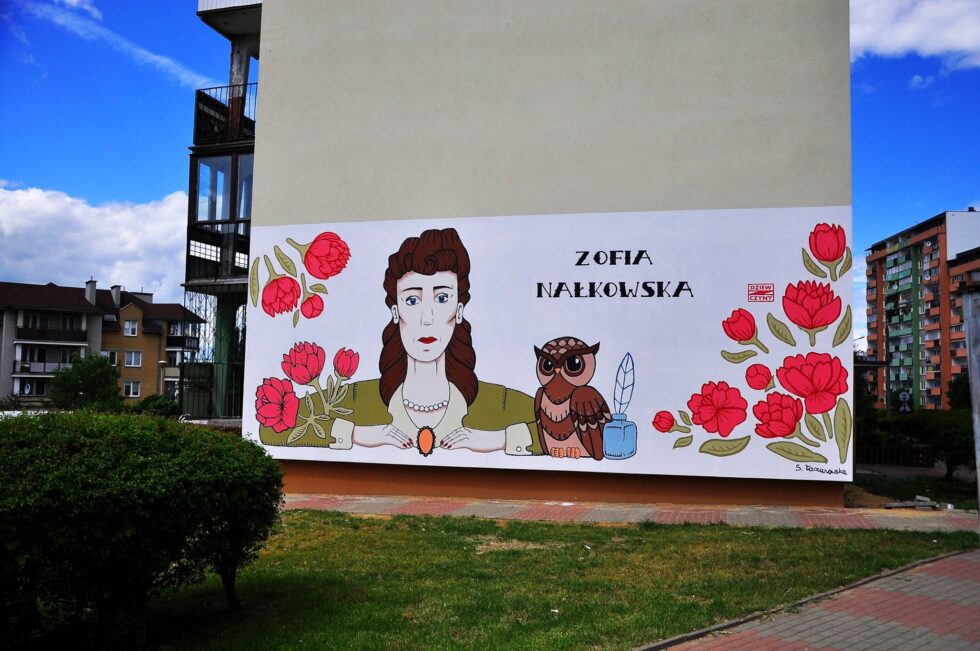
Medallions by Zofia Nałkowska, 1946 (novel in prose)
This collection of eight short stories, translated into English by Diana Kuprel, is accompanied by a powerful and famous motto: “Ludzie ludziom zgotowali ten los” (People made this fate for other people).
Based on NaÅ‚kowska’s participation in the Polish investigations of the Nazi crimes and on witnesses’ testimonies, Medallions gives an account of events during World War II in Poland. The horrifying facts are contrasted by NaÅ‚kowska’s distanced, documentary-like, language.
“The Adults and Children of Auschwitz” is a must-read for anyone trying to understand the trauma of World War II.
Foreign Bodies by Julia Holewińska, 2010 (a play in prose that sometimes rhymes)
Julia HolewiÅ„ska’s play – the recipient of the prestigious Gdynia Drama Award – is set in pre-1989 and post-1989 Poland, alternating between both times. It tells the story of Adam, a hero of the Solidarity movement.
After the fall of communism in 1989, Adam changes his sex and becomes Ewa. However, Ewa is recognised neither by her family nor Solidarity. Ewa as Adam is married and has a son, but he refuses to call her a mother.
HolewiÅ„ska’s play explore transgenderism and transsexualism and, in broader sense, aspects of performativity of gender and writing women out of Polish history. It has been performed in Poland, Ireland, and Germany, amongst others.
Eminent Polish theatre translator Artur ZapaÅ‚owski worked on its English-language version, which was published in a larger anthology of Polish contemporary plays created by Krystyna Duniec, Joanna Klass, and Joanna Krakowska. Read More…