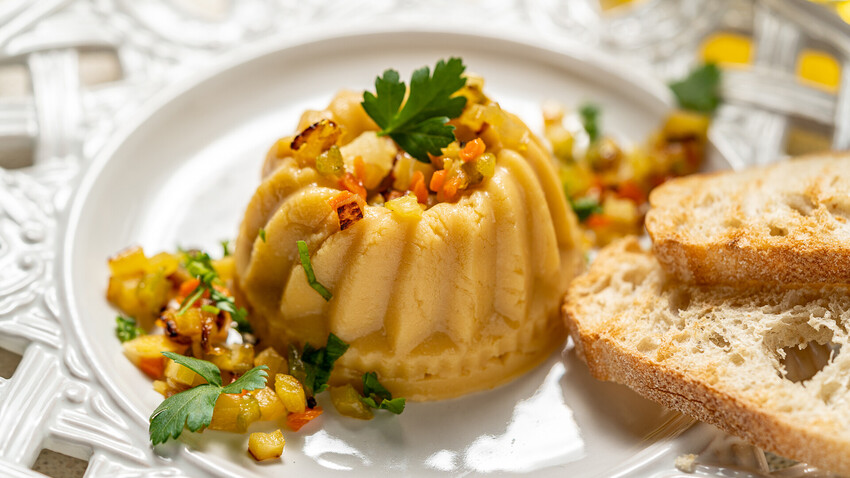
Old Russian snack, “peas kolodkoy”, aka “pea pudding” (RECIPE)
-
 Loading...
 - Victor Golovin
- 27 Mar 2023
- 64 Views
- 0 Like
- 0 Comment
This is a hearty vegan dish that was first cooked in Russia several centuries ago, but the modern version still looks tempting.
The first written mention of peas in Russia was in the 12th century, and in the 16th century the Domostroy (a book of rules of everyday life) describes a number of dishes with peas. This clearly suggests that peas were already an important component of Russian fare. In today's pea industry there are two main groups - whole green peas and dried split peas. Russia is one of the world leaders in production of dried peas. And it is from dried peas that “peas kolodkoy" is prepared.
Don’t be shocked by the name of this dish. It’s even unusual for the ear of a modern Russian. Kolodkoy means ‘one whole piece’. It’s interesting to learn how this dish of pea puree can stay solid or kolodkoy. The most common way to cook peas is as a thick soup. If the peas are boiled for a long time, then you get a thick puree that is liquid when hot. But when cooled, it becomes solid because of the high starch content. These properties are used in “peas kolodkoy".
In the old days, this dish was served as a side dish to meat or fish. But peas on their own are pretty filling due to the high protein content. Therefore, our dish can be served separately. I consider it as a vegan starter/snack that is especially useful during Lent.
This dish is based on yellow dried peas and root vegetables. Carrots add extra sweetness and color, onions and garlic spice it up. For a richer bouquet, I added parsnip root and turnips. And for extra flavor, of course, I add spices such as bay leaf, pepper, cumin, coriander and dried garlic. Cooking “peas kolodkoy" takes time in order to get the best result. First, the peas should be soaked in cold water for 24 hours. This is necessary to reduce the time of cooking. The water should be changed periodically while soaking.
Secondly, the boiling process itself is quite long, since we need to ensure that the peas are fully cooked. The cooking time will depend on the type of peas you use. My peas held their shape even after boiling for three hours, so I had to pulverize them with an immersion blender.
Finally, to stabilize the pea mass, place it in the refrigerator, preferably overnight. One other important moment is to use silicone molds. That way, the pea pudding will come out of them easily, without breaking.
This pea pudding contains no fat or oil. Despite the fact that it comes out with quite a creamy texture, I wanted to add some juiciness. To go with the peas, I made a roast of root vegetables in oil. You can serve the peas with croutons or bruschetta.
Ingredients for 6-8 appetizer servings: Read More…