One of UK’s largest seagrass beds discovered off Cornwall
-
 Loading...
 - michael mia
- 20 Apr 2023
- 79 Views
- 0 Like
- 0 Comment
Survey finds 359 hectares of rich habitat, a highly effective carbon sink, in St Austell Bay
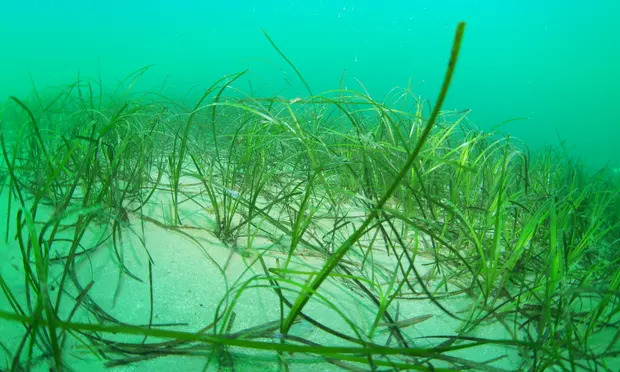
One of the largest seagrass beds in the UK, home to seahorses, pipefish and scallops and a highly effective carbon sink, has been identified off the south coast of Cornwall.
An acoustic study of St Austell Bay carried out by a survey boat pinpointed 359 hectares (887 acres) of seagrass hugging the coastline, and divers sent in to examine the site close up recorded 56 species living in the rich habitat.
Cornwall Wildlife Trust described it as a hugely positive find but said work was needed to protect the bed and further surveys should be carried out to find out if there were other beds in nearby areas.
Abby Crosby, marine conservation officer for the trust, said: “The discovery of extensive surviving seagrass beds in St Austell Bay is a very exciting development. Seagrass is one of the largest carbon sinks we have globally, despite covering only 0.1% of the ocean floor.
“It also serves as a shelter, feeding ground and nursery for a host of marine life, including vulnerable species such as seahorses, and the young of commercial fish and seafood stocks. Seagrass beds play an important role in helping to combat erosion of the coastline from the waves, as storms increase in their intensity due to climate change.”
Seagrass meadows, which can flower and photosynthesise in shallow seas, are important because they stabilise the sediments in which they grow and provide food and shelter for other species thereby enhancing biodiversity.
They also sequester and store carbon in their leaves, branches and root systems, as well as in the sediment below and around them. When seagrass meadows are stable and healthy, they can be highly effective carbon sinks. Read More…