Paranà¡ downspout means heavy losses for Argentine exports
-
 Loading...
 - Jose Arias
- 20 May 2022
- 352 Views
- 0 Like
- 0 Comment
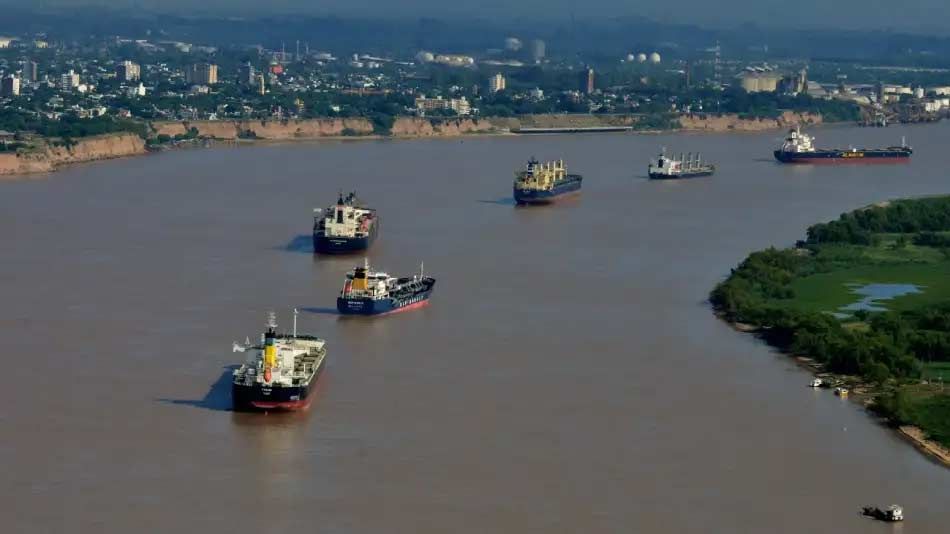
A most unusual low water level of the Paraná river has caused losses of nearly US$ 280 million so far in 2022 to Argentine rural producers and exporters, it was reported.
In addition to a drop in sales, foreign traders also incurred default with foreign buyers, which entailed heavy penalties. Due to the adverse hydrological conditions river navigability has been severely compromised.
Grain exporters have suffered losses of US$ 279,689,670 as a consequence of the low amount of cargo that ships can hold not to run aground, according to a report from the Rosario Stock Exchange (BCR).
The document also showed that the losses also included US$ 138.25 million stemming from an increase in costs due to the so-called “false freight,” which is the impossibility of loading vessels of lower capacity at full capacity.
These vessels could not complete their cargoes in ports further south or in Brazil, because their remaining capacity does not economically justify mooring them in other terminals, forcing them to go back out to sea with fewer goods onboard.
A recent improvement in the water flow of the Paraná river has brought some relief to agribusiness. The National Water Institute (INA) announced earlier this week that although conditions are, in general, better than those observed in 2020 and 2021, the climatic perspective “still does not allow establishing a temporary limit of the predominant low water scenario started in March 2020.″
The BCR report also states that vessels of a greater capacity usually complete their cargoes with goods loaded on the Atlantic coast such as Quequén, Necochea, and Bahía Blanca.
”Although this is usual practice in normal years, since larger vessels cannot be fully loaded in the Up-River ports due to their design draft, the downturn forced to increase this additional cargo,“ the BCR stressed. That change resulted in an extra cost of US$115.6 million to be paid by Argentine exporters.
Meanwhile, the cost of lower export prices for domestic soybean oil and meal, associated with the risk, amounted to US$25.8 million. Read More...