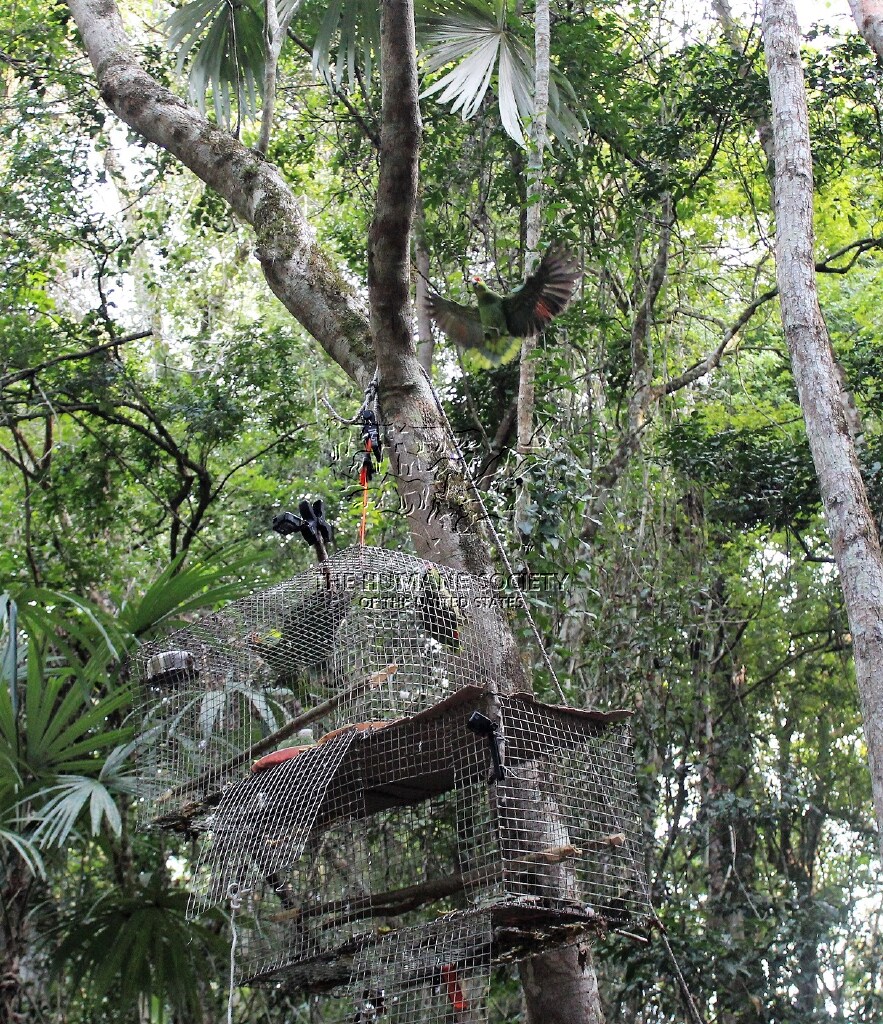
Parrots freed in Peten, Guatemala after illegal trafficking.
-
 Loading...
 - Estrada Eugenio
- 12 Jun 2023
- 63 Views
- 0 Like
- 0 Comment
Thirty-six parrots, specifically the species Amazona autumnalis, Amazona albifrons, and Pionus senilis, were recently set free in the enchanting Rio Azul National Park located in Peten, Guatemala. These vibrant creatures had been rescued from the clutches of illegal trafficking and underwent a rigorous rehabilitation process before being released.
This momentous event was made possible through the collaborative efforts of two esteemed non-governmental, non-profit organizations: Asociacion Rescate y Conservacion de Vida Silvestre and Humane Society International/Latin America. For over a decade, these organizations have dedicated themselves to safeguarding and conserving wildlife in Guatemala.
Guided by the National Council for Protected Areas (CONAP) and supported by the dedicated staff of the ARCAS Wildlife Rescue Center and HSI, the parrots, comprising various species, were joyously returned to their natural habitat within the forest. Some of these parrots had fallen victim to wildlife trafficking, while others had experienced negative interactions with humans.
Fernando Martinez, the director of ARCAS, explained that their rescue center diligently carries out physical, medical, and ethnological rehabilitation for different species that have been illegally trafficked. This is done in adherence to rigorous scientific management standards. Subsequently, these remarkable creatures are released back into the Mayan Biosphere Reserve.
"Our mission at the Rescue Center is to bolster existing wildlife populations, prevent species from facing extinction, and ensure the presence of healthy populations capable of adapting and reproducing in their natural environment," stated Martinez.
Mauricio Mota, an advocacy officer for ESAP, supported by HSI/Latin America, highlighted the prevalent practice of keeping parrots as pets in Guatemala, often acquired through illegal wildlife trafficking. This illegal trade poses a significant risk to parrot populations.
"That is precisely why HSI/Latin America and ARCAS are dedicated to successfully rehabilitating these animals, granting them a second chance to thrive in freedom. We also implore individuals to refrain from purchasing these animals as pets, to avoid buying products made from wild animals or their derivatives, and to promptly report any suspicious wildlife-related activities to the authorities," urged Mota.
Following their release, the parrots will be closely monitored for a couple of weeks. Sightings will be recorded on trails and observation platforms, ensuring their well-being in their newfound freedom.