Peru battles worst dengue outbreak in decades
-
 Loading...
 - Manger Bard
- 18 May 2023
- 80 Views
- 0 Like
- 0 Comment
Peru is currently facing its most severe outbreak of dengue fever in the 21st century due to a combination of global warming, limited access to clean water, and flooding caused by El Niño. Within the first four and a half months of this year, there have been 72,000 confirmed and probable dengue infections, surpassing the total number of cases reported in 2017 during the country's previous epidemic of this tropical disease transmitted by mosquitoes.
Dengue fever is characterized by symptoms such as high fever, headaches, vomiting, and rashes. In more severe cases, known as hemorrhagic dengue, the disease can be fatal. Unfortunately, 79 lives have already been claimed by dengue fever in Peru this year.
Dr. Cesar Munayco, the chief epidemiologist at the health ministry, stated that most of the suspected infections are likely to be confirmed after testing. In 2017, when El Niño also played a role, authorities recorded 68,290 cases.
On a positive note, Munayco highlighted that the mortality rate during the current outbreak is 0.11 percent, lower than in 2017. He emphasized the direct correlation between rising temperatures and the impact of dengue fever on the population. With temperatures increasing and remaining above the median for extended periods, the conditions become favorable for the rapid reproduction of mosquitoes and a shortened incubation period. Once infected, mosquitoes become infectious in as little as three or four days.
Lima, usually experiencing the end of summer in March, has been persistently hot even in May. Munayco explained that these conditions promote the mosquito's rapid reproduction and shorten the time it takes for the mosquito to become infectious.
Peru's inefficient water system also contributes to the spread of dengue fever. Water scarcity and irregular supply are prevalent issues in many parts of the country. People are often forced to store water in containers for consumption and washing, providing breeding grounds for the Aedes aegypti mosquitoes, the carriers of dengue.
Typically, dengue fever mainly affects the Amazonian regions in the north and east of Peru. During the 2017 outbreak, the northern region of Piura, which shares a border with Ecuador, accounted for more than half of all cases. This region is again leading in the number of infections this year. However, the current epidemic has significantly impacted Lima. The number of cases in Lima has increased by 560 percent compared to the same period last year, and it is 14 times higher than the total number recorded in 2017.
Munayco mentioned that a potential dengue vaccine is awaiting approval from the Pan American Health Organization. Once approved, Peru will acquire the vaccines to combat the disease.
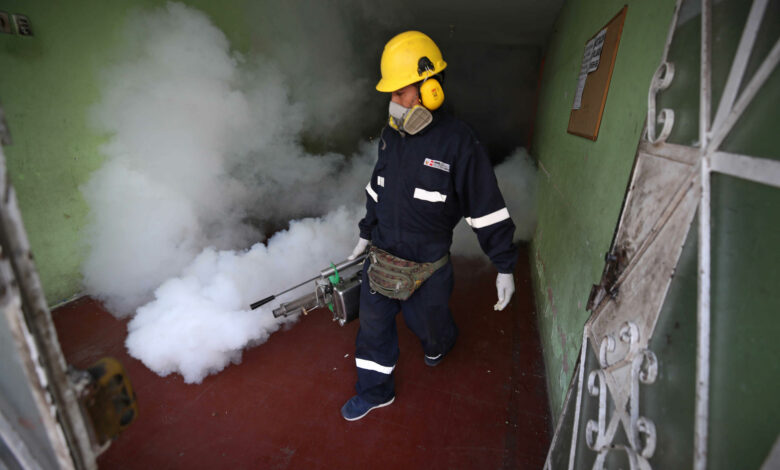
To address the situation, the Peruvian government has declared a public health emergency in 222 districts across 20 out of the country's 25 regions. This declaration involves implementing measures such as mosquito population suppression through fumigation, financial support to regional and local administrations, and efforts to alleviate the strain on the overwhelmed healthcare system, which has been dealing with the challenges of the Covid-19 pandemic.