Portuguese Desserts: 25 Traditional Sweets You Need to Try in Portugal

Many Portuguese sweets are unknown to foreigners, which is a shame because to me, it’s one of the best parts about Portuguese cuisine. Open up a Portuguese dessert menu and I guarantee you’ll be thrilled with all the delicious local desserts not named “pastel de nata”.
Don’t get me wrong, pastel de nata is an absurdly delicious Portuguese dessert and one of the best things you’ll eat in Portugal, but its popularity overshadows lesser known but equally noteworthy Portuguese sweets like queijada, pão de ló, and pudim abade de priscos.
I don’t remember where I read it but apparently, some locals can be miffed by the popularity of their most iconic dessert, only because it’s sometimes the only Portuguese dessert many tourists will try. How about showing love to the rest of our desserts?!
To help appease the locals, we’ve put together this list of the most delicious Portuguese desserts for you to try on your next trip to Lisbon and Porto.
THE BEST PORTUGUESE DESSERTS
1. Pastel de Nata
Ask anyone who’s been to Portugal – “What dessert is Portugal famous for?” – and 10 times out of 10, they’ll say pastel de nata! It’s the most internationally well-known Portuguese dessert and the perfect way to start this list.
Pastel de nata refers to a Portuguese egg tart pastry that was invented in the 17th century by monks residing at the Jeronimos Monastery in Lisbon. At the time, egg whites were used to starch clothing, leaving them with a surplus of leftover egg yolks. The leftover egg yolk was used to bake Portuguese pastries and cakes, one of them being pastel de nata.
Pasteis de nata are widely available throughout Portugal but the most famous place to have it is at Pasteis de Belem in Lisbon. They make their custard tarts with the original Jeronimos Monastery recipe that’s remained unchanged for over 180 years! We had pasteis de nata everyday in Portugal and in my opinion, not only is the pastel de nata at Pasteis de Belem the most famous version of this iconic Portuguese dessert, but it’s also the most delicious.
The Manteigaria chain makes great pastel de nata as well. They have outlets in Porto and Lisbon, including one at the famous Time Out Market in Lisbon’s Cais do Sodre district. Outside of Portugal, pastel de nata is popular in Western Europe, Asia, and in the former Portuguese colonies of Brazil and Macau.
It’s helpful to remember that the singular form of this classic Portuguese dessert is pastel de nata, while the plural is pasteis de nata. When served warm with a hot cup of coffee, it’s impossible for you NOT to have pasteis de nata. You seriously can’t eat just one!
For many tourists, this incredibly delicious egg tart is easily their favorite Portuguese dessert.

2. Arroz Doce
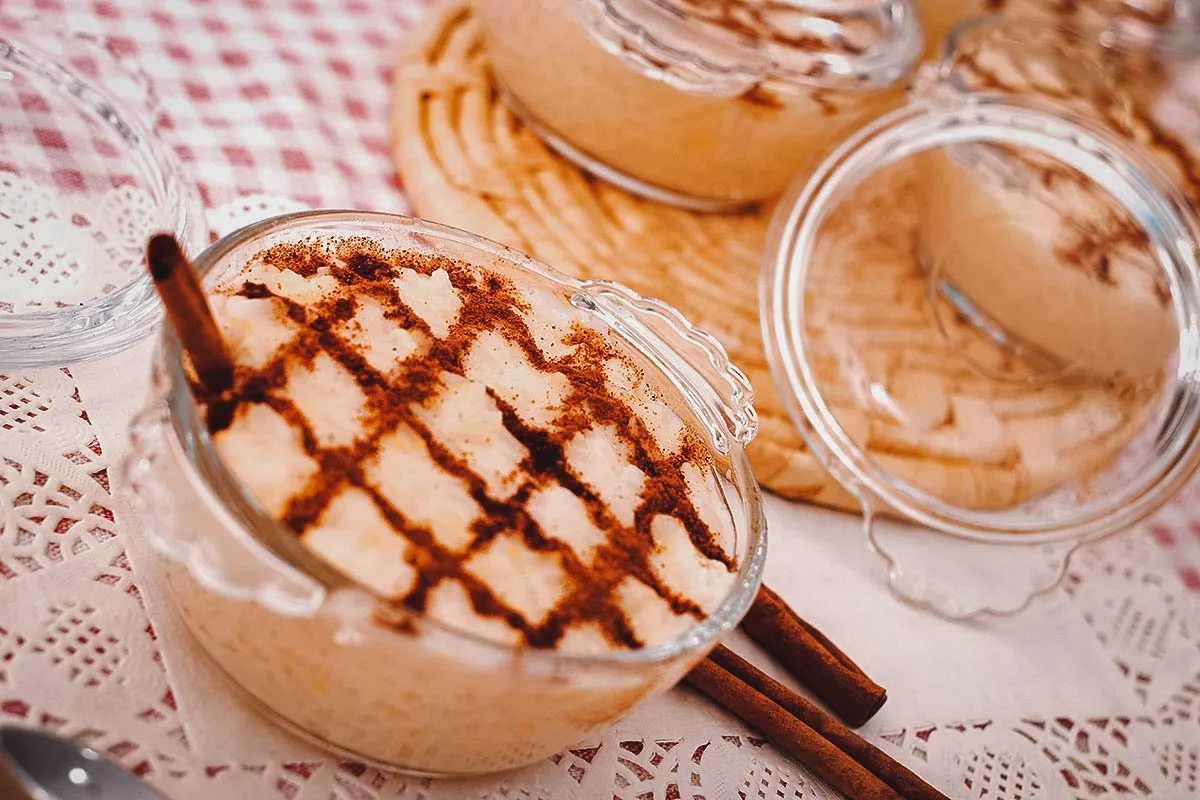
Arroz doce literally means “sweet rice” and refers to a popular Portuguese dessert of rice pudding. It’s one of the most famous Portuguese desserts and a comforting dish that many locals grew up eating.
Portuguese rice pudding is made with short-grain rice slowly cooked with egg yolks, milk (or condensed milk), sugar, cinnamon, and lemon peel. It’s a creamy and lemon-y dessert that can be served warm, chilled, or at room temperature.
You can find Portuguese rice pudding pretty much anywhere in Portugal. It’s served at cafes, restaurants, and often made at home. It’s a tasty dessert and one of the most popular to make around Christmas time. You’ll also find it at many Portuguese celebrations and family gatherings.
3. Aletria
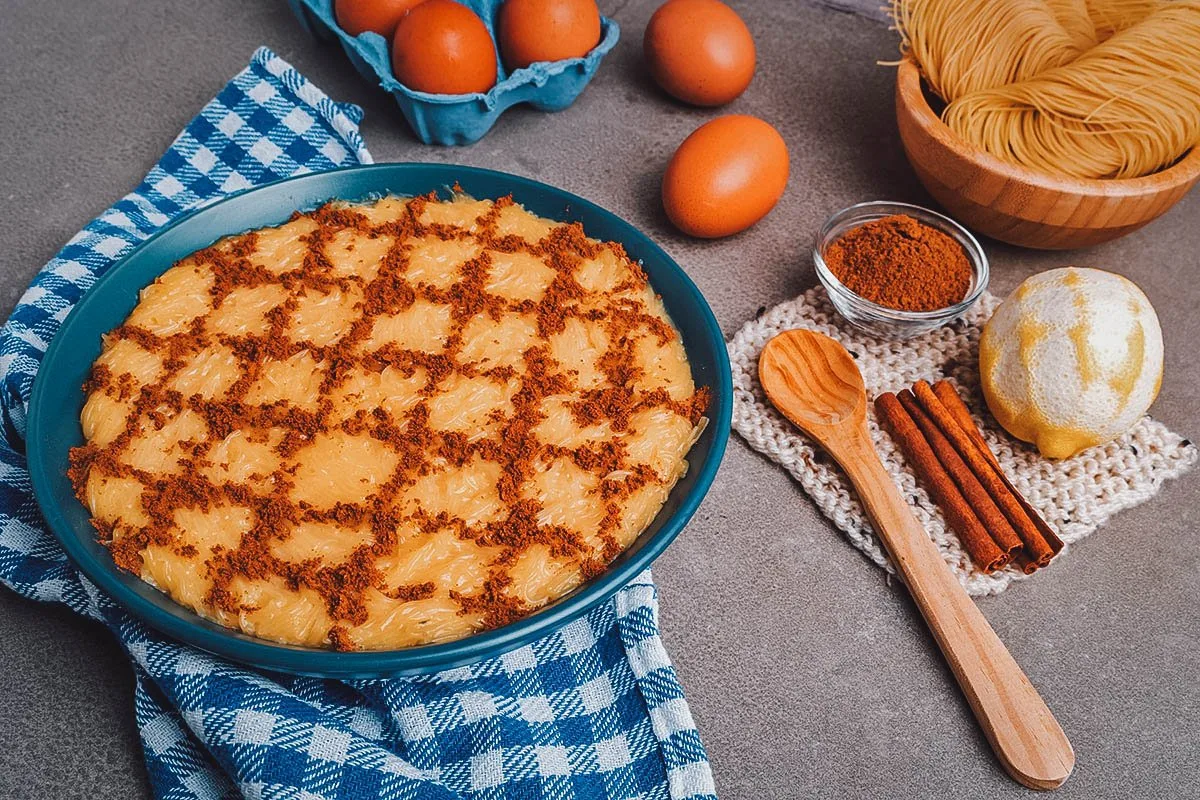
If this next Portuguese dessert looks very similar to arroz doce, it’s because it is. It’s made with virtually the same set of ingredients as Portuguese rice pudding, but instead of short-grain rice, it’s made with fine egg noodles or vermicelli.
Aletria is made with egg noodles slowly cooked in boiling milk with sugar, cinnamon, and lemon peel. When cooked, the noodles are mixed with the yolks and placed in a flat baking pan before being dusted and served with cinnamon, usually in a criss-cross pattern.
Like arroz doce, aletria is one of the most famous Portuguese desserts served over Christmas and at other holidays and celebrations.
4. Rabanadas
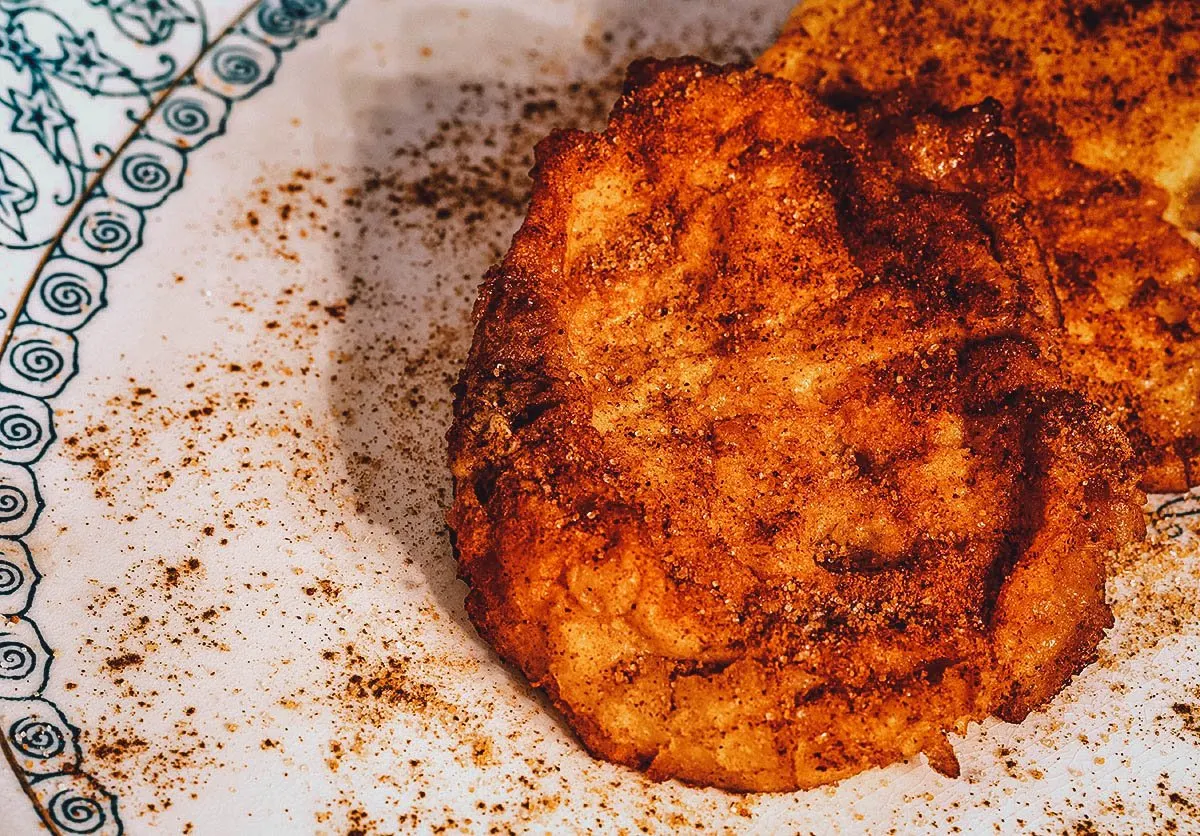
If you’re a fan of breakfast dishes, then you’re going to love rabanadas. They’re the Portuguese version of french toast, and in the opinion of many locals, they’re even better.
Unlike American-style french toast that’s typically eaten only for breakfast, rabanadas are just as commonly eaten for dessert in Portugal. Similar to Spanish torrijas, they’re often enjoyed with a glass of port and are one of the most popular desserts served around the Christmas season. In the same way that many Portuguese people can’t imagine Christmas without bacalhau, they can’t imagine it without rabanadas either.
Another key difference between Portuguese-style french toast and the American version is that rabanadas are typically made with crusty bread. This gives them a crispier exterior and a soft, custard-like interior. The bread is soaked in an egg and milk mixture and fried to a golden brown before being dusted with sugar and cinnamon.
5. Pudim Abade de Priscos
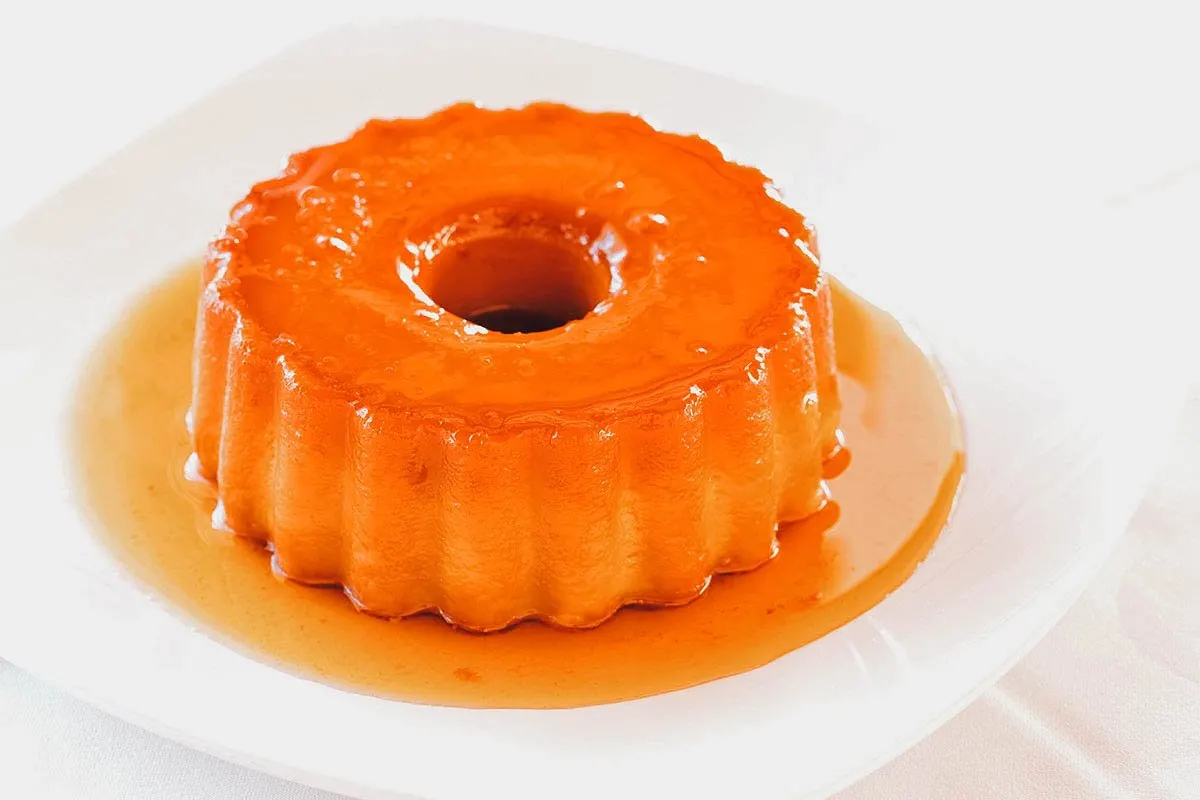
As you can probably tell just from looking at it, pudim abade de priscos is the Portuguese version of flan or creme caramel. It was invented in the 19th century by Father Manuel Joaquim Machado Rebelo – the Abbot of Priscos – hence the name.
There are many egg-heavy Portuguese desserts but pudim abade de priscos may take the cake. It’s made with bacon, port wine, and a total of fifteen egg yolks! This rich and decadent Portuguese egg pudding may not be the healthiest dessert on this list but it’s certainly one of the most delicious.
6. Leite de Creme
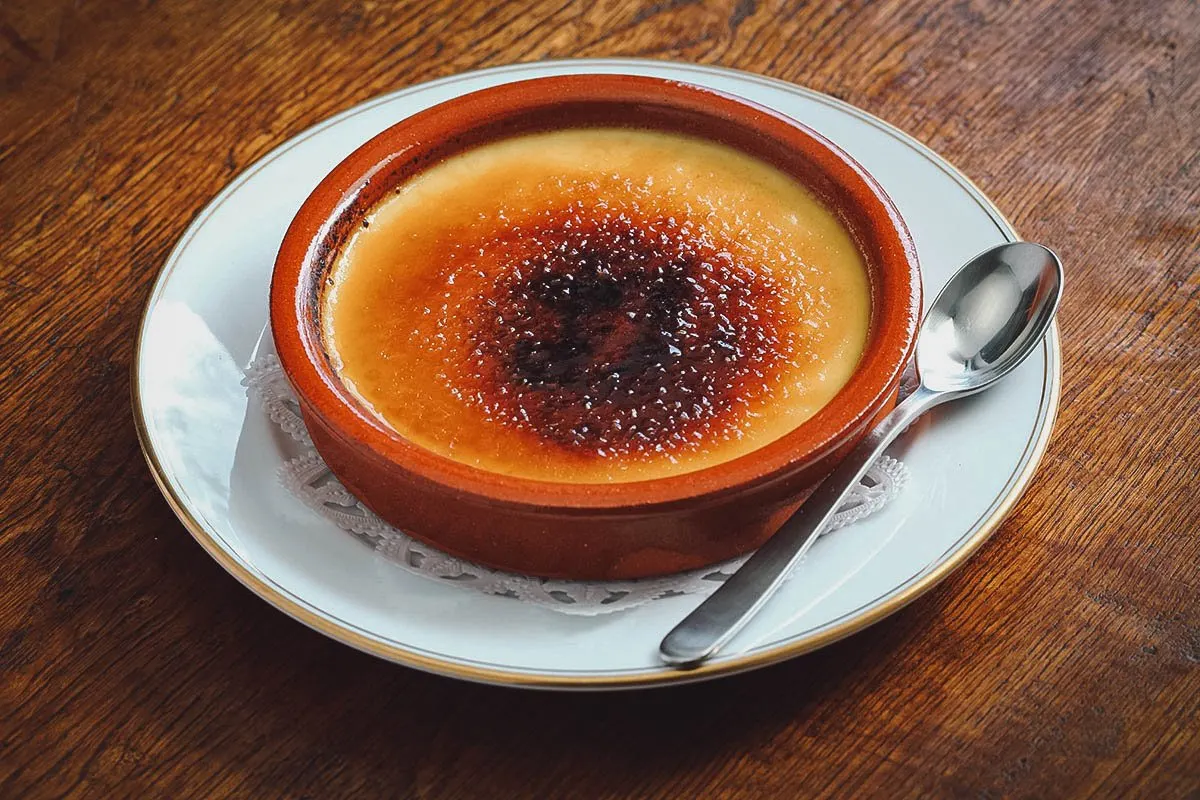
If pudim abade de priscos looks appealing to you, then you’ll probably want to sink your teeth into leite creme as well. It refers to the Portuguese version of crème brûlée made with milk, egg yolks, sugar, corn starch, cinnamon, and lemon zest. Leite creme differs from crème brûlée in that it’s cooked on a stove top instead of baked.
Like classic French crème brûlée, leite creme is poured into ramekins and sprinkled with sugar before being browned with a blowtorch. It’s a rich and creamy dessert that you’ll surely have more than once in Portugal.