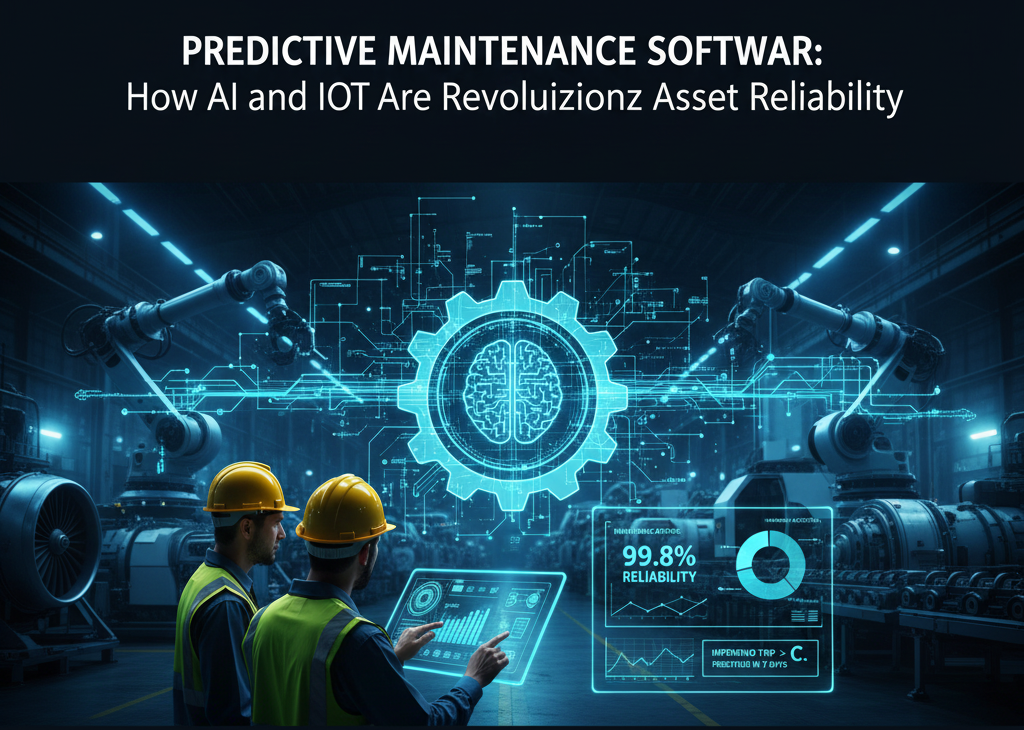
Predictive Maintenance Software. How AI and IoT Are Revolutionizing Asset Reliability

Explore how predictive maintenance software leverages real-time data, AI, and IoT sensors to forecast equipment failures, reduce downtime, optimize maintenance costs, and drive operational efficiency across industries.
Introduction: Why Predictive Maintenance Matters Today
In industries that rely on heavy machinery and infrastructure, unexpected equipment failures can cause costly production losses, safety risks, and resource wastage. Traditional maintenance approaches like reactive fixes or time-based servicing can’t keep pace with modern operational demands. Predictive maintenance software provides a smarter way to protect assets by forecasting potential issues before they become breakdowns.
Predictive maintenance is not just a technology trend. It has become essential for businesses that want to improve reliability, reduce operational costs, and support strategic decision-making in the age of data-driven operations.
What Is Predictive Maintenance Software?
Predictive maintenance software is a system that continuously collects performance and condition data from equipment and uses advanced analytics to anticipate failures. Instead of servicing machines on a fixed schedule or waiting for a breakdown, this software predicts the right moment to intervene based on data from sensors and historical patterns.
In simple terms, predictive maintenance connects real-time insights with actionable maintenance planning so teams act only when needed.
How Predictive Maintenance Works
1. IoT Sensors and Data Collection
The core of predictive maintenance lies in real-time monitoring. Sensors attached to machines track parameters like vibration, temperature, pressure, and noise.
2. Data Transmission and Storage
Once collected, sensor data flows to centralized platforms where it’s stored, processed, and made available for analysis.
3. Analytics, AI & Machine Learning
Advanced analytics, including machine learning and AI models, examine the incoming data to detect anomalies or patterns that may indicate early-stage wear or impending failure.
4. Alerts and Maintenance Actions
When predictive models identify potential problems, the software generates alerts. Maintenance managers receive these notifications and schedule service before serious issues occur. This proactive approach maximizes uptime and extends asset lifecycles.
Predictive vs. Preventive Maintenance
While preventive maintenance schedules tasks based on fixed time intervals or usage estimates, predictive maintenance adapts to actual equipment conditions in real time. Predictive strategies reduce unnecessary downtime and ensure resources are used more efficiently.
Unlike preventive maintenance, which might overhaul equipment even when it’s still healthy, predictive models aim to service exactly when needed—without waste.
Key Benefits of Predictive Maintenance Software
1. Reduce Downtime and Avoid Failures
Predictive maintenance helps catch early warning signs of equipment issues before they escalate into failure, significantly reducing unplanned downtime.
2. Optimize Maintenance Costs
Since interventions occur only when necessary, teams avoid unnecessary labor, spare parts consumption, and emergency repairs.
3. Extend Asset Lifespan
Machines maintained based on real condition rather than arbitrary calendars tend to last longer, providing more value over time.
4. Improve Safety and Compliance
Monitoring asset health in real time reduces the risk of sudden failures that could endanger personnel or breach compliance standards.
5. Data-Driven Insights
Predictive maintenance platforms offer dashboards and analytics that help organizations plan future maintenance strategies, budget smarter, and understand equipment behavior better.
Real-World Applications Across Industries
Predictive maintenance software has found adoption in sectors such as:
• Manufacturing: Early fault detection in CNC machines and production lines to avoid costly stoppages.
• Energy & Utilities: Monitoring turbines, generators, and grid equipment to ensure continuous service.
• Transportation & Rail: Detecting track or vehicle component wear before it causes delays.
• Oil & Gas: Preventing equipment failures in drilling rigs and pipelines.
• Aviation: Using AI to forecast component fatigue and reduce unscheduled maintenance.
Challenges in Implementing Predictive Maintenance
While the benefits are clear, adoption does come with challenges:
Data Quality & Infrastructure: Reliable predictions depend on high-quality sensor data.
Integration with Legacy Systems: Older assets may require retrofitting with IoT solutions.
Algorithm Selection: Choosing and tuning predictive models for specific assets can be complex.
Change Management: Teams may need training to trust and act on data-driven alerts.
Conclusion
Predictive maintenance software represents the evolution of asset management from reactive fixes to intelligent, data-driven planning. By harnessing real-time data from IoT sensors and applying AI and machine learning analytics, organizations can forecast issues, reduce downtime, cut maintenance costs, and extend the life of critical equipment.
In a world where efficiency and uptime are key differentiators in competitive industries, predictive maintenance is no longer optional. It’s a cornerstone of smart operations and future-ready enterprises.