Primer: If your child's in a Mexican school, don't ignore Teachers' Day
-
 Loading...
 - Alice Barone
- 16 May 2022
- 310 Views
- 0 Like
- 0 Comment
The concept of a teacher’s day is not unique to Mexico. Various countries have something like it on various days, and World Teachers’ Day was established on October 5 by UNESCO.
Teachers’ Day caught my attention when I first came to Mexico because neither as a student, a parent or in my initial years as a teacher did I encounter any kind of celebration of the profession — which is officially on May 3 in the United States. In Mexico, it was the first time in any job that I had that anyone thought to honor the work I do.
Here, Teachers’ Day (Día de Maestro) is celebrated on May 15. It was established as delegates negotiated the 1917 Constitution — the current one — as more than a few worked in the profession.
It is not exactly clear why that date was selected. It is the feast day of educator and priest Jean-Baptiste de La Salle, but he was not canonized as the patron saint of teachers by the Vatican until 1950.
The date also commemorates the Battle of Querétaro, an important event in the ousting of the second emperor of Mexico, Maximilian I.

The establishment of free, public and secular education was extremely important to the framers of the 1917 Constitution. Despite previous reformation attempts, education remained in the hands of the Catholic Church, with little to no opportunities for the poor.
The framers not only sought to diminish the power of the church but also to promote their own values of the new government.
Article 3 of the Constitution specifically refers to public education, tying it, and teachers, to the economic and social development of the country. The importance of the Education Ministry — and the resulting teachers’ unions — was such that until very recently all federal cultural programs were under its purview. The first education minister, José Vasconcelos, established the muralism program in the 1920s, seen as a way to teach a population that was still largely illiterate.
If you have taught in Mexico, you have experienced the near-veneration of being called a maestro/a, always called that even at the supermarket and even if you stop teaching. This attitude is nearly universal today, but teachers’ work was not always so appreciated.
One of the public schools’ main roles was to promote the government’s idea of mexicanismo, or la raza, the idea that everyone is equally Mexican. It resulted in strong pressure for traditional communities to abandon their traditional Catholic practices, leading to a backlash called the Cristero War.
It also led to pushing indigenous communities to forego their languages and traditions to assimilate. Such efforts have waned, but they have not disappeared completely.

As of the 2018–2019 school year, the Education Ministry (SEP) states that there are 2,100,277 teachers, about 60% of whom work in the primary grades. Like many in the public sector, public school teachers receive small salaries but have important benefits.
Like in other countries, teachers can have issues with receiving sufficient support. One recent problem highlighting this was the lack of computers and training for teachers and students during the pandemic when schools were closed. It is also not unusual for teachers to protest on or near this day.
Teachers’ Day is a highly political holiday both because of this history and the power of the national public school teachers’ union, the SNTE. Politicians may visit schools on this day to show their support for both teachers and education, especially if many parents attend school events.
The day is observed in some shape or form at most schools in Mexico, but exactly how depends on the grade level, the local community and the culture of the given school.
The largest celebrations tend to be in the primary grades, especially in more rural areas. Most Mexicans get at least a primary education, and in rural Mexico teachers are promoted as community leaders.
In urban areas, the day remains important in the primary grades, but they tend to be more abstract.

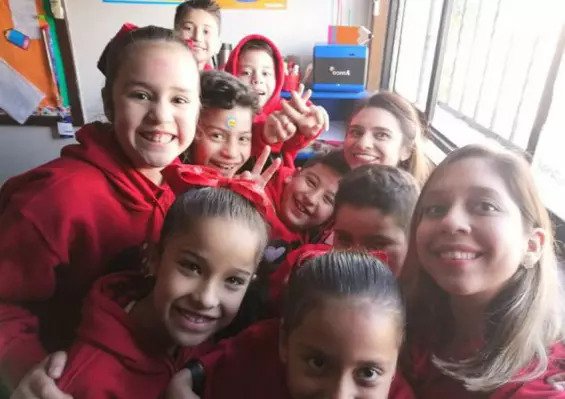
At least some classes and/or other work is suspended to celebrate, either through a meal or even day-long parties and cultural events. Celebrations can be only for teachers or involve the entire local community. The giving of small gifts by individual students or larger ones bought with collected money is also common.
I was a teacher here for 15 years and have some connections with teachers’ groups online. Not scientific by any means, but I did get some feedback from foreign teachers and parents as to their impressions about the celebrations.
The vast majority of foreign teachers and parents strongly support a day to recognize the work of teachers. The idea is best summed up by a comment by Yasuko Azuma:
“It is not only an opportunity to have some rest from a difficult job but also a reminder to society in general that teachers are the most important of all to social, knowledge and cultural development. After the family [and] parents, teachers are the most important …”
Perhaps a little more cynical is a comment by respondent Deborah Harting.
“It’s the one day a year that parents don’t get mad with teachers and show some appreciation.” Read More...