Researchers develop the first AI-based method for dating archaeological remains
-
 Loading...
 - Chris Walker
- 06 Sep 2022
- 70 Views
- 0 Like
- 0 Comment
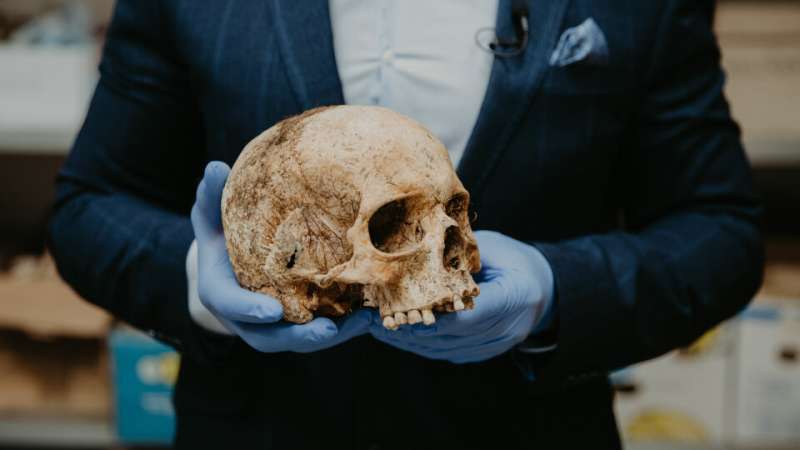
By analyzing DNA with the help of artificial intelligence (AI), an international research team led by Lund University in Sweden has developed a method that can accurately date up to ten-thousand year-old human remains.
Accurately dating ancient humans is key when mapping how people migrated during world history.
The standard dating method since the 1950s has been radiocarbon dating. The method, which is based on the ratio between two different carbon isotopes, has revolutionized archaeology. However, the technology is not always completely reliable in terms of accuracy, making it complicated to map ancient people, how they moved and how they are related.
In a new study published in Cell Reports Methods, a research team has developed a dating method that could be of great interest to archaeologists and paleognomicists.
"Unreliable dating is a major problem, resulting in vague and contradictory results. Our method uses artificial intelligence to date genomes via their DNA with great accuracy," says Eran Elhaik, researcher in molecular cell biology at Lund University.
The method is called temporal population structure (TPS) and can be used to date genomes that are up to 10,000 years old. In the study, the research team analyzed approximately 5,000 human remains—from the Late Mesolithic period (10,000–8,000 BC) to modern times. All of the studied samples could be dated with a rarely seen accuracy. Read More…