Residents of Mariupol try to survive among its ruins

Fighting for control of this strategic Ukrainian port city ended two months ago with victory for Russia after thousands were killed and hundreds of thousands forced to flee.
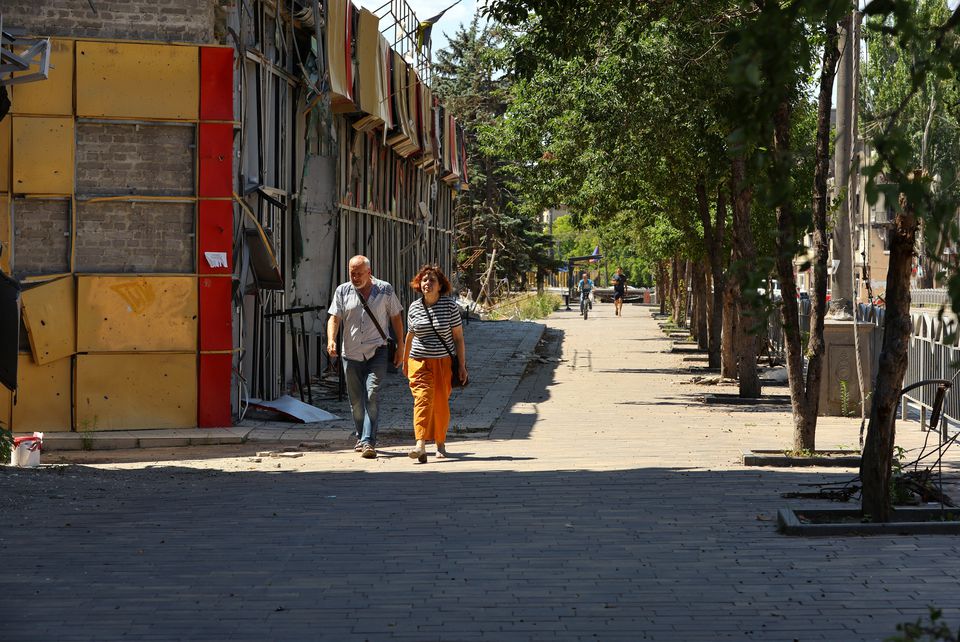
Many of those who are left in Mariupol now face a new battle: how to survive, said five residents interviewed by Reuters.
The struggle for this once bustling city of 430,000 on the shores of the Sea of Azov left it pulverised and with an estimated population in the tens of thousands.
On a recent visit by Reuters reporters, who were free to speak to locals and were not escorted by Russian-backed officials, five residents said they were struggling to get by despite efforts by the city's Russian-installed administrators to try to rebuild.
"We hope, of course, for the best, but all this (optimism) is fading every day," said Tatyana Khandeldy, as she sat outside on a stool with her neighbours surrounded by apartment blocks with their windows blown out, walls covered in bullet and shell holes.
"When the fighting was still going on, we ran on adrenaline to survive. And now the task is to survive so as not to starve to death."
Among the ruins people like Tatyana boiled kettles and fried potatoes on open fires in their yards, sinks hung off the walls of wrecked apartment blocks like earrings, shower cubicles with no running water stood in yards on wooden pallets, and in places people's personal belongings still lay on the street where they had been blown by blasts that gutted some apartment blocks.
The United Nations says 90% of the city's buildings were destroyed after Russia used tanks, artillery and air strikes to try to dislodge its defenders.
A top official from the world body said last month that at least 1,348 civilians had been killed, including 70 children, and that the final toll was probably thousands higher. Kyiv estimates that 22,000 civilians were killed.
The Russian defence ministry did not immediately reply to a request for comment on the death toll, but has previously accused the city's Ukrainian defenders of using civilians as human shields and of setting up fire points in residential areas. Ukraine denies this.
DAILY GRIND
Sitting outside with her daughter Sofiya, Anna Malenko, 31, complained she had no work or money to buy food, while a man who gave his name only as Roman pointed to a concrete rubble-strewn wasteland that he said used to be a green yard where dozens of children once played.
"Now there are two or three children left here who really have nothing to do," said Roman, who said he was a former factory worker.
He described his life as "Groundhog Day" -- a monotonous daily grind which involved cooking on open fires in order to feed other locals and children.
Russian diplomats say Moscow is doing its best to return life to normal and Reuters reporters saw locals buying fresh bread in an open-air market.
In a Facebook post this week responding to comments from the White House about Russian plans to annex parts of Ukraine, Russia's embassy in the United States said Moscow was returning peace to what it called "liberated territories."
It said there were plans to build about 500 km (310 miles)of roads and bridges in the Donbas region, which includes Mariupol, by the end of this year and that what it called "12 modern condos and a medical centre with high-tech equipment" were being built in Mariupol. It said they should be completed by the autumn. Read More...