Review: Netflix's “Alice in Borderland†Uses Sci-Fi to Highlight Japanese NEETs' Woes

Fans of manga and anime appreciate the genre for their distinguishing characteristics: fantastical, eccentric, and often larger-than-life storylines and characters. This unique style of storytelling has made translating them into live-action mostly unsuccessful and cringey endeavors. The Netflix original series Alice in Borderland, however, brings a sci-fi manga series to life and succeeds in a thrilling, heart-thumping fashion.
The Borderland—an escape from a gloomy reality?
Alice in Borderland centers around Arisu, a modern day NEET living in Tokyo. With absolutely no ambitions in life, he lives off his family’s money. He spends all his time either playing video games or hanging out with his two friends, Karube and Chota; the former a bartending delinquent, and the latter a soft-spoken IT salaryman. Within the first five minutes of the series, we see a concise, unembellished exposition into the main characters—three examples of bumbling young men who exemplify the gloomy pessimism that has plagued modern Japanese society.
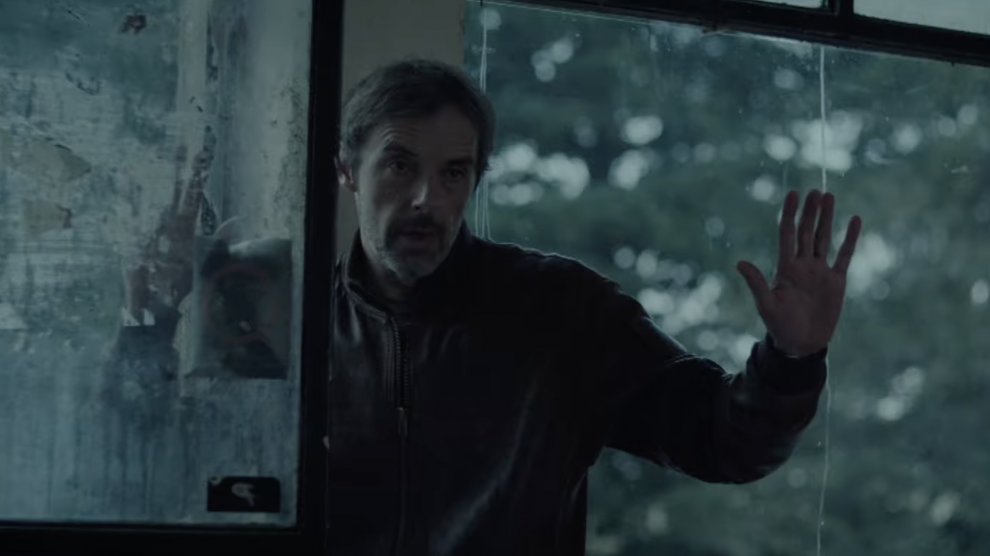
“Wish I could go to some unknown place,” Arisu laments one day. While loafing around town, the three of them end up running into a cubicle to hide from police. Snickering at their own transgressions and joking about farts, the power suddenly goes out. When they exit the stall, everyone in Tokyo has disappeared.
Initially the boys appear delighted—perhaps this is a welcome change from the boring pace of their previous lives. Sitting in the now (impressively) empty Shibuya crossing, a bright light suddenly turns on behind them. A giant monitor on the face of a building flashes the words: “WELCOME PLAYERS, THE GAME WILL COMMENCE SHORTLY.”
Still confused and half in disbelief, the boys enter their first game called “Dead or Alive?”, with the rule that they must choose between two doors under a time limit. Laughing, Chota muses that this must be some reality show until another player walks through the wrong door and is instantly killed. We quickly see the stark realities of the gruesome stakes of the game.

Survival—but at what cost?
Every time a player wins (read: survives) a game, they are granted a “visa” which allows them to rest for a few days. In order to extend their visa in this world, the player must win more games, which are categorized by type (clubs, hearts, diamond, or spade) and difficulty (the card number). The currency for survival, in order words, is to keep playing with seemingly no end in sight.
One word of caution is that Alice in Borderland is by no means an easy watch. The games are brutal, and the series does not hold back from leaning into the terrifying nature of its imagined world.
That being said, the games are well designed and come off as genuinely clever rather than gimmicky. A game’s true objective is often deceptive, forcing both players and viewers to engage with the narrative by reading in between the lines.
Alice in Borderland taps fearlessly into moral gray zones as well. As the players contend for their lives, they are often pitted against each other, either explicitly by the rules of the game, or via internalized decisions made to maximize their own chances of survival. The latter is, of course, an intended consequence of these games—the more players win, the more they lose sight of their own humanity. Read More…