Ron DeSantis has raised more than $100 million for his reelection bid. Could he use that money in a presidential race?
-
 Loading...
 - Debora Costa
- 22 May 2023
- 50 Views
- 0 Like
- 0 Comment
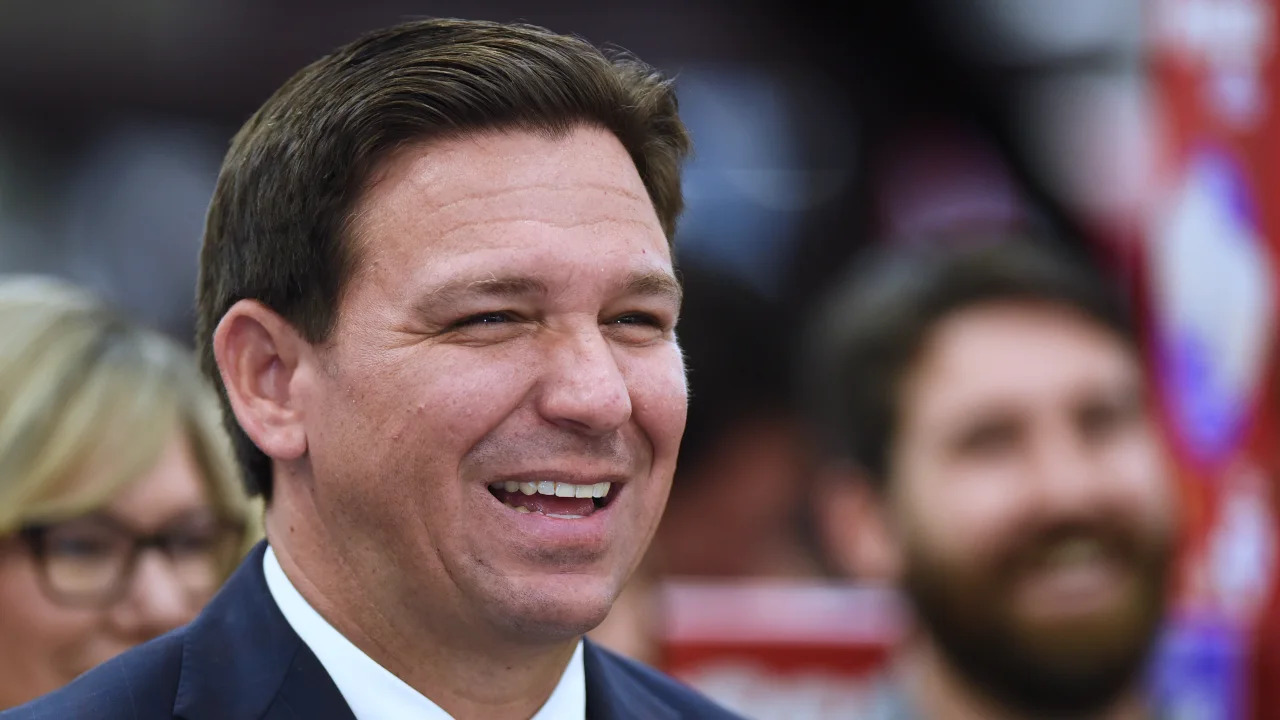
The Federal Election Commission recently reached a deadlock on whether US Representative Byron Donalds violated a law that aims to prevent state campaign funds from being used in federal elections. While this went unnoticed by most, election lawyer Brett Kappel saw an opportunity for Florida Governor Ron DeSantis. DeSantis, who is breaking fundraising records, has amassed a staggering $111 million for his second gubernatorial term. Speculation is rife that he intends to run for president in 2024, and the FEC's inaction on Donalds' case may serve as a blueprint for DeSantis to raise money for both campaigns simultaneously.
Kappel believes that every time the FEC fails to reach a decision on novel financial structures like this, it sends a clear message that such tactics can be employed without consequence. Publicly, DeSantis downplays any discussion of his future ambitions, but insiders claim that his political team has already strategized ways to convert the substantial war chest into funds usable for a federal campaign. The expectation is that DeSantis will raise around $200 million during this cycle, leaving him with a surplus of at least $100 million for a super PAC to support his potential presidential bid. This financial advantage rivals that of former President Donald Trump's own fundraising machine.
Unlike campaign donations, contributions to super PACs have no limits. While there are some restrictions on super PACs, such as prohibitions on receiving funds from federal contractors or foreign nationals, the FEC's enforcement has been weak, allowing candidates to exploit the gray areas in the law. As long as DeSantis avoids blatant violations, he will have considerable leeway to use his funds as he sees fit.
The case of Byron Donalds, which closely mirrors DeSantis' situation, exemplifies the potential loophole. Both politicians operate state-registered political committees with no restrictions on the amount of money they can receive. Donalds, for instance, transferred the remaining $107,000 from his committee to a super PAC supporting him during his successful congressional bid. Although a watchdog group filed a complaint against this arrangement, arguing that federal committees cannot spend money raised for state races and that it violates coordination rules, the FEC deadlocked on the case.
DeSantis, surrounded by a seasoned political team, including Phil Cox, who ran a super PAC supporting Chris Christie's presidential campaign in 2016, is well-prepared to exploit this loophole. Ready for Ron, an unaffiliated super PAC, has already begun running ads urging DeSantis to run for president. The Governor's campaign has attracted donations from various sources, including Trump's supporters and other wealthy Republican donors. While DeSantis is accumulating massive funds, he has yet to tap into them extensively, indicating that he is building a significant cash advantage.
With his political team aiming for a decisive victory in the gubernatorial race, DeSantis may spend a considerable amount of his funds. However, he remains a strong favorite for re-election, as national Democrats focus their resources on governor's races in other states. DeSantis has gained substantial media exposure from conservative outlets and leveraged free coverage, reducing the need for extensive advertising expenses. Though there is speculation about a potential primary challenge from Trump, DeSantis's team remains undeterred, with many donors favoring him as the GOP's best hope in 2024.
In conclusion, the FEC's deadlock on Byron Donalds' case has opened up avenues for Ron DeSantis to raise money for his gubernatorial campaign while also accumulating funds for a potential presidential bid. DeSantis has built a strong financial advantage, attracting donations from a wide range of sources. With a seasoned political team and the potential to exploit loopholes, he is well-positioned to make a serious run for the presidency.