‘Russia has lost its soft power’: how war in Ukraine destabilises old Soviet allies
-
 Loading...
 - Maria Laine
- 13 Mar 2023
- 66 Views
- 0 Like
- 0 Comment
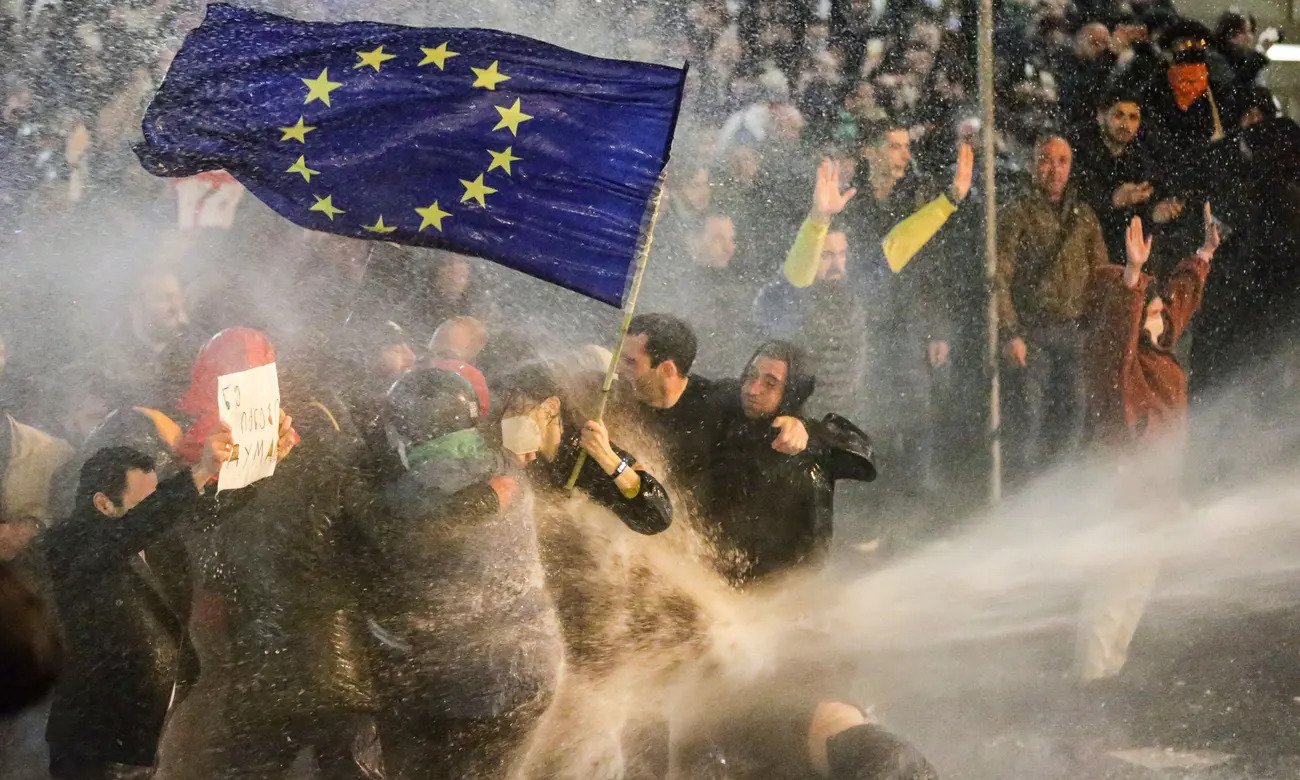
As Georgian protesters marched on the country’s parliament against a new “foreign agents” law this week, they bore signs that said “No to Russian law!”, and others decrying the spirit of autocracy and imperialism that is now firmly associated with Moscow’s influence in the region.
By all appearances, the law they opposed was a local initiative to allow the ruling Georgian Dream party to crack down on civil society and win forthcoming elections. But that party’s perceived closeness to Moscow and the similarities to a notorious Russian law against “foreign agents” were a popular rallying cry for Georgians who joined the protests.
“Everybody knows that Russia is not popular here,” said Kornely Kakachia, a professor at Tbilisi State University and director of the Tbilisi-based Georgian Institute of Politics. “And [the protesters] also want to show Georgians what would be the result of this [law]. Just look at what has happened with Russia.”
From Yerevan to Chișinău, and Tbilisi to Astana, the invasion of Ukraine has amplified fears of Russian aggression in some countries and forced others, considered allies, to at least reappraise Moscow’s role as a stable partner. And it has accelerated a trend among young people who were born after the Soviet Union era to take a more vocal stance against Russian influence in the region. Read More…