Russian ethnic minorities bearing brunt of Russia's war mobilization in Ukraine
-
 Loading...
 - Colin Drakos
- 05 Oct 2022
- 77 Views
- 0 Like
- 0 Comment
For about seven months, Aleksey had been largely untouched by the war in Ukraine. Like many others in the big cities of Russia, he was able to continue working and living his life.
But that changed in mid-September, after Aleksey boarded a flight headed for his hometown of Ulan-Ude, the capital of the Republic of Buryatia, which sits around Lake Baikal in the Siberian region of Russia. (Aleksey is not his real name; CBC agreed to change his name to protect him from potential reprisals.)
Aleksey was going for a short trip to visit friends and family he hadn't seen since moving to the western side a few years ago. The roughly 6,000 kilometres between the two regions means planes sometimes have a layover in countries south of the Russian border.
This was one of those flights, which meant Aleksey had to take his passport with him — something for which he would later be extremely grateful.
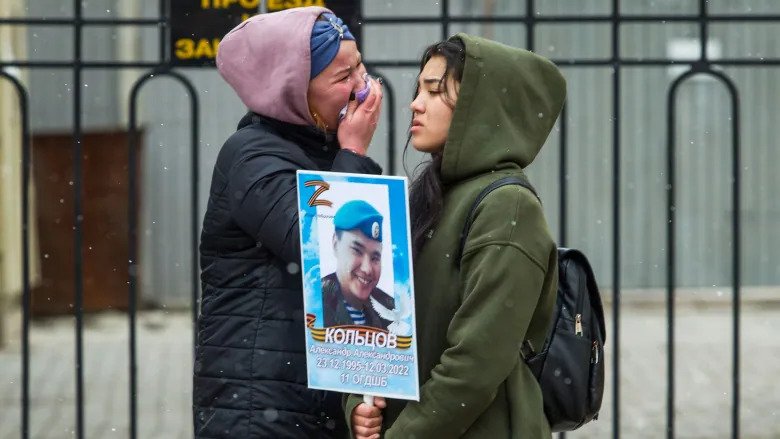
That's because on Sept. 21, Russian President Vladimir Putin announced a partial mobilization of 300,000 reservists — young men who had previously gone through the country's mandatory conscription — in order to continue the war in Ukraine.
While Putin declared the mobilization to be nationwide, those most affected are Russia's ethnic minorities — among them, the people of Buryatia (referred to as Buryat).
Aleksey had spent a few days in Buryatia before Putin's televised address, hoping the president's decision wouldn't result in a mass conscription of his people.
"We still had the hope that this would all settle, the draft notices wouldn't come," said Aleksey. Read More...