Rwanda eyes $3bn in new investments in 2023
-
 Loading...
 - Oumar Diouf
- 10 May 2023
- 102 Views
- 0 Like
- 0 Comment
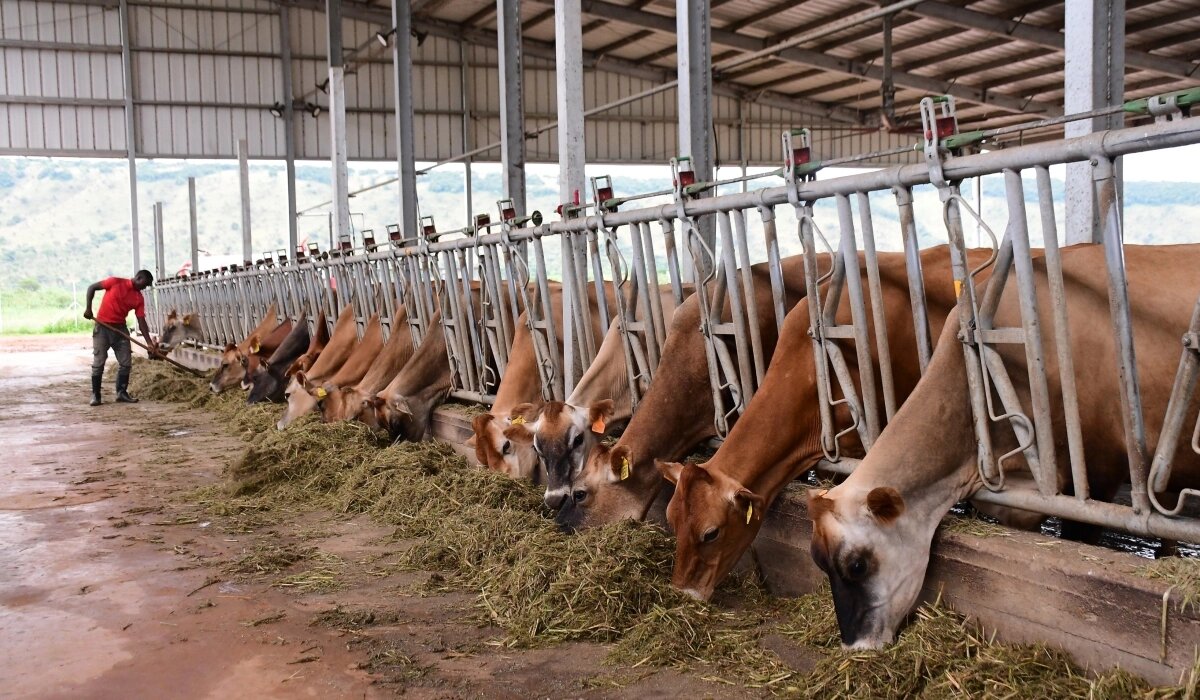
Some cows at Gabiro Agribusiness Hub project in Nyagatare District. Rwanda projects to attract total investments worth $3 billion (approx. Rwf3.3 trillion)
Rwanda is anticipating $3 billion in investments in 2023, with the help of the One Stop Center at Rwanda Development Board (RDB), as highlighted in RDB’s recent annual report. This amount is expected to be directed towards key sectors such as construction, ICT, agro-processing, mining, tourism, and manufacturing. Last year, the country recorded $1.6 billion in total investment, which was a 26% rise from 2020, but a decrease from $3.74 billion in 2021.
The global economic situation, characterized by inflation and the Russia-Ukraine crisis, made it challenging for governments to take monetary actions that were favorable to investments. Consequently, it led to a decrease in investments. However, even though the numbers decreased, sectors such as financial services, insurance, and manufacturing accounted for the lion's share of total registered investments, amounting to 45.6%. These sectors are also expected to generate 38.5% of the total employment opportunities created from these investments.
Kigali City recorded the highest inflow of investments, accounting for 77.3% of the total registered investments. It was followed by the Northern Province, which attracted 11.7% of the total investments recorded in the report, totaling $192 million. Local investments represented 39% of the total investments, while China, India, and Germany were the leading sources of FDIs, accounting for 13%, 11%, and 9%, respectively. Other significant contributors to FDIs include the United States, Canada, the UK, South Africa, Kenya, and Nigeria.
According to Emmanuel Habineza, Managing Partner of BDO in East Africa, the investment landscape has experienced a shift since the onset of Covid-19 due to a change in perspective towards business opportunities. As a result, there has been a slowdown in the hospitality industry, leading to a drop in investment. However, there are still numerous untapped sectors in the Rwandan economy, such as food value-addition, logistics, and services, that have the potential to attract investors.
Habineza further suggests that studies be conducted to identify other product offerings that can be used to draw in more investors and to promote them as well. On the other hand, CJ Fonzi, Partner at Dalberg Advisors, believes that the investment climate in Rwanda has gained momentum over the years, leading to an increase in the pipeline of investment opportunities.
The Rwandan economy is fascinating because it presents numerous sectors that investors can invest in. There has been significant investment in technology and the agriculture sector, and there is a growing trend in the Kigali International Financial Centre. Fonzi adds that despite slow growth in some sectors due to sector-specific challenges, the economy still offers abundant investment opportunities for FDIs.