Rwanda: vegan agatogo
-
 Loading...
 - Benard Mugisha
- 14 Mar 2023
- 137 Views
- 0 Like
- 0 Comment
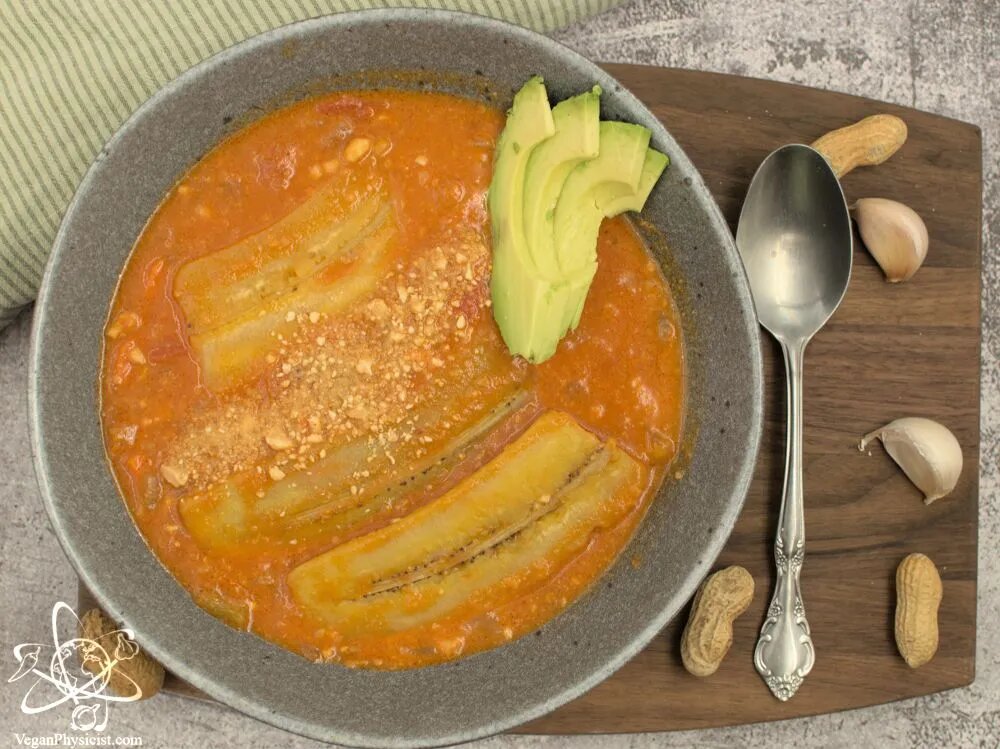
Today we are visiting Rwanda to cook vegan agatogo. From our last stop in Eastern Europe, we head south and find ourselves once more in East Africa. Agatogo is a Rwandan tomato-based stew with plantain or matoke. Read on to learn more about Rwandan cuisine and agatogo or jump straight to the recipe.
Rwandan cuisine
Rwanda is a small, landlocked East African country. We have recently visited two of Rwanda’s neighbours, Burundi where we made beans and bananas, and the Central African country the Democratic Republic of Congo, where we cooked vegan fumbwa. Rwanda lies in a mountainous region surrounded by large lakes and is known as “the land of a thousand hills” [1].
Rwandan cuisine is dependent on local, small-scale farming [2]. Local fruits and vegetables are the backbone of Rwandan dishes and meat is often a rarity, in particular in rural areas [3]. In the cities, meat and fish are both a bit more common. Local starches include matoke (a relative to plantain), sweet potatoes, cassava, millet, and corn [1]–[3]. Other important produce are beans, peas, peanuts, onion, tomato, cabbage, peppers, and leafy greens, including cassava leaves. The plants themselves are often the main contributor to flavour in Rwandan meals, sometimes accompanied by Maggie cubes, hot peppers and fresh herbs like cilantro [4].
Rwandan dishes
There are many local, plant-based or plant-heavy Rwandan specialties to choose from. Isombe is a green stew based on pounded cassava leaves cooked with onion, eggplant and tomatoes[1]. Isombe, and many other stews, are usually served with ugali or bugali. Ugali is a firm, porridge-like mash made from ground corn [1]. Similar to West-African fufu, ugali is enjoyed throughout East Africa and known by many names, like pap and nsima [3], [5]. In some regions, cassava or millet are used instead of corn.
Muvanje is another interesting dish. This stew is made from several different starches including sweet potatoes, cassava, and arrow roots, along with beans and pumpkin [4]. To add a little heat to their meals, Rwandans use akabanga, an extremely hot chili oil made from scotch bonnet and vegetable oil [6] as well as pili pili sauce made from scotch bonnet, onions, garlic and tomatoes [3], [7].
Matoke, a relative to plantain, is an important staple in the region, as we learned when visiting Rwanda’s southern neighbour Burundi where we made beans and bananas. In Rwanda, matoke is also served deep-fried as chips called mizuzu [3]. Urwaga is a beer made by fermenting bananas [1]. Igisafuria is a one-pot meal made by simmering matoke with onion, tomatoes, celery, and hot peppers (usually with chicken as well) [1] while umunyinjye is simply mashed matoke served as a side dish [3].
Rwanda vegan agatogo recipe Read More…