Saving the rarest of the rare

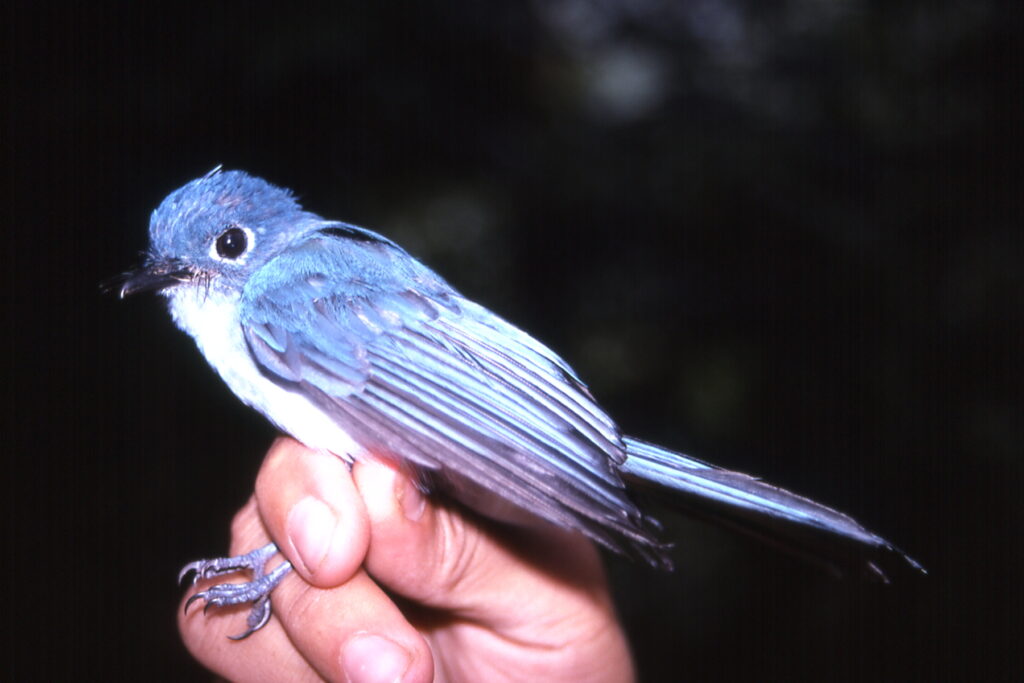
In 1873, a local hunter working for German naturalist A B Meyer on the island of Sangihe, Indonesia, collected an unfamiliar blue songbird that proved to be new to science. Despite further explorations, Cerulean Flycatcher was not definitely seen again until 1998, following which its population was thought to be just 19-135 birds. Almost 25 years later, surveys – including by Burung Indonesia (BirdLife Partner) – have revealed new locations but not increased that initial estimate. Unequivocally one of the rarest of the world’s rare birds, Cerulean Flycatcher is a BirdLife priority.
In 2007, BirdLife launched the Preventing Extinctions Programme (PEP), seeking to understand the status of all bird species and prevent, halt or reverse the slide to extinction. Underpinned by BirdLife science, often supported by funding from Species Champions (dedicated benefactors) and working through local Species Guardians (BirdLife Partners and other frontline conservation organisations), analysis of efforts since 2013 suggests that PEP has helped at least 726 globally threatened species. For Roger Safford, PEP’s Senior Programme Manager, this sends a clear statement that extinctions resulting from human activity “simply aren’t acceptable”.
The ‘rarest of the rare’ comprise extant, Critically Endangered species currently considered to have the tiniest global populations, often just a few dozen individuals. They matter to BirdLife, Safford explains, “because there are no lost causes”. Such species are “typically characteristic of extraordinary places with high levels of endemism and clusters of rare species. Working to save the very rarest birds can bring wider benefits to threatened biodiversity”. So which are the very rarest birds that are benefiting from BirdLife’s help – and how? Read More...