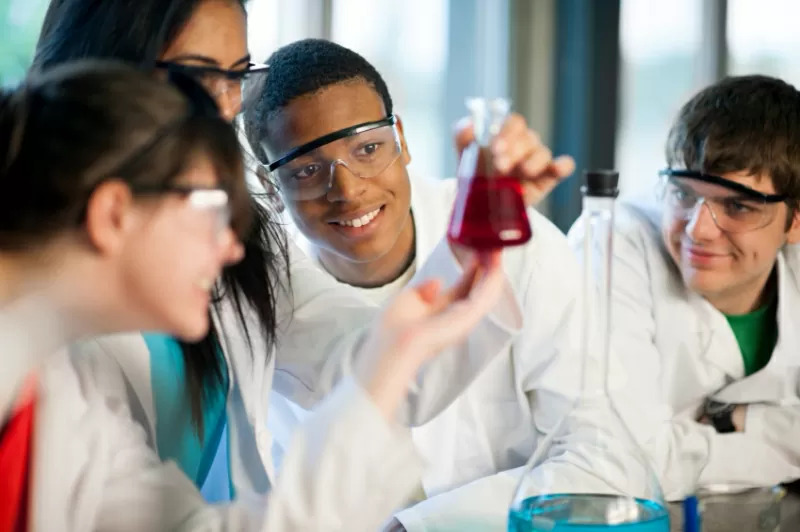
School Lab Safety Tips

School labs are a part of science classrooms in middle schools, high schools, and colleges across the country. While the lab is essential to hands-on learning, these labs also subject students to a number of dangerous situations from toxic chemicals to fire. In fact, according to Discover Magazine, the rate of lab accidents in colleges and schools is between 100 and 1000 times the accident rate at major chemical companies. The following tips can help keep students safe.
Lab Communication Tips for Safety
Just like in any dangerous situation, good communication is essential for preventing accidents. Both instructors and students need to practice these tips in order to maintain a safe lab environment.
Clearly Explain the Experiment Before Entering the Lab
A clear explanation, in addition to good printed instructions, is the first step toward avoiding accidents. Instructors shouldn't wait until students enter the lab to explain the experiment, since some students may get distracted by the tools and supplies, want to get started early, or simply find it difficult to concentrate.
It's also essential to answer any student questions, even if this means delaying the start of the lab experiment. These questions can bring up important safety topics.
Ask Plenty of Questions
Similarly, students need to ask questions if they are not certain of a lab procedure or ingredient. This will allow the instructor to clarify any potentially dangerous misunderstandings before the lab experiment actually begins. Remember, you can also ask questions after the lab starts.
Read the Entire Lab Experiment Before Starting
It's tempting to get started on a lab experiment right away, even if you haven't completely read the steps. However, when it comes to something involving dangerous chemicals or heat, you should always have a complete understanding of the process before you begin the first step. It's even a good idea to read the experiment a second time, so you can ask any additional questions you may have before you begin.
Personal Preparation Tips for Lab Experiments
Before you begin your experiment, it's important to make sure you're wearing the appropriate clothing and safety gear. Keep these tips in mind to help.
Pull Back Your Hair
If you have long hair, always pull it back into a ponytail before you begin your experiment. Also, secure loose clothing and remove items like scarves. Loose hair and clothing can easily catch fire or get caught in equipment during your experiment.
Wear Goggles
Your eyes are delicate, and you need to protect them from harmful vapors, splashes, and burns. Always wear safety goggles in the science classroom when you're conducting any kind of hands-on experiment.
Put on Protective Clothing
Depending on the requirements of your school and the type of lab you are conducting, you may need to wear lab aprons and gloves to protect your skin and clothing. If these items are required, put them on as soon as you enter the lab.
Tips for Conducting Safe Experiments
Once you understand the experiment and have put on any necessary clothing and goggles, it's time to get started. Keep these tips in mind as you work.
Avoid Touching Your Face
When you have started the lab experiment, avoid touching your face with your hands. Your hands may have traces of acid or other chemicals, and these could get into your eyes or mouth.
Don't Eat or Drink
Never bring a drink or a snack into the lab with you. Although you may try to keep these items from becoming contaminated, there is no way to ensure they are safe. Never eat or drink anything in the lab.
Stay Focused
Lapses in attention can result in accidents, so it's important that you stay focused as you work. Don't engage in horseplay or do anything else that might distract others or cause a disturbance. Read More…