Scientists discovered fossils of a huge mosasaur from Morocco
-
 Loading...
 - andreassen linnea
- 10 May 2023
- 84 Views
- 0 Like
- 0 Comment
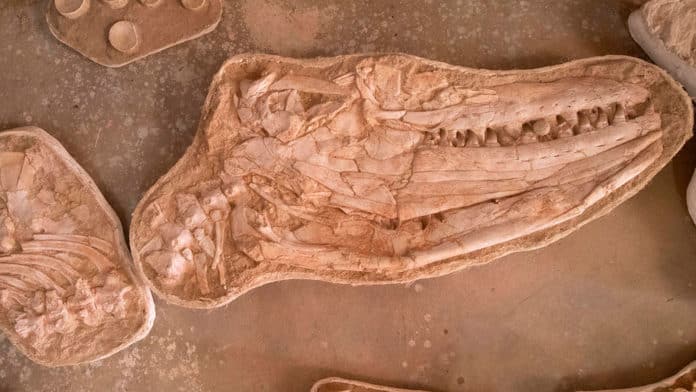
A team of scientists has made an astounding discovery in Morocco, uncovering fossils of a colossal mosasaur that existed around 66 million years ago. These giant marine reptiles, known for their massive jaws and teeth, dominated the seas during their time on Earth. The newly discovered species, Thalassotitan atrox, was an apex predator that grew to be almost 30 feet long, about the same size as a killer whale.
Researchers from the University of Bath made the discovery in Morocco, located approximately one hour outside of Casablanca. Thalassotitan had a short, broad muzzle and conical teeth, much like those of an orca, which is unlike other mosasaurs that had long jaws and slender teeth for catching fish. These adaptations indicate that Thalassotitan was a specialized predator, occupying the top position in the food chain.
The remains of Thalassotitan revealed that it likely attacked and ate other marine reptiles, as the teeth of the mosasaur were often broken and worn, indicating the biting and tearing of prey. Scientists also found fossils with unusual damage that suggested Thalassotitan’s victims. These included large predatory fish, a sea turtle, a plesiosaur head, and the jaws and skulls of at least three different mosasaur species.
Thalassotitan was a formidable creature that was feared by other marine animals, including other Thalassotitan, as evidenced by facial and jaw injuries from violent conflicts. These conflicts were likely over mates or feeding sites. Dr. Longrich, one of the researchers, described the mosasaur as an "amazing, terrifying animal" that was akin to a "Komodo Dragon with a great white shark crossed with a T. rex crossed with a killer whale."
The discovery of the Thalassotitan indicates that mosasaurs were flourishing in the final million years of the Age of Dinosaurs and were not in decline before the asteroid impact that led to the Cretaceous mass extinction. These findings provide researchers with an unparalleled glimpse into the biodiversity that existed at the end of the Cretaceous period.
“They tell us how life was rich and diversified just before the end of the ‘dinosaur era,’ where animals had to specialize in having a place in their ecosystems. Thalassotitan completes the picture by taking on the role of the mega predator at the top of the food chain.”
"Morocco's exploration of marine life has barely scratched the surface. The Cretaceous period boasts an opulent and variegated marine fauna that remains largely untapped. Despite the ongoing study of the mosasaurs' diversification and biology, there is still so much to uncover."