Scientists Finally Solve Mystery of Why Solar Probes Keep Fogging Up
-
 Loading...
 - Joanna Bailey
- 10 Mar 2023
- 74 Views
- 0 Like
- 0 Comment
Space probes designed to study the Sun are the last places you'd expect to have a moisture problem. Yet a recent investigation has found aluminum filters on two different satellites are degrading as water corrodes their surfaces.
The filters help detect extreme ultraviolet (EUV) emissions, so any kind of clouding is bound to affect their effectiveness. Though the issue has been evident for a while, scientists now finally know what's causing it.
NASA's Solar Dynamics Observatory (SDO, launched in 2010), and NASA and the European Space Agency's Solar and Heliospheric Observatory (SOHO, launched in 1995) both have the same issue. In the first six months, SOHO's Solar EUV Monitor degraded by about 35 percent; in the five years following, it degraded by a further 60 percent.
Solar probes aren't exactly cheap, and neither is launching annual recalibration missions to send new sensors into space. Figuring out why the filters are clouding could see to future solar probe missions being made more robust.
In 2021, a team of scientists led by physicist Charles Tarrio of the National Institute of Standards and Technology (NIST) experimentally figured out what it wasn't – that is, a build-up of carbon causing the fogging, long considered the culprit.
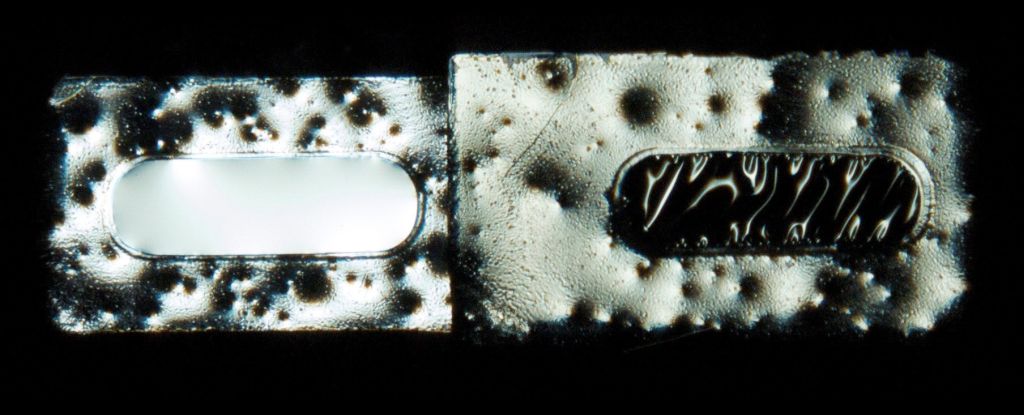
Now they've figured out what it is, and it's surprising: oxidation of the aluminum, caused by the presence of water and induced by ultraviolet radiation. As the layers of oxidized metal build up, the filter becomes foggy, preventing it from admitting the light waves the sensor is designed to monitor.
The surface of aluminum is usually naturally coated with a surface layer of oxide, which occurs when oxygen atoms bond to the atoms on the surface of the aluminum. UV light increases the oxidation rate, causing additional layers of oxide to form. Read More…