Scientists find link between excess visceral fat and cognitive performance
-
 Loading...
 - Carolina Xu
- 04 May 2023
- 65 Views
- 0 Like
- 0 Comment
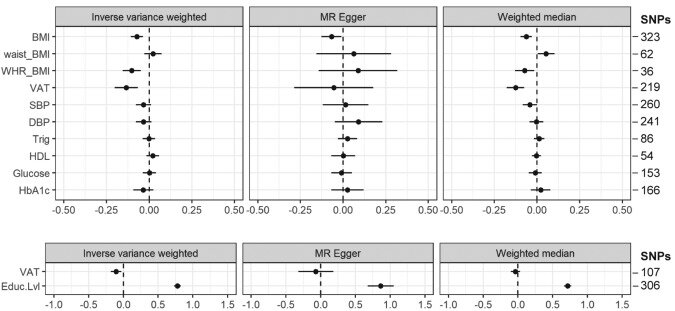
Two-sample Mendelian Randomization reveals causal evidence for visceral adiposity in influencing general cognition. The forest plots illustrate standardized beta (95% Confidence Interval) for each two-sample MR in inverse variance weighted, MR Egger and weighted median. BMI = Body Mass Index; waist_BMI = Waist Circumference adjusted for BMI; WHR_BMI = Waist Hip Circumference adjusted for BMI; VAT = Visceral Adipose Tissue; SBP = Systolic Blood Pressure; DBP = Diastolic Blood Pressure; Trig = Triglycerides; HDL = High-density lipoproteins; Educ.Lvl = Education levels. VAT_no_BMI refers to two-sample MR performed without SNPs that are also genetic variants for BMI. Credit: The Lancet Regional Health - Western Pacific (2023).
Scientists from the Lee Kong Chian School of Medicine (LKCMedicine) at Nanyang Technological University, Singapore (NTU Singapore) have found that Asians with an excess amount of visceral fat tend to have a poorer ability to think, learn, and remember. This finding is based on an analysis of the health data of close to 9,000 multi-ethnic Singaporeans and permanent residents collected for the Health for Life in Singapore (HELIOS) study between 2018 and 2021.
The scientists found that an increase in the type of fat wrapped around the internal organs—known as visceral fat—is associated with poorer performance in cognitive tests of memory, executive function, processing speed, and attention. When the scientists conducted a deeper dive into the relationship between body fat and cognition, using statistical analysis of genetic data from global databases, they found that a higher body mass index (BMI) and BMI-adjusted waist-to-hip ratio were also linked to a fall in cognitive performance.
These findings, published in the April edition of the journal The Lancet Regional Health—Western Pacific, highlight the impact that preventing obesity could have on maintaining cognitive function, said the scientists. NTU LKCMedicine's Professor John Chambers, senior author of the study and HELIOS study's lead investigator, said, "With dementia expected to afflict 78 million people in 2030, and 139 million people by 2050, understanding and addressing the determinants of cognitive function is a major public health priority. Read More…