Scientists have calculated what can unbalance El Nià±o
-
 Loading...
 - niam violet
- 25 Aug 2022
- 69 Views
- 0 Like
- 0 Comment
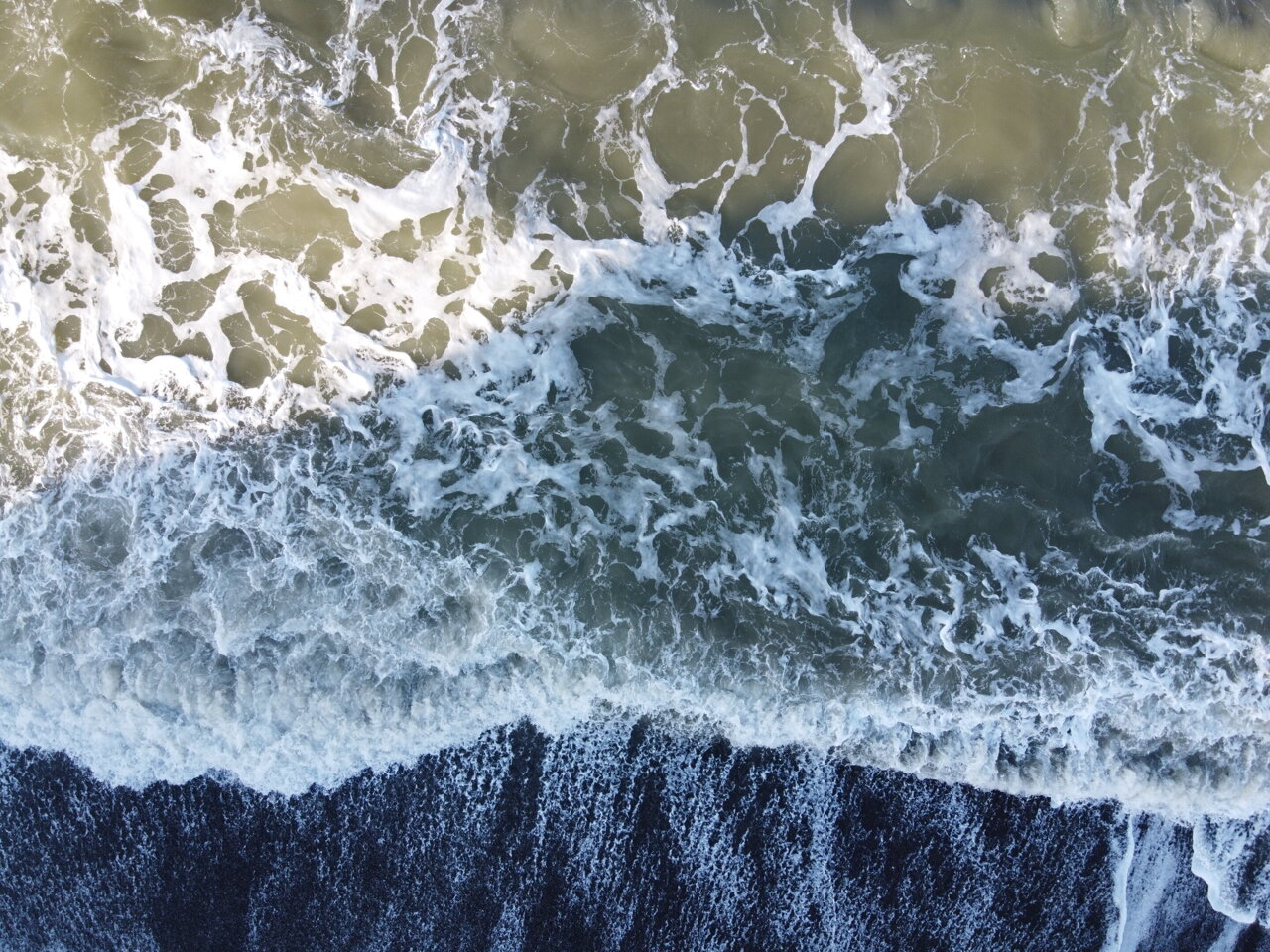
Physicists and mathematicians of the Ural Federal University (UrFU) have calculated how external factors affect the behavior of El Niño - atmospheric and oceanic processes in the Pacific region. In the mathematical model, they accounted for wind, humidity, temperature, ocean currents, and other parameters that can lead to unpredictable El Niño results. This is a phenomenon in which the temperature of the upper Pacific Ocean rises and the near-surface waters shift eastward. The onset of El Niño affects rainfall, fisheries in Peru, Chile, Ecuador, and climate change on the planet. Description of the features of the unusual phenomenon and its scenarios, the scientists published in the journal Physica D: Nonlinear Phenomena.
“Our calculations have shown that the higher the intensity of the noise, the more unpredictable the consequences, the stronger the disturbances, the more intense El Niño will manifest itself. And for the system to get out of equilibrium, sometimes you need a little push: a change in humidity or ocean currents,” says Head of the Laboratory of multiscale mathematical modeling at UrFU Dmitri Alexandrov. “The mathematical model allowed us to show how the process will develop under the influence of one or another factor. That is, we did not predict when El Niño would appear or what its consequences for the global climate would be, we calculated possible scenarios of this phenomenon and showed that under some conditions there would be one version of events and under a different set of parameters there would be another.”
According to the calculations of physicists, external factors have a major impact on this phenomenon. For example, the stronger the wind, the greater the temperature amplitude. This, among other things, can throw the system out of balance and cause unpredictable weather phenomena.
“We based on the classical Vallis model, that describes El Niño. It is a simple model. It takes into account the temperature difference between the east and west coasts, the heat exchange between the Pacific Ocean and the atmosphere, and the velocity of air masses. We also took into account external noise - parameters that also affect atmospheric and oceanic processes. For example, changes in pressure, humidity, wind gusts, ocean currents,” says researcher.
These calculations may come in handy the next time El Niño appears. On the one hand, scientists still cannot predict when El Niño will come next, but, on the other hand, they have learned to predict how El Niño will behave. This is important because El Niño affects the climate as much as global climate change affects this phenomenon.
And if previously it was thought that the consequences of El Niño are observed only in South America, today scientists are confident that the abnormally warm water surface affects the weather of most of the Pacific Ocean, up to the 180th meridian. At the same time at El Niño periods global weather changes are more pronounced: large-scale changes in ocean temperature, precipitation, atmospheric circulation and vertical air movement over the tropical Pacific Ocean. Read More…