Seeing A New Life: George Nobechi's Path To Photography
-
 Loading...
 - Rimba Ningsih
- 20 Apr 2022
- 362 Views
- 0 Like
- 0 Comment
Back in the day, photos used to be produced in a darkroom, where a film negative would be enlarged to expose a sheet of paper. The paper would appear blank, until swished gently in a bath of developer fluid. Gradually, an image would emerge.
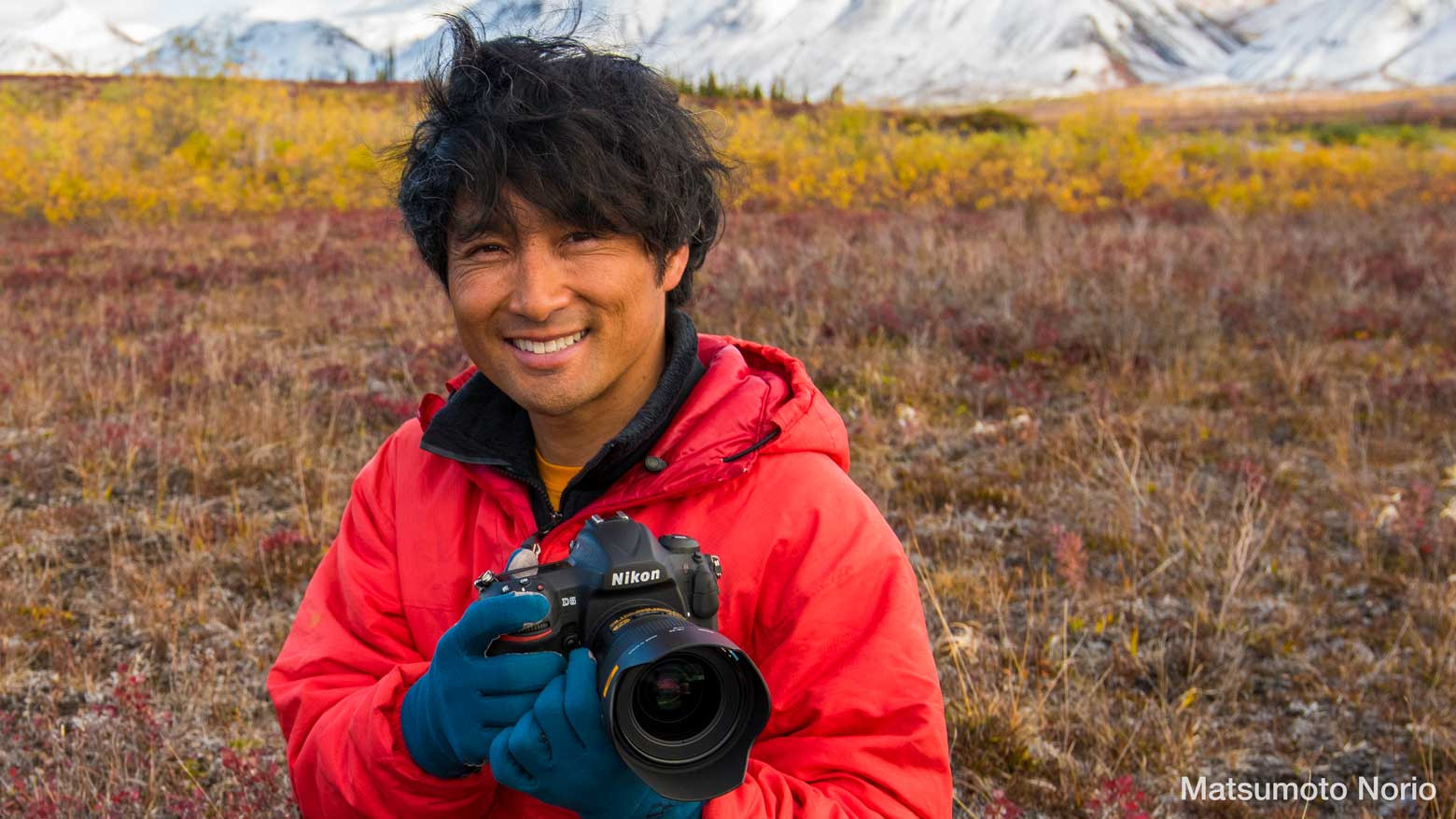
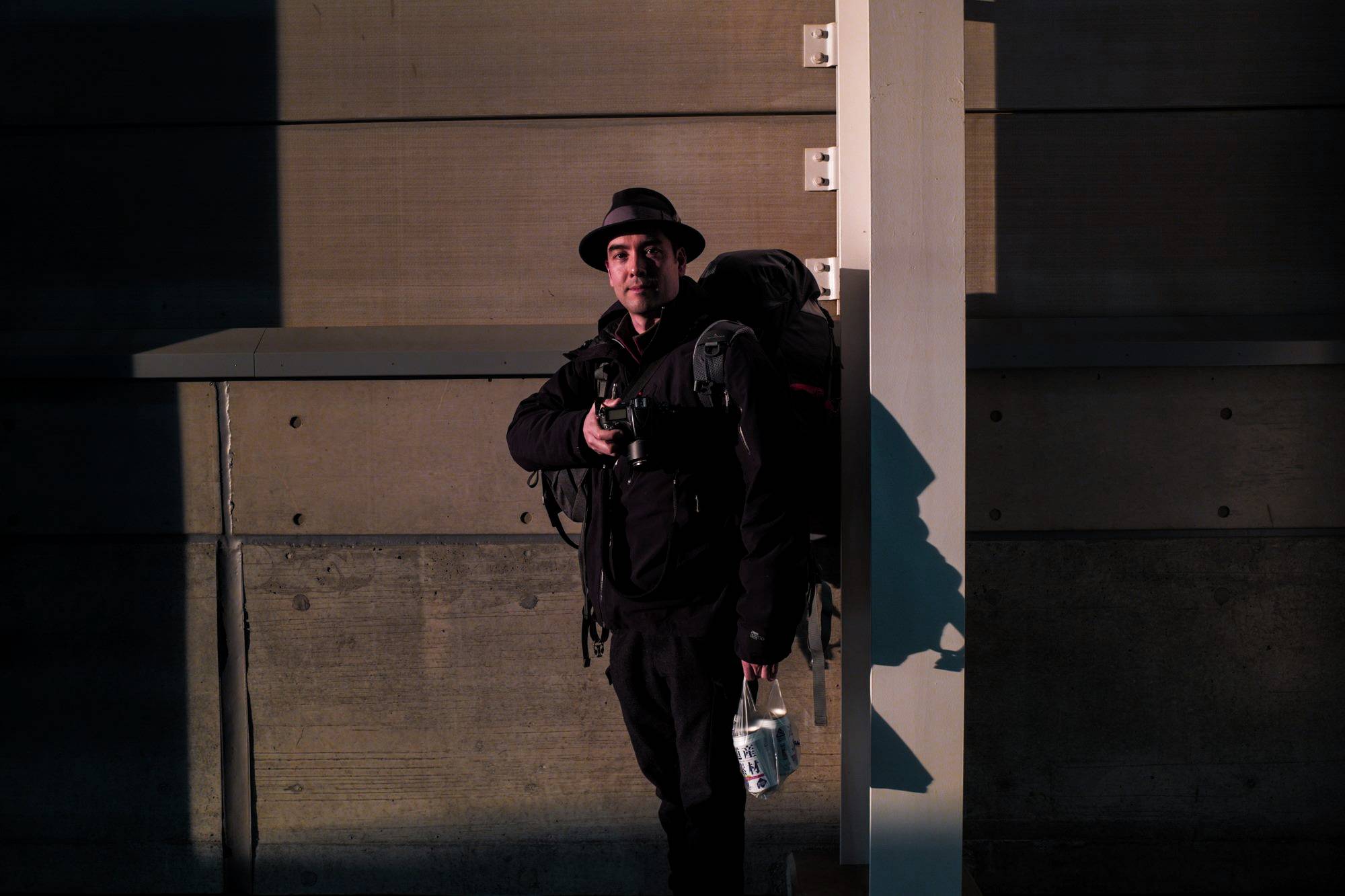
This way of processing might be the perfect metaphor to describe the life of Japanese-Canadian photographer George Nobechi. For 12 years, Nobechi worked in the world of finance, trading stocks and taking on stressful jobs that left his world looking blank. One day, he gave up the office, and plunged into a completely different bath, pursuing a career in photography. This is when his imagination really began to develop.
Nobechi, now 41, is by any measure a successful artist. Aside from numerous awards and solo exhibitions around the world, his work can be found in collections at the Detroit Center for Contemporary Photography and the University of Arizona’s Center for Creative Photography. This month, he is the subject of an exhibition titled “Eastern Light, Western Wind,” which runs till May 9 at the Tokyo American Club. While the club is not normally accessible to the public, Nobechi has arranged a reservation system to admit people to the gallery.
Even the briefest glance at the photographer’s work will bring up two thoughts: first, his use of wide-angle lenses conjures up a frontier-like vastness, even when the subject is a view through a window, and second, there’s an unflinching focus on rough imperfections and gritty details that seems to tap into Japan’s wabi sabi aesthetic. This duality is not surprising, given Nobechi’s exposures.
Nobechi spent his childhood years in Tokyo, the son of a Canadian businessman and Japanese mother who trained in music at the Juilliard School in New York. He enjoyed a cultured upbringing, with lots of travel and visits to art exhibitions with his maternal grandfather. He even recalls having a Contax 35 mm camera, and taking rolls of family shots. One of his strongest visual memories, though, is of gazing at Tokyo Tower, then lit with an outline of white lights and some blinking red ones, from his bedroom window.
“I tended to sleep with the curtains open,” he recalls, “and somehow the calmness that came from the view over the cityscape of nighttime Tokyo was reassuring.”

When Nobechi was 11, his family relocated to Edmonton, Alberta, and the culture shock was significant. At the time, in Edmonton, “all Asians were considered ‘Oriental people,’” Nobechi recalls. The rural landscape also left an impression. “It was 40 degrees below zero, the crossover point for both Centigrade and Fahrenheit,” Nobechi says, “a temperature that froze my eyelashes and nostrils walking to school.”
However harsh the climate, Nobechi grew to appreciate Edmonton and, after moving to Vancouver several years later, found himself longing to return. He was only 19 years old when his father died suddenly. He helped his mother and younger sister get their feet back under them, finished a degree in history and international relations, and then moved back to Tokyo to enter the field of finance.
For 12 years, Nobechi worked in the world of finance, both in Tokyo and then on Wall Street. Then, one evening in 2014, Nobechi found himself sitting with a circle of young photographers exhibiting at Photoville, an outdoor photo festival held at Brooklyn Bridge Park. Something about the moment, under the city lights and in the company of people devoted to their craft, moved him to see a different future. He quit his job, put his belongings in storage, and moved to Santa Fe, New Mexico, to take his first serious photography class, “Visions of the American West,” with Nebraskan Brett Erickson.
Erickson found merit in his quiet student and, perhaps admiring Nobechi’s daredevil cowboy move of changing horses mid-stream, introduced him to Sam Abell. Abell, a master at framing life and light who’s known for his work for National Geographic Magazine, took Nobechi under his wing, and the two remain friends to this day.
“We hit it off immediately,” Nobechi says, “and he told me at the end of my workshop with him in March 2015, that if I wanted to truly walk away from my prior career and life and attempt a career at photography, he would help me. One doesn’t get offered that kind of opportunity every day.”
Nobechi acknowledges his mentor’s influence, and a close look at Nobechi’s work — particularly his haunting through-the-window series “Here, Still (Unmoored),” and his 2020 Prix de la Photographie Paris award-winning series “Japanese Aquariums” — reveals flashes of similar attention to framing, spatial sensitivity and profound quiet. Nobechi traveled nearly 1,000 days between his time with Abell and moving back to Japan in 2017, circling the globe, vagabond-style, only to return to Tokyo for three years, before moving again, this time northward to a larger space in Karuizawa, Nagano Prefecture. There, he had room to print his own work, offer photography classes and hike through the woods, which surround a nearby volcano.
“The neighbors I encounter are foxes and kamoshika (Japanese serow) and the many wild birds,” Nobechi says. “Yet, if I wanted to meet you for a coffee, I could be in Marunouchi in 70 minutes. That’s rare in this world. Karuizawa is a special place, and I fully intend on bringing to it everything I know and have learned along the way to make it a vibrant art community.”

Nobechi is quick to encourage new and upcoming photographers, perhaps recalling his own path to the art, but he acknowledges the challenge to excel is heightened when most of the local population carries a fairly decent camera, most of the time.
“I would say that digital cameras mean that there is a very low hurdle to entry,” Nobechi says about modern forms of photography. “You can also set most cameras in auto mode. They will do the setting work for you 90% of the time and you will achieve a competent picture. But at the same time, I think it has become far more difficult to make work that stands out. At the end of it all, it won’t be ‘he/she/they who got the most likes wins,’ but rather as those images fade from our memories, what original ideas were left.”
Manipulation and compositing of images is something Nobechi eschews (but doesn’t necessarily look down upon), and he isn’t a big fan of post-processing either. Read More...