Serbia: vegan burek
-
 Loading...
 - robyn anna
- 25 Mar 2022
- 373 Views
- 0 Like
- 0 Comment
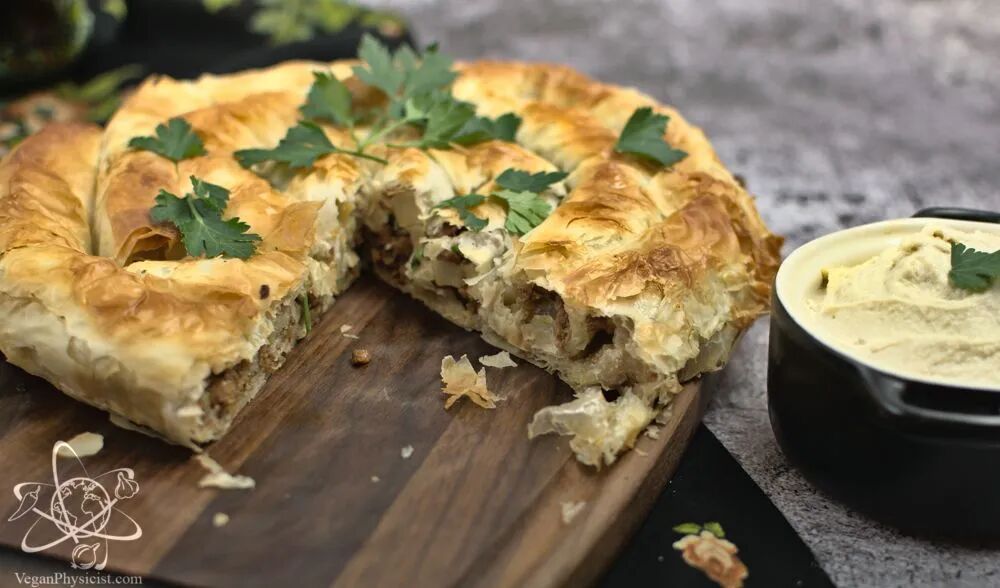
Today we set foot in the Balkan as we learn a bit about Serbian cooking. We make a burek, a nice filo dough pastry filled with vegan mince, onion and potato. Crispy and rich in flavour, this traditional Serbian breakfast-and-more dish is sure to delight.
Serbian cuisine
Serbia is a landlocked country in the Balkans, a region which has seen a lot of migration and occupation over the past several centuries. The cuisine of Serbia is a combination of the cuisines of the different peoples who have occupied the region, and the country’s historical neighbours ​[1]​. Influences from Greek, Turkish, Hungarian and Bulgarian dishes are fused with Serbian and Balkan dishes. Meat and dairy are important elements in the Serbian kitchen along with vegetables like bell pepper, tomato and eggplant.
Among the many dishes that showcase Serbian cuisine, you will find meat dishes like ćevap, a type of kebab brought by the Ottomans and karaÄ‘orÄ‘eva šnicla, a stuffed and breaded schnitzel like dish ​[2], [3]​. Dairy is another big component in the Serbian kitchen and kajmak, a home made cheese that is either eaten fresh or allowed to mature in ones home, is served as a starter or a side with many Serbian meals ​[1], [2]​.
Among the dishes that are more easy to create vegan recipes for, we find sarma ​[1], [4]​. Similar to the sarmale we made for Romania, Serbian sarma are cabbage rolls made with fermented whole head cabbage leaves, another dish that came to Serbia with the Ottoman rule. Hungarian perkelt, a paprika heavy stew related to goulasch, makes an appearance in Serbia as well.

Vegan Serbian dishes
Prebranac is an inherently vegan Serbian recipe where white beans are baked with fried onions, garlic and paprika until rich in flavour and creamy in texture ​[3]​. As with many popular dishes, everyone has their own special twist on it, such as adding celery, carrots or some white wine. Ajvar is another well known vegan Balkan recipe where bell peppers are roasted and ground into a delicious relish that goes with everything ​[5]​. If you replace the peppers with eggplant, you instead get pinđur, another popular side dish in Serbia.
One dish that was completely new to me is gomboce. Also known as plum dumplings or knedle, the dish is popular across the Balkans and in Hungary and Poland ​[6]–[9]​. Fresh, pitted plums are wrapped in a dough made from boiled potatoes and flour to create dumplings which are then boiled and finally rolled in fried bread crumbs and sugar. Somewhere between a savory dessert and a sweet savory dish, you can never go wrong with gomboce served with some vegan sour cream.

Serbian vegan burek
In Serbia, pies are everywhere. The pies are commonly made with filo dough (aka phyllo dough) and come in all shapes and with all sorts of fillings. Gibanica contains layers and layers of filo dough interleaved with homemade cheese ​[1], [10]​. Sweet pies like baklava or walnut pie are also very popular ​[11]​.
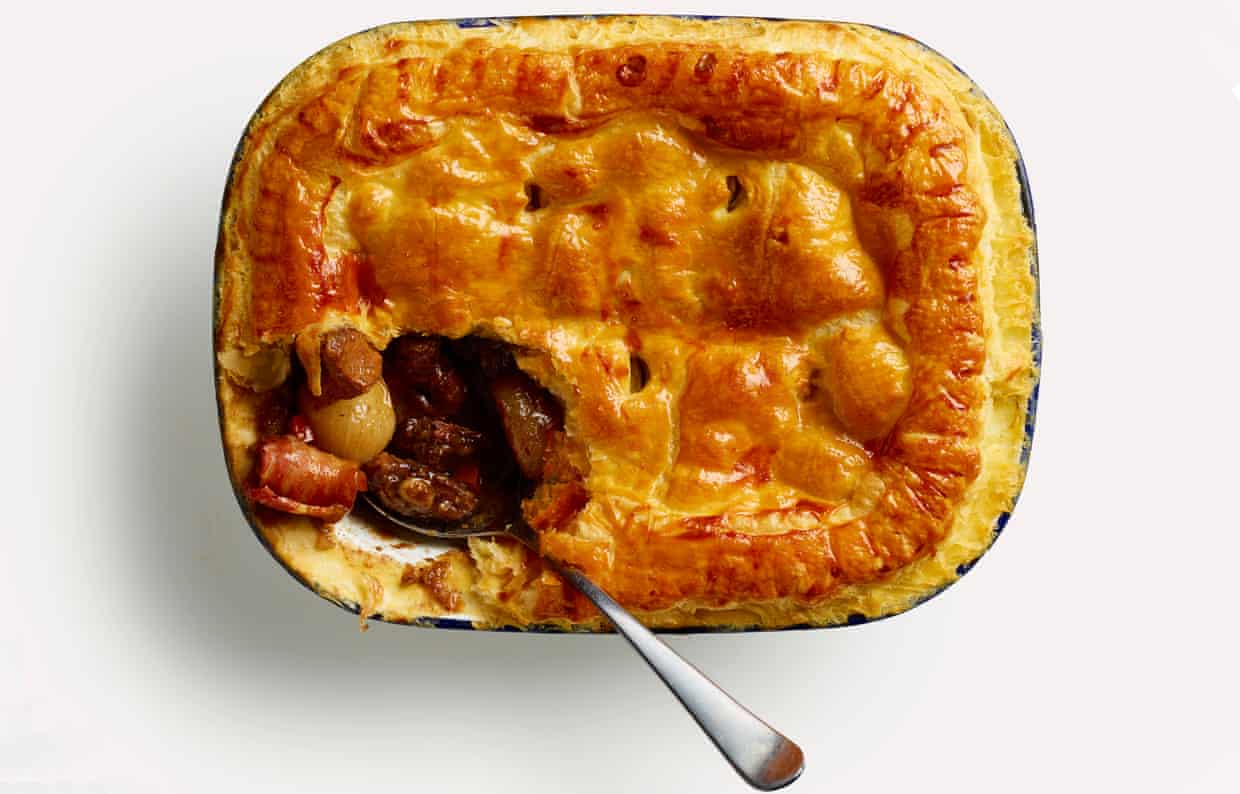
Burek, or börek is one of the more famous pie varieties and is often eaten for breakfast ​[1], [12], [13]​. Originating in Turkey, burek has been made in Serbia since the end of the 15th century, maybe longer, and is popular all across the Balkan and the neighbouring region, from Greece to Turkey. An annual burek contest is held in the Serbian city Niš, birthplace of the Serbian style burek. During the festival in 2006, a 200 kg burek was created, possibly the biggest burek the world has ever seen ​[12]​.
How to make vegan burek
The chief component is thin, delicate layers of filo dough with varying fillings, such as spinach or cheese. In shops, the pie is usually rolled into a fancy looking spiral but many home cooks simply go for a rectangular baking dish to save time, or individual, triangular pies. After all, the flavour is what matters. The most common filling seems to be minced meat ​[13]–[16]​, sometimes with potatoes ​[17], [18]​, with varying spices used vary. Most use simple ingredients like include onion, parsley and black pepper ​[13], [15], [16]​ while some include a large array of spices like cinnamon, allspice, cumin, smoked paprika and/or ginger ​​[17], [18]​.
In Serbia, the most common fillings seems to be minced meat, potatoes and onion, which is what I will be making for the vegan burek on this vegan world tour. The recipe below uses a common vegan mince, such as TVP, and potatoes, onions, garlic and parsley to give the dish the traditional flavours.
Conclusion
After cooking the recipe below, I understand why burek is so popular across the entire Balkan. The filo dough is crispy and rich and the simple filling is amazing. Loved the creaminess from the potatoes. The dish itself is very straight forward to make. The filling takes very little time and the rolling up step is not that bad. It cracks a little but that’s fine, the final burek still looks great.
Serbian burek is a filo dough pie usually filled with minced meat and rolled into a beatuiful spiral. This vegan burek uses vegan mince, potatoes and onion for the filling.
Ingredients
· 250 mL your favourite vegan mince TVP, Yves veggie ground, etc.
· 300 g potato, raw, cut into 1 cm cubes One large potato
· 150 g onion, minced ½ onion
· 2 tbsp parsley, chopped
· salt and pepper, to taste
· 8 layers filo dough, thawed 30 x 40 cm, see note
· 3 tbsp vegetable oil e.g. canola
· 50 mL plant-based milk, e.g. soy
Instructions
Filling
In a pan on medium heat, sweat the onion.
Add the potatoes and cook for 5 minutes, until the potatoes start to go soft
Add the vegan mince and continue to cook for 10 minutes. The potatoes should be just about done.
Sprinkle with parsley.
Add salt and pepper to taste.
Let the filling cool before continuing.
Make the burek
Preheat oven to 200°C.
Once the filling has cooled, brush a pan and a baking sheet with oil.