Singapore’s rate pause points to new reality
-
 Loading...
 - Alison Poon
- 18 Apr 2023
- 58 Views
- 0 Like
- 0 Comment
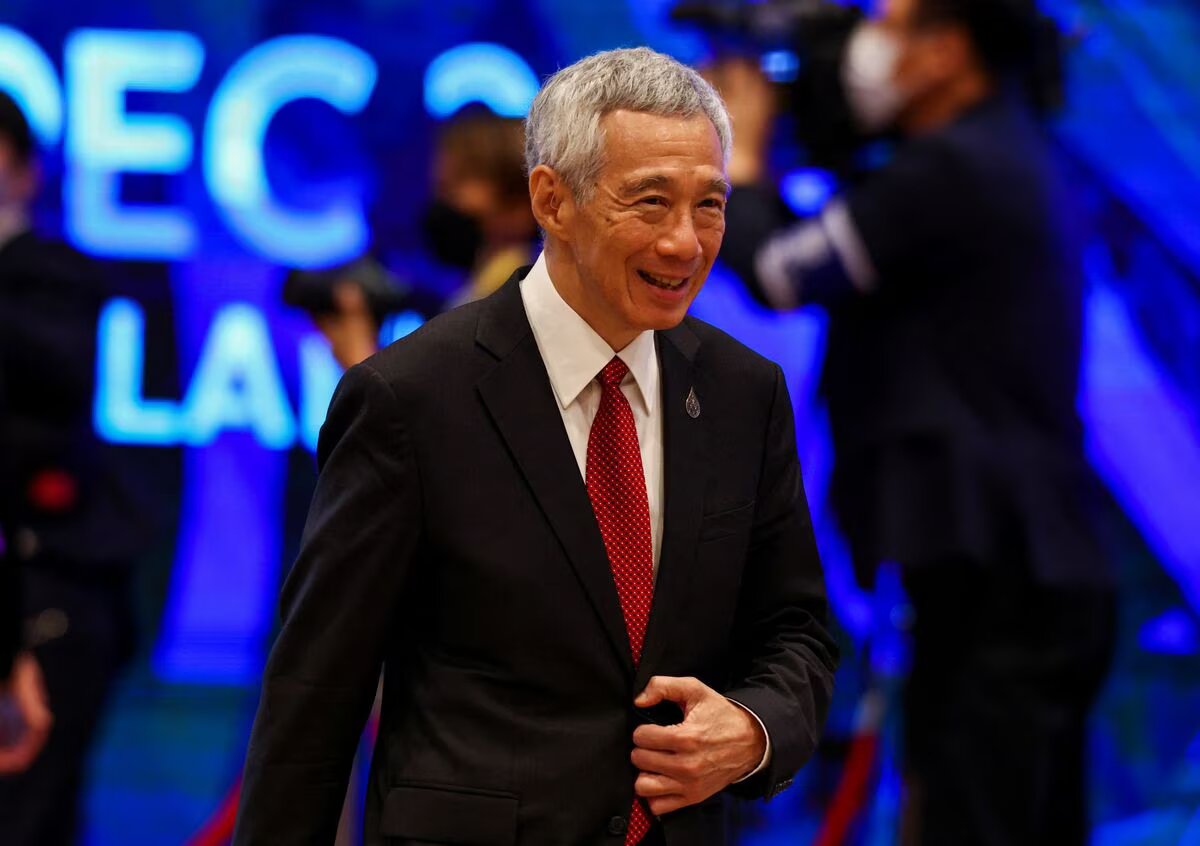
Singapore Prime Minister Lee Hsien Loong attends the APEC Leaders' Informal Dialogue with Guests during the Asia-Pacific Economic Cooperation (APEC) Summit 2022, in Bangkok, Thailand November 18, 2022. REUTERS/Athit Perawongmetha/Pool.
Singapore’s surprise decision on Friday to keep its monetary policy unchanged leaves one thing unsaid. The central bank at the helm of one of the world’s most open economies pointed to multiple problems, including higher global borrowing costs and fragilities in the global financial system. It didn’t refer to the damage U.S.-China tensions is set to inflict.
The Lion City, whose trade volumes dwarf the size of its economy, joins Australia, India and South Korea in standing pat. Although the city-state has become a magnet for the region’s ultra-rich, especially the Chinese, GDP grew by just 0.1% in the first quarter on a year-on-year basis; a Reuters poll expected 0.6%. Manufacturing disappointed. And a contraction in its trade-related cluster is expected to worsen; electronics, which has significant linkages across the region, is in a sharp downturn.
Those problems may persist with worsening relations between Washington and Beijing. Singapore has repeatedly warned this would damage the Lion City’s growth outlook. Prime Minister Lee Hsien Loong said in 2019 that it should prepare for these consequences and adapt to new global realities. The time may be now. Read More…