Slovnaft’s Bratislava Refinery Advances Renewable Fuels Production
-
 Loading...
 - Fleur Braam
- 17 Feb 2025
- 56 Views
- 0 Like
- 0 Comment
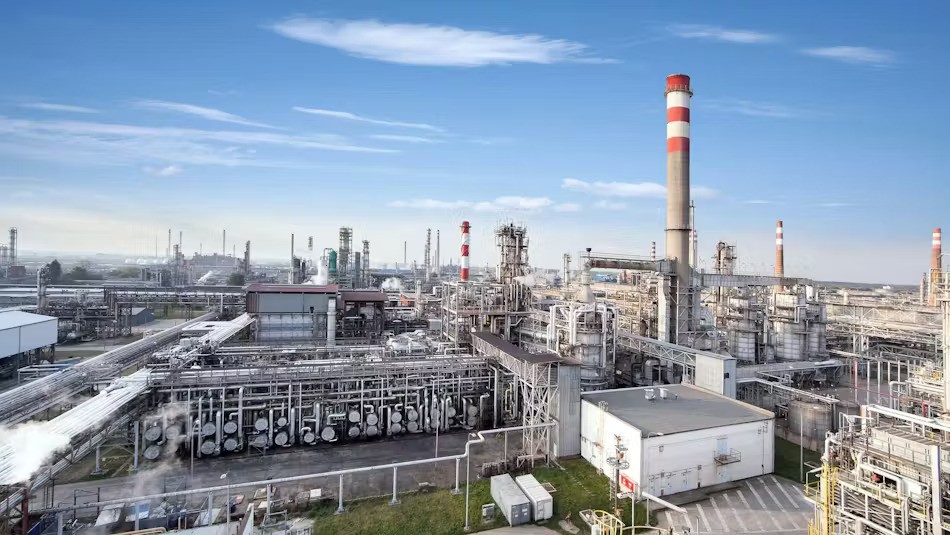
MOL Group subsidiary Slovnaft has successfully achieved the first production of sustainable aviation fuel (SAF) and hydrotreated vegetable oil (HVO) at its integrated refining and petrochemical complex in Bratislava, Slovakia, which has a capacity of 6.1 million tonnes per year (tpy). This milestone marks a significant step in the company’s efforts to transition towards more sustainable fuel options.
As part of a testing program that began over a year ago, the Bratislava refinery has produced SAF and HVO—commonly known as biodiesel—by co-processing conventional and renewable feedstocks within its existing production units. This innovative approach allows Slovnaft to utilize its current infrastructure while advancing its commitment to alternative fuels.
The successful completion of these production tests confirms the Bratislava complex’s readiness for larger-scale production of both SAF and HVO. This initiative aligns with MOL Group’s long-term +2030 Shape Tomorrow strategy, which aims to ensure supply security while transforming traditional fossil fuel operations into a low-carbon, sustainable business model.
Gabriel, vice-chairman of Slovnaft’s board and downstream vice-president of MOL Group, stated, "The fact that Slovnaft has passed this test is a confirmation of our position as an important player in the Central and Eastern Europe region." He emphasized the importance of preserving and developing the company’s long-standing expertise in chemical production in line with its future goals.
While the specific volumes of SAF and HVO produced during the testing phase have not been disclosed, both Slovnaft and MOL Group confirmed that the finished products met the required quality specifications, validated by Isotoptech LP’s Isotoptech Zrt., a laboratory based in Hungary specializing in elemental and radioanalytical measurement services.
The production of HVO was completed at the end of 2024 through the co-processing of renewable-based oil derived from cashew nut shells in an existing unit designed for conventional diesel production. Róbert Hurný, the director of downstream development at Slovnaft, noted that the testing for SAF was conducted in a unit for standard aviation kerosene production, utilizing partially refined cooking oil.
Slovnaft collaborated with the aeronautics faculty of Slovakia’s Technical University of Košice for the SAF production testing, highlighting the importance of academic partnerships in advancing renewable fuel technologies.
Slovnaft’s advancements in producing sustainable aviation fuel and hydrotreated vegetable oil represent a significant step towards a more sustainable energy future in the region. As the company prepares for larger-scale production, it continues to play a crucial role in the transition to low-carbon fuels, aligning with global efforts to reduce reliance on fossil fuels and combat climate change. Official plans for scaling up production at the Bratislava refinery are yet to be revealed, but the successful testing phase sets a promising foundation for future developments in renewable fuels.