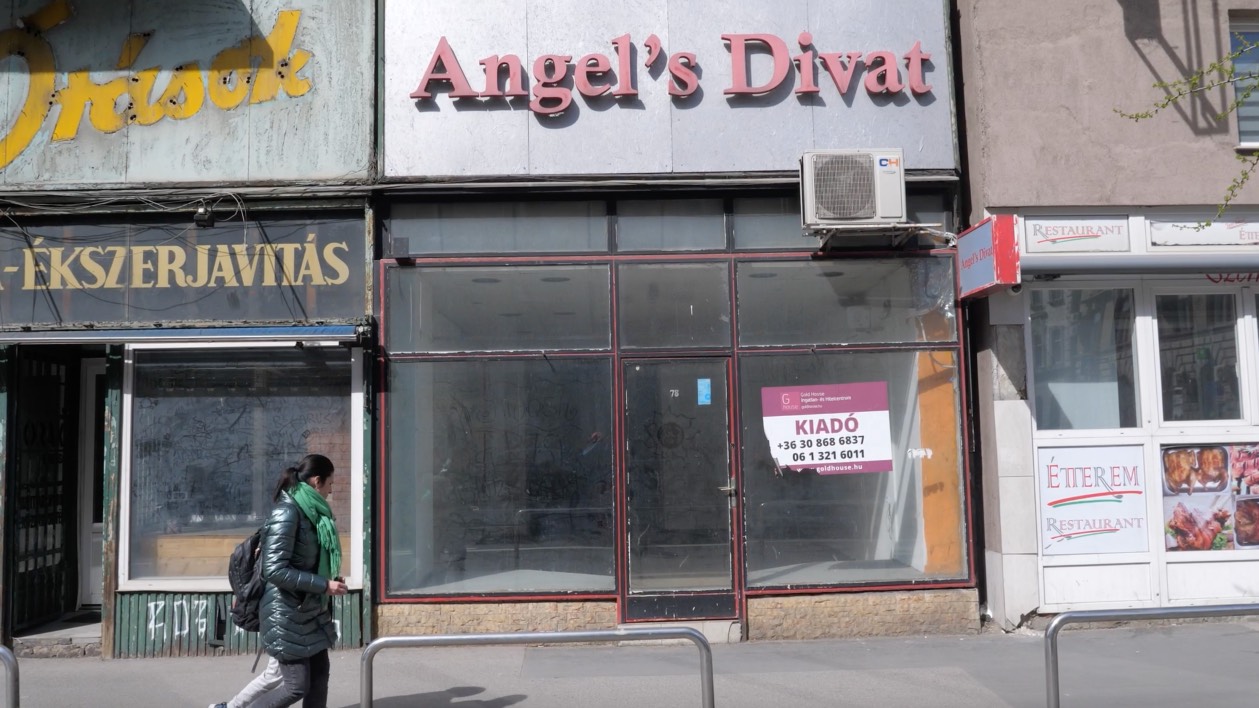
Small businesses in Hungary struggle to stay afloat as recession looms
-
 Loading...
 - Blanco Rafael
- 13 Jun 2023
- 117 Views
- 0 Like
- 0 Comment
Small enterprises in Hungary are facing significant challenges due to the country's economic downturn. Inflation rates in Hungary are currently the highest among European Union countries, accompanied by a rising unemployment rate.
Szouza Feher, a proprietor of a small business in Budapest, is well aware of the risks her family's enterprise is facing.
The escalating inflation in Hungary, coupled with the government's imposed price restrictions on essential food items and the energy crisis, have severely impacted their profitability.
"At some point, we may have to close down. At present, we lack sufficient funds to cover our expenses," Feher shared with CGTN Europe. "This month, we barely managed to generate enough income to pay the rent, and the bills are piling up."
Feher's family store is situated on Rakocsi Street, one of Budapest's primary thoroughfares.
Just a few years ago, this street represented a revival and gentrification in the capital, but the situation has drastically changed.
"Numerous shops here have gone bankrupt, while others struggle with minimal profit margins. It's truly distressing," Feher emphasized.
Misleading statistics
Despite the bleak economic outlook, the government maintains that the economy is strengthening.
However, economists caution against solely relying on GDP figures and disregarding other economic indicators, as this fails to present an accurate portrayal of Hungary's financial well-being.
"The Hungarian figures can be somewhat misleading since GDP does not reflect the national income," warned Bod Peter Akos, Former Governor of the Hungarian National Bank.
"GDP incorporates the profits of foreign businesses, and although German car manufacturers contribute to the GDP and employment in Hungary, it does not represent the actual pay and local profits earned by Hungarian businesses."
Hungary's escalating inflation, the government's price caps on essential food items, and the energy crisis have put immense pressure on the profits of small enterprises.
As a result, businesses are struggling to survive. The Hungarian Trade Association reports that there are presently 109,000 registered businesses in Hungary, and they anticipate approximately 4,000 closures by year-end.
Small businesses in Hungary employ around two-thirds of the country's population, thus a wave of closures undoubtedly translates into job losses.
Unemployment has already reached 4 percent, the highest in two years. Hungary's year-on-year inflation stands at 25 percent, with food inflation at 50 percent.
Productivity growth has stagnated, and the national budget deficit has surged.
Numerous economists and business owners argue that the government's perspective on the situation fails to align with the realities experienced on the streets.
"If inflation is soaring in Hungary, possibly the highest in Europe at present, how can the economy possibly grow?" questioned Andras Timar, CEO of Welldon Restaurant Consulting.
As Feher calculates her losses and anxiously anticipates the rent payment deadline, she fears that her store will soon resemble the numerous others on Rackocsi Street—boarded up and abandoned.