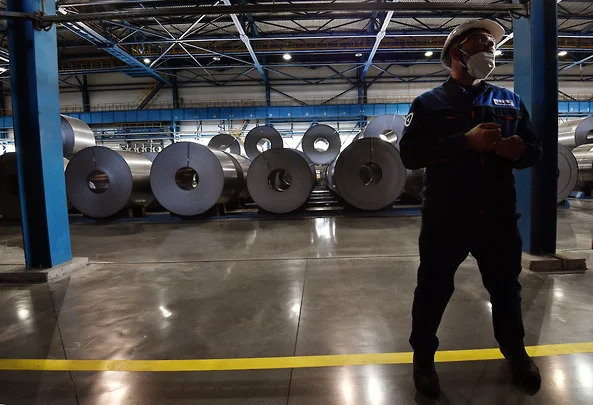
Steel production in Russia has become unprofitable
-
 Loading...
 - James Smith
- 15 Jul 2022
- 128 Views
- 0 Like
- 0 Comment
Russian steel companies in June, according to Kommersant, had a negative profitability of deliveries to both the domestic and foreign markets. So, Severstal told Kommersant that the profitability of exports was minus 46%, and in the domestic market it was almost zero (plus 1%). Against this background, the industry is actively reducing output, and is also considering reducing investment programs.
Russian metallurgists are now working with negative profitability in sales both for export and in the domestic market, interlocutors in the companies told Kommersant (the largest Russian steel producers this year have not yet published financial and operational statements).
In June 2022, Severstal operated with a profit margin of minus 46% on exports and plus 1% on the domestic market, says Andrey Leonov, Severstal's GR Director and Vice President of the Russian Steel Association of ferrous metallurgists. Severstal has traditionally been one of the leaders in the sector in terms of profitability, but it has suffered more than others from Western sanctions. Its main shareholder Alexei Mordashov and his assets are on the SDN list, and European sanctions prohibit supplies to the EU.
According to Kommersant's sources, other large companies' profitability in June is also negative. MMK , which supplies up to 90% of its products to the domestic market, reached an average profitability rate of minus 5.9%, the source told Kommersant. IMH did not sell for export in June. The company of the Tulachermet holding and its partner plant Tula-Stal operated with a profitability of minus 6% and minus 49%, respectively. These companies did not give official comments.
Negative profitability may cause significant adjustments to the investment program.
In June, the owner of MMK, Viktor Rashnikov, said that the plant's investment program could be implemented with a profitability of at least 15%, but in May this figure was 4%. According to him, although coal and ore suppliers are reducing prices, there is little room for maneuver. “They also have a margin that is not so big, as they say, you can’t add it,” TASS quoted Viktor Rashnikov .
The workload of metallurgists is also falling. Russian Steel said last week that in June steel production fell by 20-50% depending on the company, while the cost of production increased by 50% (as a number of costs are permanent and do not depend on output). Under these conditions, the Ministry of Industry and Trade proposed to reduce the tax burden on metallurgists and cancel the excise tax on liquid steel, which was approved last year as a measure to withdraw excess profits. The Ministry of Finance is not yet ready to cancel the excise tax, but may consider adjusting it. Read More…