Surfing Colombia
-
 Loading...
 - Alaia Delgado
- 13 Sep 2022
- 85 Views
- 0 Like
- 0 Comment
Surfing Colombia - quick facts
Population: 48.23 million
Location: South America
Main surf area: Along the Western Pacific Coast
Language: Spanish
Currency: Colombian Peso
Year round surf: Yes
Most consistent surf: December to March and July to September
Best time for Beginners: December to March and July to September
History of Surfing in Colombia
Surfing in Colombia is considered by many as the last frontier of surfing in Latin American as this stretch of coast has long flown under the surfing radar, due in part to a combination of isolation and the long shadow of a violent past.
As recent as fifteen years ago, the beautiful Colombian coast line was a no-go zone overrun with left-wing guerrilla groups, paramilitaries, and drug traffickers battling for control of the region. However, the political situation has long been stabilised, and word has spread of the amazing set-ups hidden here. Now is the time to surf Colombia’s perfect waves.
What’s the surf like in Colombia?
Colombia is a beautiful, sensuous country that is deeply immersed in nature, music, dance, lush green jungles, sophisticated towns and cities and fantastic surf spots for all level of abilities.
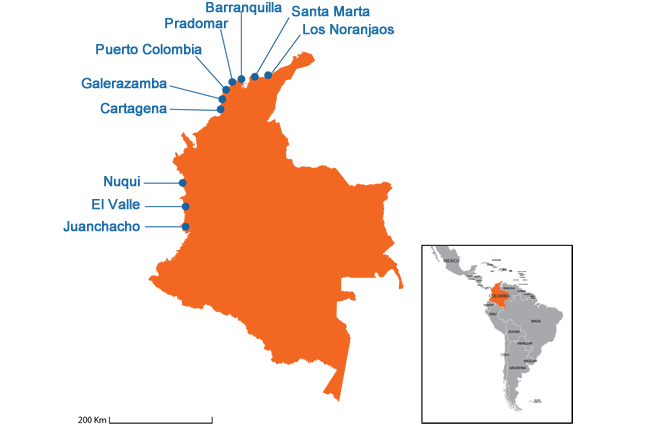
There are two different coastlines to explore when surfing in Colombia, the Pacific and Caribbean.
The Pacific and it’s many un-surfed spots, is best from April to October and has some amazing surfing beaches on its Western Pacific Coast. Some of them are easier to get to than others but any surfer willing to progress will be happy to know that there is opportunity for many different types of Colombia surf experiences, depending on skill levels and preferences such as left or right walled waves, point breaks or beaches or whether you simply want to surf alone.
November to March, is when the more developed and easier-going Caribbean coastline comes to life and during these months, will barely drop below waist-height, making for some great beginner and intermediate waves if you are considering a Colombia surf camp.The waves that hit this stretch of the Caribbean are all locally produced wind swells that have a very short wave period, which can result in messy surf, don’t worry though you can still get great waves during this time on your Colombia surf trip. It just means catching the glassy morning conditions and late afternoon session when the winds back down.
The hurricane season between August and November can produce a solid clean groundswell for Caribbean Colombia which can result in top to bottom barrels that are best surfed by intermediate and advanced surfers.The dominant swell size is between the 3-6ft, but it can get to double this with the swell often building through the day and then dropping off slightly as the wind dies overnight. Tidal variation rarely exceeds 0.3m. The best time for surfing in Colombia is December through March and July through September.
Getting There
Colombia’s biggest international airport is Bogatá’s Aeropuerto Internacional El Dorado. Direct services from Europe to Bogotá are offered by Iberia (Madrid and Barcelona), Air France/KLM (Paris), Avianca (Barcelona and Paris) and Lufthansa (Frankfurt). Avianca also operates flights from Madrid to Cali and Medellín.
In North America, Air Canada connects Toronto to Bogotá, Lan and American Airlines connect Bogotá with Miami, while Delta links Bogotá with New York, Chicago and Atlanta, and Jet Blue flies to Bogotá from Orlando and Fort Lauderdale.
Where to surf in Colombia
Caribbean Coast
Whilst lacking the power and size of its Pacific counterpart, the surfing beaches on the Caribbean coast are much easier to get to, are more tourist oriented, and tend to be a bit calmer and better for those seeking the best beginner and intermediate surf beaches Colombia offers. Surfing beaches along the Caribbean are usually closer to the main city centres and there is road access, walking access, and more bars, restaurants, surf shops and accommodation.
1. Barranquilla
Named Surf Spots: 12
Barranquilla is a port city laid out in a tangled ribbon along mangroves and the Caribbean Sea. It prides itself for being the birthplace of Colombian pop songstress Shakira and for its annual carnival. Once a year the whole town clocks off, puts on its finest attire and lets loose at the country's biggest street party. This Mardi Gras celebration is second in size only to that in Rio de Janeiro, making it South America's second most important carnival. It's held in February on the four days before Ash Wednesday, there are street bands, masquerade and fancy dress, live performances, and a riotous, slightly unhinged atmosphere as the town drinks, eats and dances itself into the ground.
If you can time your Colombia surf trip within these dates, we highly advise it! Predomar is a very popular Colombia surf beach, so expect to share a wave during the weekend mornings or for a session to yourself try and go during the week or for the dawny session. The wave itself offers both left and rights and there are some fun bars, restaurants and shacks along the beach that offer fresh fruit, delicious food and cold beverages.
Puerto Colombia packs a bit more power in its waves and offers up a good option for intermediate surfers on one of our Colombia surf camps as it has a fewer people in the water and the punchy walls offer the perfect canvas to get your turns dialled in.Once you are in the area ask for El Muelle and everyone will know what you are talking about and point you off in the direction of uncrowded waves, deserted stretches of sand and breath-taking scenery!. Read More...