Suzi Gablik, Art Critic Who Took Modernism to Task, Dies at 87
-
 Loading...
 - Khepri Yousef
- 23 May 2022
- 282 Views
- 0 Like
- 0 Comment
Suzi Gablik, an art critic, author and theorist who once championed modernism — and was once an artist of that persuasion — but found fame when she turned against it, died on May 7 at her home in Blacksburg, Va. She was 87.
Her death was confirmed by a friend, Tacie Jones, who said Ms. Gablik had congestive heart disease.
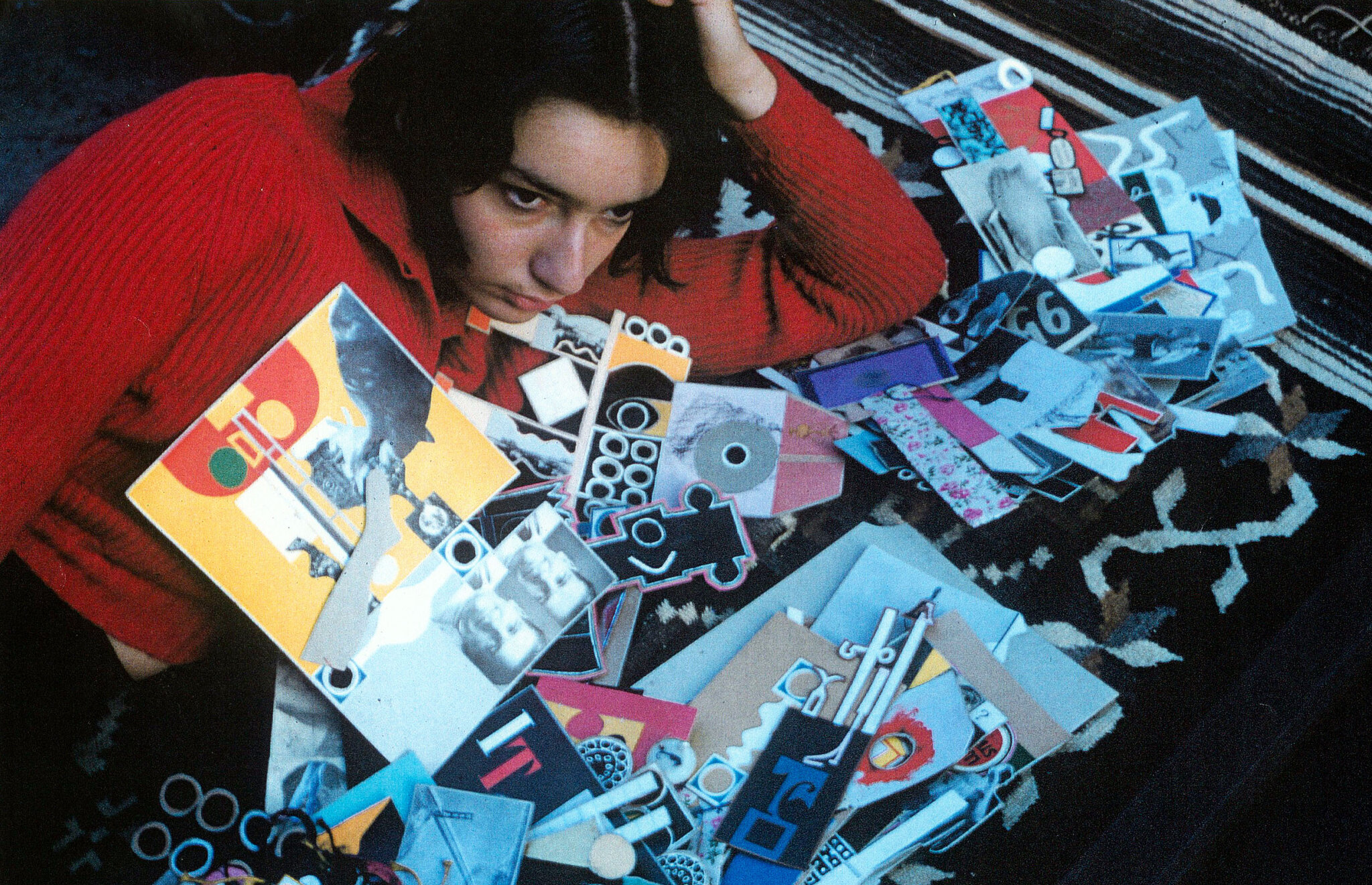
In the mid-1950s, the art scene in New York City was small and contained, a tiny tribe where everyone knew one another. Ms. Gablik, who made literary and hallucinogenic collages of animals and nature images torn from magazines — they look like scenes from Eden, before the fall — was part of it.
Among her crowd, no one was famous yet. Jasper Johns, who was working as a clerk at Marlboro Books on West 57th Street, was her best friend; she called him “my Fred Astaire.” Robert Rauschenberg was a pal, too, and she introduced the two young artists one night, as Mr. Johns recalled recently by email, changing art history forever.
So was Ray Johnson, the mischievous avant-garde “mail” artist who inveigled art-world friends to pass along objects and messages through the post, in a lively ongoing performance piece. Mr. Johnson and Ms. Gablik once made a performance together, too, with Mr. Johnson arraying Ms. Gablik in his collages and cut-paper pieces and posing her on the streets of SoHo as if she were a human gallery.
In 1959, when she was 25, Ms. Gablik spent nine months living in the attic of René Magritte, the Belgian Surrealist, researching a book about him. They had begun an epistolary friendship in a curious way.
Ms. Gablik was having an affair with Harry Torczyner, a Belgian lawyer living in New York who was Magritte’s friend and legal adviser, and whom Ms. Gablik urged to collect more of his countryman’s work. (As a result, Mr. Torczyner would become one of the artist’s biggest collectors.) Magritte at the time was eager to have some questions answered by an American, which he posed by letter to Ms. Gablik, who was fluent in French: He loved detective stories, could they discuss? And what exactly was a hamburger?
When she broached the subject of writing a book about Magritte, he was happy to invite her into his home. There she starred in the home movies he liked to make. (In one film he directed her to simulate giving birth to a tuba, which emerged from under her skirt.) When she found a cache of his drawings in the attic, he gave them to her.

It would take 10 years for her to find a publisher for the book, because no publisher would commit to an unknown author who was also an artist, as she was when she returned from Belgium. (She was also writing reviews for ARTnews and then Art in America, where she was a contributor for the next two decades.) Finally published in 1970, her monograph, both scholarly and intimate, was the first English-language book on Magritte, who died in 1967.
“Suzi was a true bohemian who seemed to value her friendships with artists at least as much as the career she made by writing about them,” said the art critic Deborah Solomon, who is working on a biography of Jasper Johns. “She didn’t care about conflict of interest. Like Apollinaire, the great champion and friend of Picasso, she seemed to believe the more conflicts the better.”
Writing freelance art reviews is not a lucrative gig, and when, in the late 1960s, Ms. Gablik was evicted from her rent-controlled apartment, she moved to a bedsit in London. There she met and fell in love with John Russell, the natty and erudite art critic, then at The Sunday Times of London. Together they curated a show of Pop Art at the Hayward Gallery in London and wrote a book, “Pop Art Redefined,” published in 1969.
When Mr. Russell left Ms. Gablik in 1974 for the charismatic American art historian Rosamond Bernier, whom he married in 1975, and a new job as art critic for The New York Times, she stayed behind in London and began a career as a public speaker.

At the invitation of the United States government, she began to lecture about American art around the world, an experience that altered her thinking about contemporary art. It was not just daunting but embarrassing, as she wrote later, to try to describe “some of the aggressively absurd forms of art that dominated the decade of the 1970s in America: Vito Acconci putting a match to his breast and burning the hair of his chest; Chris Burden crawling half-naked across broken glass.”
She began to feel that modernism — her religion — had reached its limits. Its provocations were no longer transgressive but silly, elitist and even venal, having been co-opted by corporate sponsors and the growing art market. Her salvo of a book, “Has Modernism Failed?,” arrived with a bang in 1984, and all of a sudden she was a sought-after speaker in her own country, a dissident voice pilloried by some critics but welcomed by others.
“To the public at large, modern art has always implied a loss of craft, a fall from grace, a fraud or a hoax,” she wrote. “We may accept with good grace not understanding a foreign language or algebra, but in the case of art it is more likely, as Roger Fry once pointed out, that people will think, when confronted with a work they do not like and cannot understand, that it was done especially to insult them.”
Decrying the pointlessness and commercialism of contemporary art was hardly a new position — Tom Wolfe had gleefully staked it out in “The Painted Word,” in 1975 — but Ms. Gablik’s book nonetheless struck a chord. Read More...