Svetlana Alexievich: Literature can prevent humans from becoming savage beasts
-
 Loading...
 - Sadiki Omar
- 25 Jan 2023
- 61 Views
- 0 Like
- 0 Comment
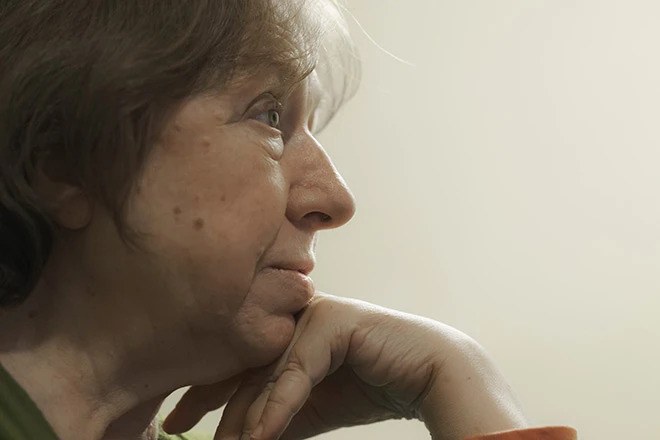
Svetlana Alexievich, the 2015 Nobel Literature Prize winner, could not stop crying when she heard that Russia had invaded Ukraine on Feb. 24, 2022.
“My mother is Ukrainian and my father is Belarusian,” she said in an interview with The Asahi Shimbun in late November. “I truly love Russia and grew up within its culture. I absolutely could not believe that a war would begin.”
Alexievich, 74, won the Nobel Literature Prize for her works, which include one about German-Soviet battles during World War II (“The Unwomanly Face of War,” published in 1985) and about the Soviet invasion of Afghanistan (“Boys in Zinc,” 1989).
The interview was conducted at her home in Berlin, where she effectively lives in political exile.
Alexievich was born in western Ukraine when it was part of the Soviet Union. All of her works are written in Russian, and she often focuses on those who were sacrificed by the times they lived in or by society.
“Chernobyl Prayer” (1997), for example, is based on interviews with those who tried to contain the nuclear accident of 1986 as well as bereaved family members.
She described what unfolded in Ukraine in 2022 as “savage beasts crawling out of human beings.”
Reports of inhumane acts by Russian troops have been prevalent, including gruesome evidence of torture, rape and murder in Bucha, near Kyiv, when it was temporarily occupied by Russia.
Alexievich was asked about similarities between what has been going on in Ukraine and what she heard from those who fought in World War II and Afghanistan.
“I still clearly remember one man who I interviewed saying how ‘beautiful war was,’” she said. “He said, ‘Cannon shells flying at night in the open field are very beautiful. There are some moments of beauty, not just people being killed.’
“His description of the groan by someone stabbed in the throat was almost poetic. War contains various trials for humans. It is capable of dominating the souls of people.”
With no signs of a cease-fire in Ukraine, Alexievich was asked what role literature could play in a time of war and to help the many people suffering from it.
“Writers work to help foster growth in people,” she said. “As (Fyodor) Dostoyevsky pointed out, writers work to ensure that humanity as much as possible can remain inside people.”
“We live in an age of loneliness,” Alexievich said. “Every one of us is very lonely. That is why we must all search for something that we can rely on in order to not lose our humanity.” Read More…